House Wrap and Moisture Barriers Explained
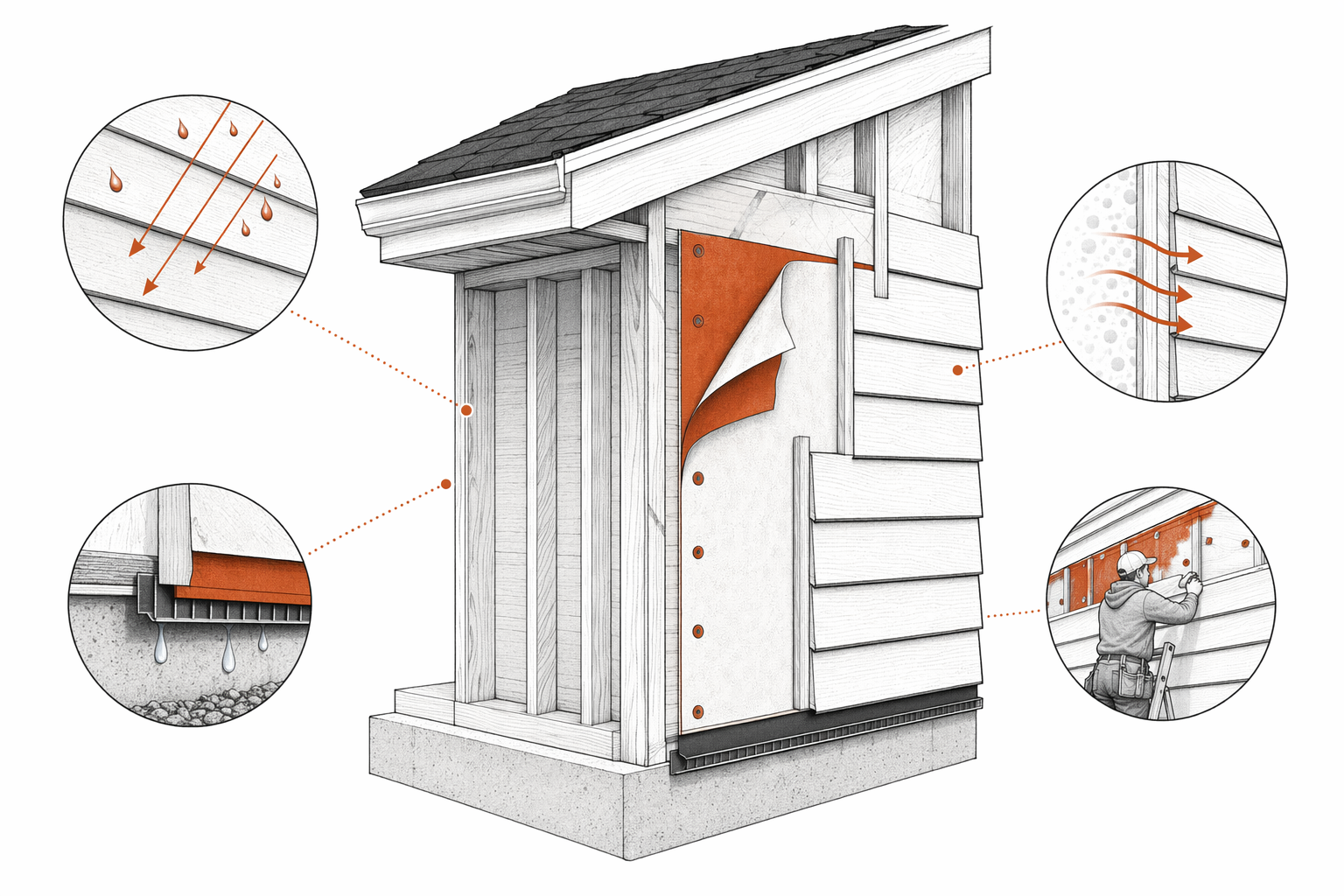
House wrap and other moisture barriers help manage water and air behind your siding. They are an important part of many siding projects, but the right setup depends on your wall type, climate, local code, and the siding material you choose.
Intro
If you are planning new siding, you may hear words like house wrap, water-resistive barrier, and moisture barrier. These terms can sound confusing.
In simple words, this layer goes behind the siding to help protect the wall from water that gets past the outer surface. It can also help reduce unwanted air leaks in some wall systems.
It is not the same thing as siding, and it is not a cure for every water problem. But when it is chosen and installed correctly, it can be an important part of a longer-lasting exterior wall.
The short answer
House wrap is usually a protective layer installed behind siding to help shed water and, in some cases, reduce air movement through the wall. Many homes need some kind of water-resistive barrier behind siding, but the exact product and installation method depend on the home, the climate, the siding type, local permit and code rules, and whether old siding is being removed. If you are comparing project costs, remember that moisture barrier work is usually only one part of the total price. You can review typical siding ranges at costs.
What house wrap does
A moisture-management layer is there to help if rain gets behind the siding. Even good siding systems are designed with the idea that some water may get past joints, seams, or trim areas.
A basic house wrap or similar water-resistive barrier may help:
- Direct water downward and out of the wall system
- Protect wall sheathing from moisture exposure
- Reduce some air leakage when seams and edges are handled correctly
- Support the overall performance of the siding assembly
What it does not do: it does not replace proper flashing, trim details, caulking where needed, or good installation practices. If windows, doors, corners, and penetrations are not detailed correctly, water can still get in.
House wrap vs. other moisture barriers
Homeowners often use these terms as if they mean the same thing, but they can refer to different products.
- House wrap: A sheet material commonly installed over wall sheathing and under siding.
- Water-resistive barrier: A broader term for materials that help resist liquid water behind siding.
- Air barrier: A layer intended to limit uncontrolled air movement.
- Flashing tape and metal flashing: Products used around windows, doors, and transitions to move water away from openings.
Some wall systems use more than one protective layer. The right combination depends on the home design and local requirements. That is why it is smart to ask contractors to explain, in writing, what moisture barrier they plan to use and how they will handle seams, flashing, and penetrations.
When it matters most
Moisture barriers become especially important when:
- Old siding is being removed and the wall underneath is exposed
- The home has had leaks, rot, or staining before
- You are switching to a different siding material
- You live in an area with heavy rain, wind-driven rain, snow, or humid conditions
- The project includes new trim, windows, or wall repairs
If old siding stays in place and new siding is installed over it, the approach may be different. That can affect moisture control, thickness, trim details, and code compliance. You can read more at can you side over old siding.
Because hidden water damage can increase labor and materials, final pricing can change once the wall is opened. This is one reason estimates can vary from one contractor to another.
What to do next
Ask each contractor to show the full wall plan, not just the outside siding color and style. A clear estimate should say whether old siding will be removed, whether a house wrap or other water-resistive barrier is included, how flashing will be handled, and what happens if damaged sheathing is found.
Before you sign anything:
- Hire licensed, insured, and bonded siding contractors
- Verify the license, insurance, and bond yourself
- Get the price, materials, scope, and cleanup details in writing before any deposit
- Follow local permit and code requirements
- Be careful with storm-chasers who push you to sign right away
If you want help finding local pros, you can use get matched for free. It also helps to review how to vet a siding contractor before comparing estimates.
House wrap is a protective layer behind siding that helps manage water and sometimes air leaks. Ask contractors to explain the full wall system in writing, and verify their license, insurance, and bond before you hire them.