Vinyl siding
**Vinyl siding** is a popular choice because it is usually one of the most budget-friendly ways to cover a home’s exterior. It comes in many colors and panel styles, and it does not need regular painting. If you are planning a new install or full replacement, this page explains how the work usually goes, what typical installed costs look like, and how to choose a licensed, insured, and bonded contractor with confidence.
Why homeowners choose vinyl siding
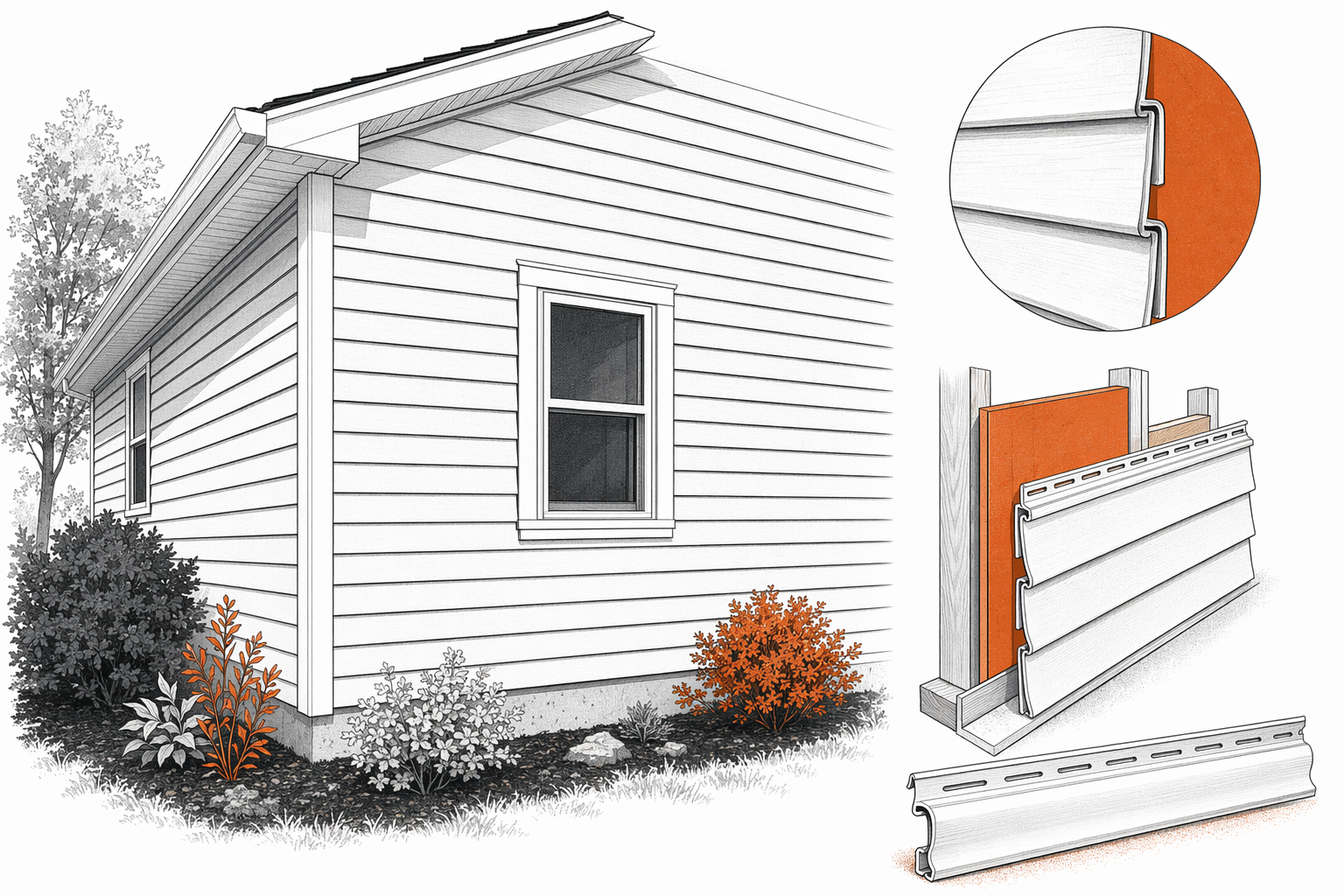
Vinyl siding is a plastic-based exterior cladding made in long panels that lock together. It is widely used on homes across the US because it is affordable, fairly quick to install, and available in many looks, including horizontal lap panels, vertical panels, and shake-style accents.
For many households, the main benefit is value. Vinyl often costs less than many other siding materials, while still giving the home a clean, finished appearance. Some products also include insulated backing, which can help the wall feel more solid and may improve energy performance in some homes.
If you are comparing options, you can review broader siding costs or get help through our free contractor matching service.
How vinyl siding installation or replacement works
A vinyl siding job usually follows a clear step-by-step process.
- The contractor measures the home and reviews walls, trim, soffits, corners, and problem areas.
- If this is a replacement, the old siding is removed when needed. The wall surface underneath is checked for damage.
- The crew installs or repairs the water-resistive barrier, flashing, and other moisture-control details around windows, doors, and penetrations.
- Starter strips, corner posts, trim channels, and utility trim are installed.
- Vinyl panels are hung in rows, locked together, and nailed with room to expand and contract.
- The crew finishes gables, eaves, and detail areas, then cleans up the site.
Proper installation matters. Vinyl expands and contracts with temperature changes. If panels are nailed too tight or installed out of level, they can buckle, warp, or look uneven. Local permit and code rules may apply, so ask your contractor what is required in your area.
Typical vinyl siding cost per square foot
A typical installed cost range for vinyl siding is about $5 to $12 per square foot.
This is an estimate, not a quote or guarantee. The real price depends on home size and height, material grade, insulated vs. non-insulated panels, trim details, removal of old siding, wall repairs, site access, and your local labor market.
In many projects, basic panels on a simple one-story home cost less per square foot than premium panels on a taller home with many corners, dormers, and custom trim. Removal and disposal of old siding can also raise the total.
For a closer planning number, compare estimates carefully and use a written scope. Our cost guides can help you set expectations before you talk to contractors.
How long a vinyl siding job usually takes
Most vinyl siding projects take about 3 to 10 days once work starts.
A small, simple home may move faster. A larger two-story house, bad weather, old siding removal, or hidden wall damage can add time. Permit timing and special-order materials can also affect the schedule.
Ask the contractor for a realistic timeline in writing. It should include start date, major work stages, cleanup, and what happens if the crew finds rot or moisture damage after the old siding comes off.
Pros and cons of vinyl siding
What to ask before you sign
Before you agree to a project, ask clear questions and get the answers in writing. This is especially important if more than one contractor is bidding the job.
You can also review our guide on how to vet a siding contractor.
Verify the contractor carefully
SidingLedger is a free matching service. We do not install siding or act as the contractor. Before you hire anyone, verify the contractor’s license, insurance, and bond yourself. Get the full price, materials, scope, timeline, and payment schedule in writing before any deposit.
Be careful with high-pressure sales tactics, especially after storms. Watch out for storm-chasers who push you to sign the same day, promise vague pricing, or avoid written details. A trustworthy contractor should answer questions clearly and give you time to review the agreement.
Vinyl siding is a common low-cost way to cover a house. Most jobs take a few days to about a week, and typical installed costs are about $5 to $12 per square foot, depending on the home and your area. Always hire a licensed, insured, and bonded contractor, and verify those details yourself before you sign.