Can You Put New Siding Over Old Siding?
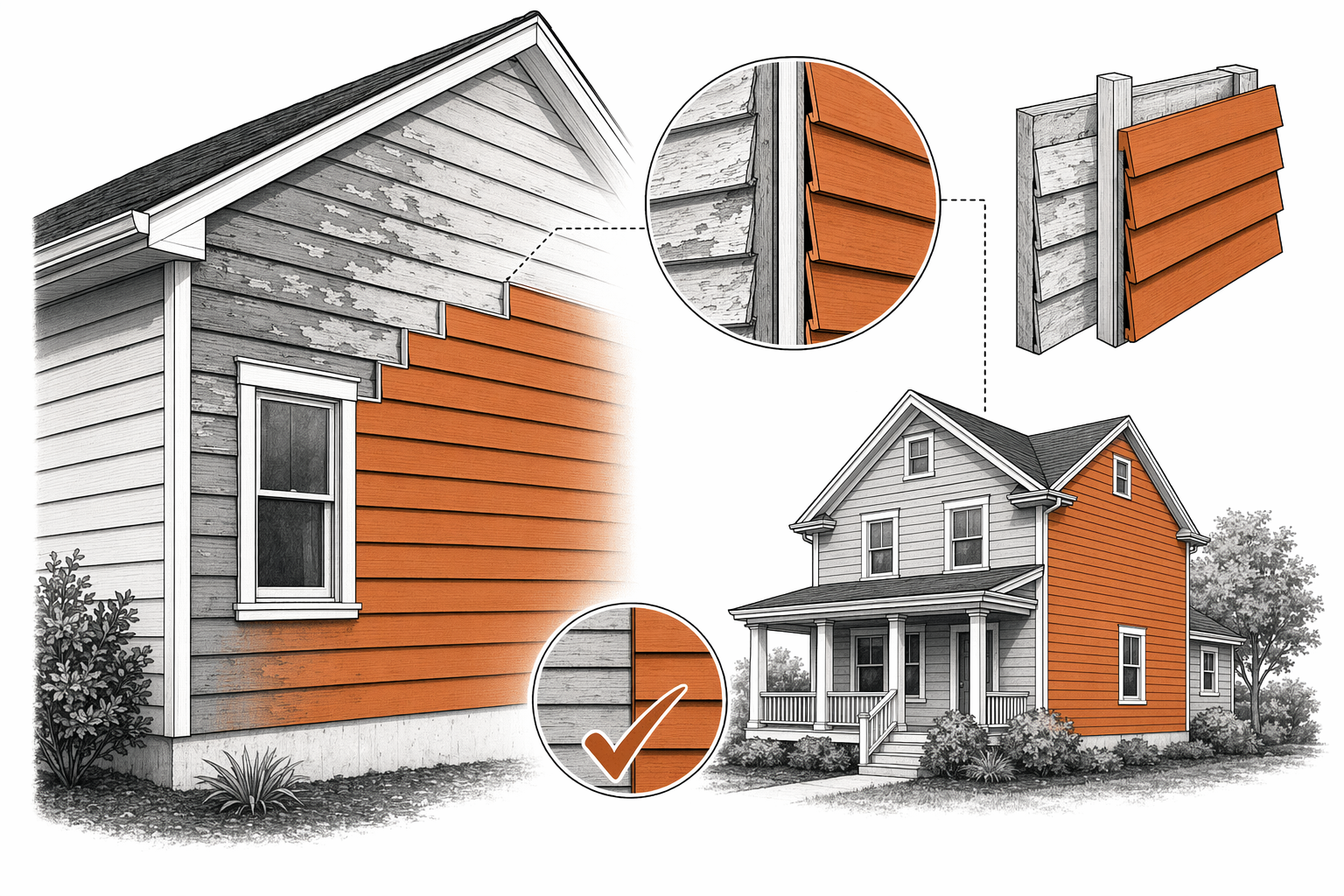
Yes, sometimes you can put new siding over old siding. But it is **not always the best choice**. The right answer depends on the condition of the old siding, moisture risk, wall flatness, local code, and the new material you want to use.
A short intro
Many homeowners ask this question because they want to save time, reduce mess, or lower labor costs. In some cases, installing new siding over old siding is possible. In other cases, full removal is the safer path.
This guide explains the basic pros, limits, and next steps in plain language. If you want local help, you can use free contractor matching to connect with licensed, insured, bonded siding contractors near you.
The short answer
Yes, sometimes new siding can go over old siding. But it only works when the existing siding and wall underneath are still in good enough condition. If there is rot, trapped moisture, major unevenness, pest damage, or loose areas, covering it can hide problems instead of fixing them. Also, some siding materials and some local code rules may require removal first.
When going over old siding may work
Overlaying old siding may make sense when the current siding is relatively flat, firmly attached, and not badly damaged. It is more common when the old layer does not have serious moisture problems and the wall can still be prepared correctly.
A contractor may also need to add a weather-resistive barrier, furring, or other prep work so the new siding sits properly. That is one reason the final price can vary. Typical siding costs are estimates, not quotes, and usually depend on home size and height, material, removal needs, site conditions, and your area. You can compare common ranges on our siding cost guides.
When old siding should usually come off first
Removal is often the better choice when the old siding is failing or when hidden wall problems are possible. Taking the old siding off lets a licensed contractor see the sheathing, flashing, and moisture protection underneath.
This is important because siding is not only about looks. It also helps manage water and protect the wall assembly. If damage is covered instead of repaired, the problem may get worse later.
Important trade-offs to understand
Putting new siding over old siding can look cheaper at first, but it is not always the best value. If hidden damage is missed, later repairs can cost more.
There are also practical issues. Adding another layer can slightly change wall thickness around trim, windows, doors, soffits, and other edges. That can affect how clean the finished job looks and how well water is managed.
Before you sign anything, ask each contractor exactly what stays, what gets removed, what prep is included, and how they will handle moisture protection and flashing. Review the scope carefully, and use this guide to vet a siding contractor.
What to do next
- Walk around your home and note any soft spots, swelling, cracks, loose panels, staining, or mold smell.
- Ask at least two or three licensed, insured, bonded siding contractors whether overlay is appropriate for your home.
- Verify the contractor's license, insurance, and bond yourself.
- Get the full scope, materials, prep work, permit responsibility, timeline, and payment terms in writing before any deposit.
- Be careful with storm-chasers or anyone who pressures you to sign on the spot.
SidingLedger is a free matching service. We do not install siding or inspect homes. We help homeowners compare options and connect with local pros for estimates based on their project details. If you are ready, start with get matched.
Sometimes yes, sometimes no. If the old siding has damage or moisture problems, it is usually better to remove it first.