Siding permits & inspections explained
Permits and inspections can feel confusing. But they are often a normal part of a siding project. The main idea is simple: local rules help make sure the work follows code and is recorded properly. This guide explains what siding permits usually cover, who typically pulls them, what an inspector may look for, and how permitting can help protect you.
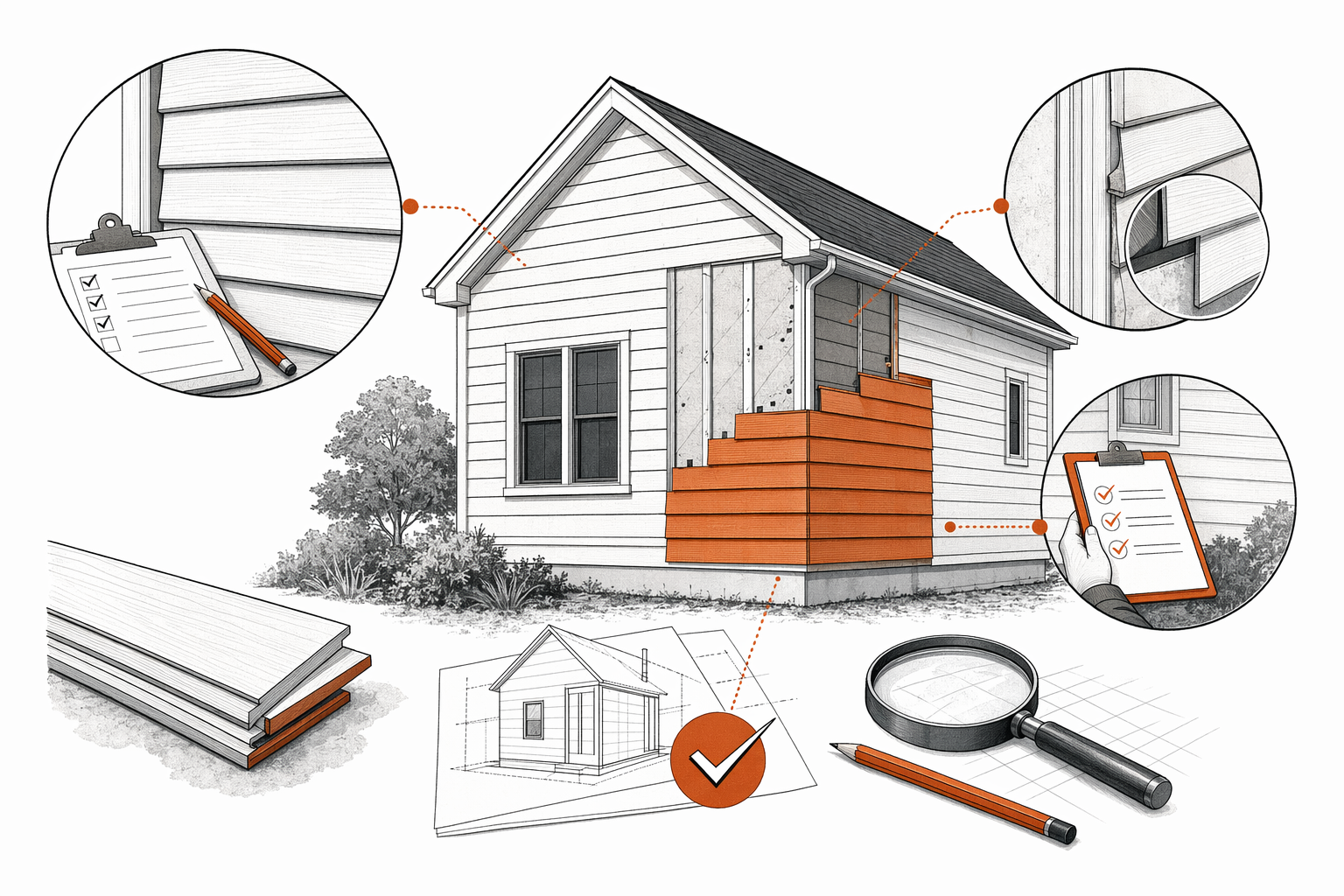
Why permits and inspections matter
A siding job does not always need the same paperwork in every city or county. Some areas require a permit for full replacement. Some may require one only when the project includes structural repairs, changes to the wall assembly, or work around weather barriers, windows, soffits, or trim. Rules can also differ for repair work versus full replacement.
That is why local permit requirements matter more than general online advice. A permit creates a record of the job. An inspection, when required, gives the local building department a chance to confirm that the work appears to meet code. This can help protect you later if you sell the home, file paperwork after storm damage, or need to show that the project was done properly.
SidingLedger is a free matching service. We do not install siding, inspect homes, pull permits, or give construction advice. We help homeowners connect with licensed, insured, and bonded siding contractors so they can ask the right questions and compare written estimates. You can start with get matched or review general costs before you compare bids.
Key points to know before your project starts
In many areas, the contractor pulls the permit. But do not assume. Ask directly, and get the answer in writing in the estimate or contract.
If a permit is required, the building department may want details such as the property address, basic project description, contractor license information, and scope of work. In some places, a homeowner can pull the permit. Even so, many homeowners prefer the contractor to handle it because the contractor is responsible for the work scope they are performing.
Inspections vary by area. Some jurisdictions may inspect once. Others may inspect at more than one stage, especially if damaged sheathing, moisture issues, or other hidden conditions are found after old siding is removed.
A permit does not guarantee perfect work. But skipping a required permit can create problems. It may delay the job, complicate a future home sale, or lead to fines or extra work if the city or county requires corrections later.
What inspectors may check
Exact inspection items depend on local code and the scope of the project. In general, an inspector may look at whether the permitted work matches the approved description and whether visible parts of the installation appear consistent with local requirements.
That can include basic items related to wall coverings, weather-resistive layers, flashing details, trim areas, clearances from roofs or grade, and how repaired areas were addressed if damage was found underneath. If the project includes related exterior components, those may also fall under review depending on local rules.
The important point is this: the inspector works for the local building department, not for the contractor and not for SidingLedger. If you do not understand what is being checked, ask your contractor and the permitting office to explain it in simple terms. If English is not your first language, ask for written notes or translated help if available. Our guides for non-English speakers may also help you prepare questions.
What to do: a simple step-by-step plan
1. Ask your local building department about permit rules. Tell them whether this is a repair or a full replacement, and mention any known water damage or wall repairs.
2. Ask each contractor the same permit questions. Who pulls the permit? Is the permit fee included? Who schedules inspections? What happens if hidden damage is found after tear-off?
3. Verify license, insurance, and bond status yourself. Do not skip this step. A contractor saying "we are covered" is not enough.
4. Get a written estimate and scope. It should clearly state what is included, what is excluded, and whether permit handling is included.
5. Read the contract before you sign. Make sure payment terms, material description, cleanup, change-order process, and permit responsibility are clear.
6. Keep copies of permit and inspection records. Save the contract, estimate, receipts, permit number, and any final sign-off for your files.
7. Follow local code and permit instructions. If the job changes after old siding is removed, ask for updated paperwork when needed.
For extra planning help, compare your paperwork with our contractor vetting guide before you move forward.
Common permit mistakes homeowners make
Next step: compare contractors carefully
If you are planning a siding project, treat permits as part of the full hiring process, not a small detail. A good contractor should be able to explain the local process clearly, show proof of license, insurance, and bond, and put permit responsibility in writing.
SidingLedger is here to help you make that comparison easier. We are a free service that matches homeowners with local siding contractors. You can get matched to compare licensed, insured, and bonded pros near you, then review written scope, pricing, and permit details before you decide.
Remember: cost information online is only a typical estimate range, not a bid or guarantee. Your final price depends on home size and height, material, removal of old siding, site conditions, and your area.
A permit is official local approval for certain kinds of work. An inspection is when the city or county checks the job if required. Rules are different in every area, so always ask your local building department and make sure permit responsibility is written into your contract.