Where your siding budget actually goes
A siding estimate is not just one big number. It is a group of line items that can change a lot from one home to another. When you understand where the money goes, it is easier to compare bids, ask better questions, and avoid surprise charges later.
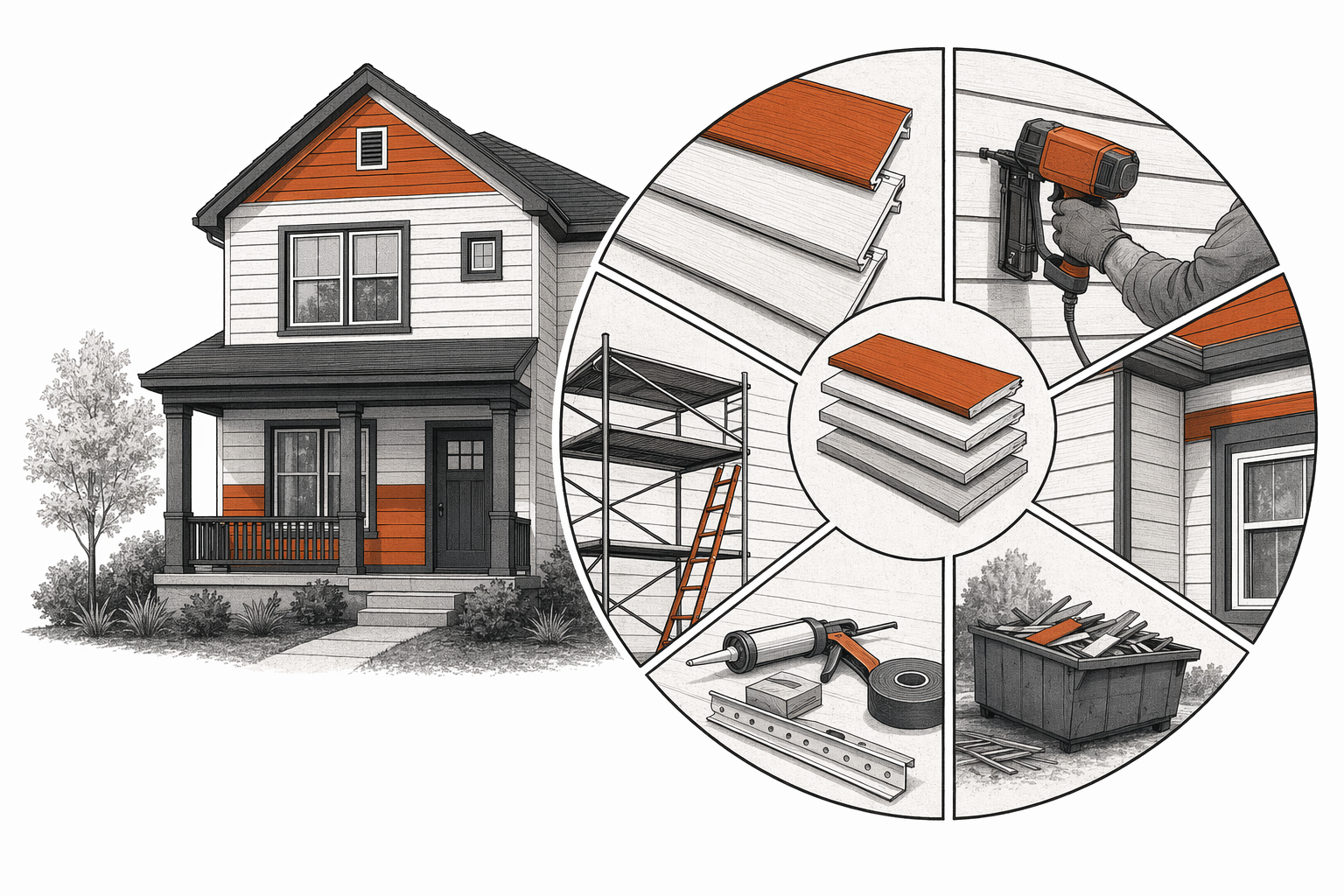
What a siding budget usually includes
Most homeowners first look at the total price. That is normal. But the breakdown matters just as much.
A full siding project often includes material, labor, tear-off of old siding, trim work, moisture protection, delivery, debris hauling, and permit-related costs if your area requires them. Some estimates also include upgrades like insulated panels, better trim details, or repairs to damaged wall areas found after removal.
Typical installed siding cost ranges often fall around $6 to $22+ per square foot depending on the material and project details. That is only a general estimate, not a quote. Your real price depends on home size and height, siding material, removal of old siding, site conditions, trim amount, and your area. You can compare broad ranges on our costs page.
The line items that quietly add up
If two estimates are far apart, the difference is often hidden in the details. One contractor may include everything. Another may leave out important items and add them later.
Below are the most common budget pieces to watch.
How to read the estimate with open eyes
A good estimate should tell you what is included, what is excluded, and how changes are handled.
Look for clear descriptions instead of vague phrases like "complete siding job" or "standard prep." The paperwork should list the siding type, approximate quantity, trim scope, removal scope, moisture barrier details, cleanup, and warranty terms. It should also explain what happens if hidden damage is found after tear-off.
It also helps to compare estimates by scope, not just by price. A low number is not always a better value if it leaves out trim, wrap, or disposal.
Before signing, hire licensed, insured, and bonded siding contractors, and verify the license, insurance, and bond yourself. Get the full price and scope in writing before any deposit. If you want help finding local companies to compare, SidingLedger offers a free matching service for homeowners.
For extra help reviewing companies, read our guide on how to vet a siding contractor.
What to do before you choose a contractor
Use these steps to compare bids more safely and more clearly.
Common mistakes that raise costs or cause problems
Next step: turn a big number into a clear plan
The goal is not just to find the cheapest estimate. It is to understand why the numbers are different.
When you know how siding costs are built, you can ask smarter questions and spot missing items before work starts. That can help you avoid change-order surprises and choose a contractor with more confidence.
If you are still early in the process, start with our broader siding cost guides. If you are ready to compare local pros, SidingLedger can help you get matched with licensed, insured, and bonded siding contractors near you at no cost. Always verify credentials yourself, review the written scope carefully, and follow local permit and code requirements.
A siding price has many parts, not just one total. Ask for a written breakdown so you can see material, labor, tear-off, trim, and other extra costs. Always choose licensed, insured, and bonded contractors, verify that yourself, and do not let anyone pressure you to sign fast.