Fiber cement siding
Fiber cement siding is a durable exterior cladding made from cement, sand, and cellulose fibers. Many homeowners choose it for a clean, premium look and strong resistance to rot, insects, and weather. If you are comparing options, SidingLedger can help you review [typical siding costs](/costs/) and [get matched](/get-matched/) with licensed, insured, and bonded siding contractors near you at no cost.
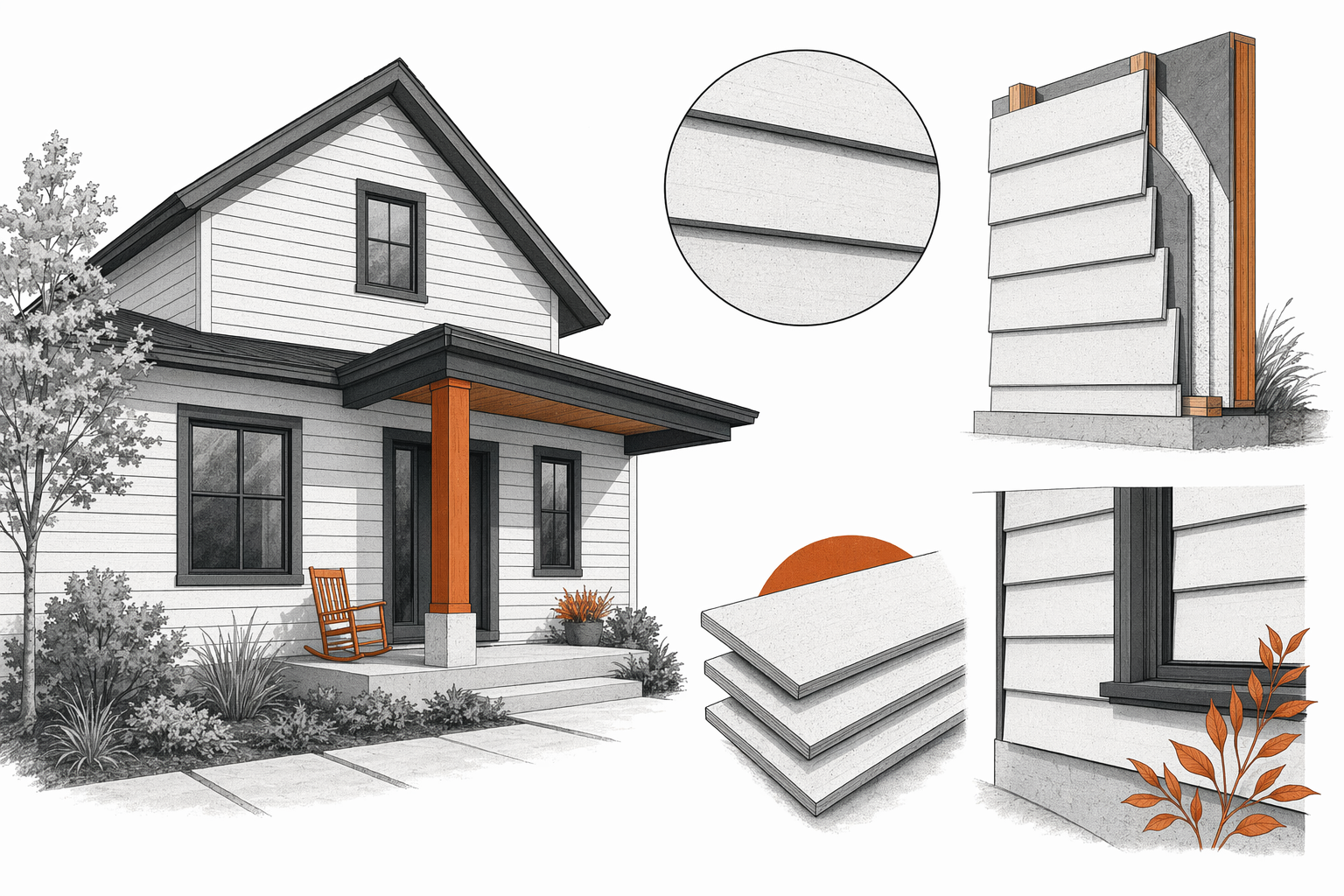
What fiber cement siding is
Fiber cement siding comes in several styles, including lap boards, vertical panels, and shake-style pieces. It is made to look like painted wood, but it is generally more durable and lower maintenance than natural wood.
This material is popular on homes that want a crisp, upscale appearance. It is heavier than vinyl and usually takes more labor to install, so it often costs more. The exact fit for your home depends on your climate, design goals, wall condition, and budget.
How fiber cement siding works on a home
Fiber cement protects the outside of the home from rain, sun, wind, and normal wear. The siding itself is part of the exterior cladding system, but it works best when it is installed together with flashing, trim, and a water-resistive barrier behind it.
It is usually factory-primed or factory-finished, depending on the product and color choice. Some homes use horizontal boards for a traditional look. Others use large panels or board-and-batten layouts for a more modern style.
Because the boards are rigid and heavy, installation needs careful cutting, fastening, spacing, and sealing details. This is one reason it is important to hire experienced installers and follow local code and permit rules.
How the job is usually done, step by step
- The contractor measures the home, reviews walls, trim, windows, and problem areas, and explains the written scope.
- If old siding is being removed, the crew takes it off and checks for damaged sheathing or moisture issues underneath.
- The wall surface is prepared. This can include small repairs, flashing updates, and installation of house wrap or another approved moisture barrier.
- Trim, starter details, and layout lines are set so the courses and panels stay straight.
- Fiber cement boards or panels are cut and fastened according to the manufacturer instructions and local code.
- Joints, transitions, corners, and penetrations are detailed carefully to help manage water.
- The crew finishes trim and touch-up items, cleans the site, and walks you through the completed work.
If you want more help comparing scope details, get matched with local contractors and ask each one to put materials, prep work, and cleanup in writing before any deposit.
Typical installed cost range
A typical installed cost for fiber cement siding is often about $7 to $15+ per square foot.
That is an estimate, not a quote or guarantee. The real price depends on home size and height, material style, local labor rates, removal of old siding, trim details, site access, wall repairs, and your area.
Single-story homes with simple walls are often easier and less expensive than tall homes with many corners, dormers, and custom trim. If old siding must be removed, or if hidden moisture damage is found, the price can rise.
For a wider look at siding pricing, see cost guides.
Typical timeline
Many fiber cement siding projects take about 1 to 3 weeks once work starts. Smaller, simple homes may move faster. Larger homes, bad weather, special order materials, or wall repairs can stretch the schedule.
The timeline also depends on whether old siding is being removed first and whether the crew finds damaged sheathing or trim. Ask the contractor what could delay the job and how change orders will be handled if hidden problems appear.
Pros and cons of fiber cement siding
What to ask, and how to verify the contractor
Before you sign, ask clear questions and get the answers in writing. You can also review contractor vetting tips before you choose.
Always hire a licensed, insured, and bonded siding contractor, and verify the license, insurance, and bond yourself. Ask for the full scope, materials, cleanup, payment schedule, and permit responsibility in writing before any deposit. Follow local permit and code rules.
Be careful with storm-chasers or anyone who pressures you to sign the same day.
Fiber cement siding is a strong, durable option that can look like painted wood. It usually costs more than vinyl, but many homeowners like the premium appearance and weather resistance. Prices and timelines vary, so compare written estimates and verify the contractor's license, insurance, and bond yourself.