How to vet a siding contractor
Hiring the right siding contractor can protect your home, your money, and your peace of mind. A good vetting process is not complicated, but it does take a little time. The goal is simple: hire a **licensed, insured, and bonded** contractor, verify that yourself, and get the full price and scope in writing before you pay a deposit.
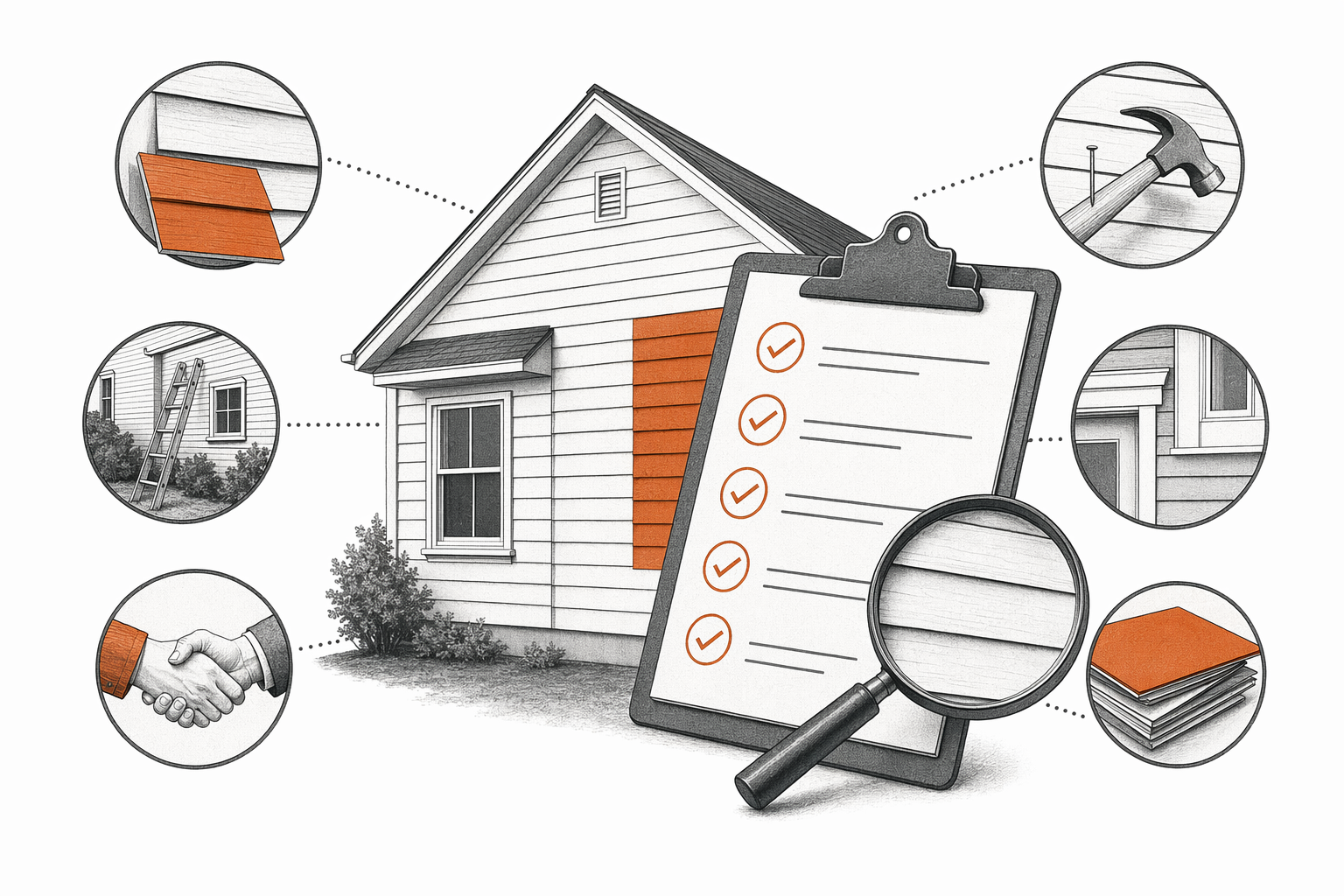
Why vetting matters before siding work starts
Siding is a major exterior project. The contractor you choose may handle tear-off, moisture barrier details, trim, flashing, cleanup, and permit coordination depending on your local rules and the job scope. If the wrong company does poor work, you may end up with leaks, damage, delays, or surprise charges.
That is why homeowners should slow down and check the basics first. Ask questions. Compare written estimates. Verify license, insurance, and bond details yourself. If someone pressures you to sign right away, that is a warning sign, especially after a storm.
If you are still early in the process, get matched with local siding contractors and compare options carefully. You can also review typical siding costs before you start asking for bids.
Key points to check before you hire
A trustworthy siding contractor should be clear, organized, and easy to verify. You do not need to be a construction expert. Focus on a few core items and do not skip the paperwork.
Start with legal and business basics. The contractor should be properly licensed if your state or local area requires it. They should also carry current liability insurance and workers' compensation coverage. If they say they are bonded, ask for proof of that too.
Then review how they communicate. Good contractors explain the scope in plain language, answer questions directly, and put important terms in writing. They do not avoid details. They do not make vague promises.
Finally, look for signs of consistency. A company with a stable business presence, a written process, and recent local references is usually safer than someone who appeared right after a storm and wants a signature today.
What to do: a simple vetting process
1. Make a short list of contractors. Try to compare at least three companies when possible. If you want help finding local options, SidingLedger is a free matching service that can connect you with contractors near you.
2. Ask each contractor the same core questions. Ask whether they are licensed, insured, and bonded. Ask how long they have worked in your area. Ask whether they handle siding only or many unrelated services. Ask what siding materials they recommend for your climate and home style.
3. Verify credentials yourself. Check the contractor's license with the right state or local agency if licensing applies in your area. Ask for certificates of insurance and confirm coverage is current. If they mention a bond, ask for bond information and verify it.
4. Get detailed written estimates. The estimate should describe the siding material, profile, trim, moisture barrier details if included, tear-off or side-over plan, cleanup, estimated timeline, and payment schedule. Any cost you discuss should be treated as an estimate, not a guarantee. The real price depends on home size and height, material, removal of old siding, site conditions, and your area.
5. Compare scope, not just price. One estimate may look cheaper because it leaves out old siding removal, trim replacement, permit fees, or disposal. Read line by line. If needed, use a checklist so you compare the same items across all bids.
6. Check references and past work. Ask for a few recent local jobs. When you speak with references, ask whether the crew showed up on time, kept the site clean, stayed near the written price, and fixed punch-list items.
7. Read the contract before paying a deposit. The contract should include the company name, job address, materials, scope, start and completion terms, payment schedule, warranty details, change-order process, and cleanup terms. Get price and scope in writing before any deposit.
8. Pause if anything feels off. High-pressure sales tactics, vague answers, missing paperwork, and requests for unusually large deposits are reasons to step back. For a deeper checklist, see this guide to vetting a siding contractor.
Common mistakes homeowners make
Next step: compare carefully and move forward with confidence
Vetting a siding contractor is really about reducing risk. You want a company that is properly qualified, easy to verify, and willing to put everything in writing. That protects you before work starts and gives you a clearer path if questions come up later.
If you are ready to take the next step, start by gathering a few written estimates and comparing them side by side. SidingLedger is a free service that helps homeowners connect with local siding contractors for that process. Before you choose, verify license, insurance, and bond details yourself, make sure the contract is complete, and stay alert for pressure tactics.
If you want help getting started, visit get matched.
Do not hire a siding contractor just because they seem friendly or cheap. Check their license, insurance, and bond yourself, get everything in writing, and do not let anyone pressure you to sign fast.