How to estimate your siding square footage
Measuring siding square footage does not have to be hard. A simple estimate can help you understand contractor pricing, compare bids, and plan your budget before you talk to local pros. This guide explains how wall area is usually measured, how gables and openings are handled, and why your final price is still only a **typical estimate** until a licensed contractor measures the home in person.
Start with a simple wall-area estimate
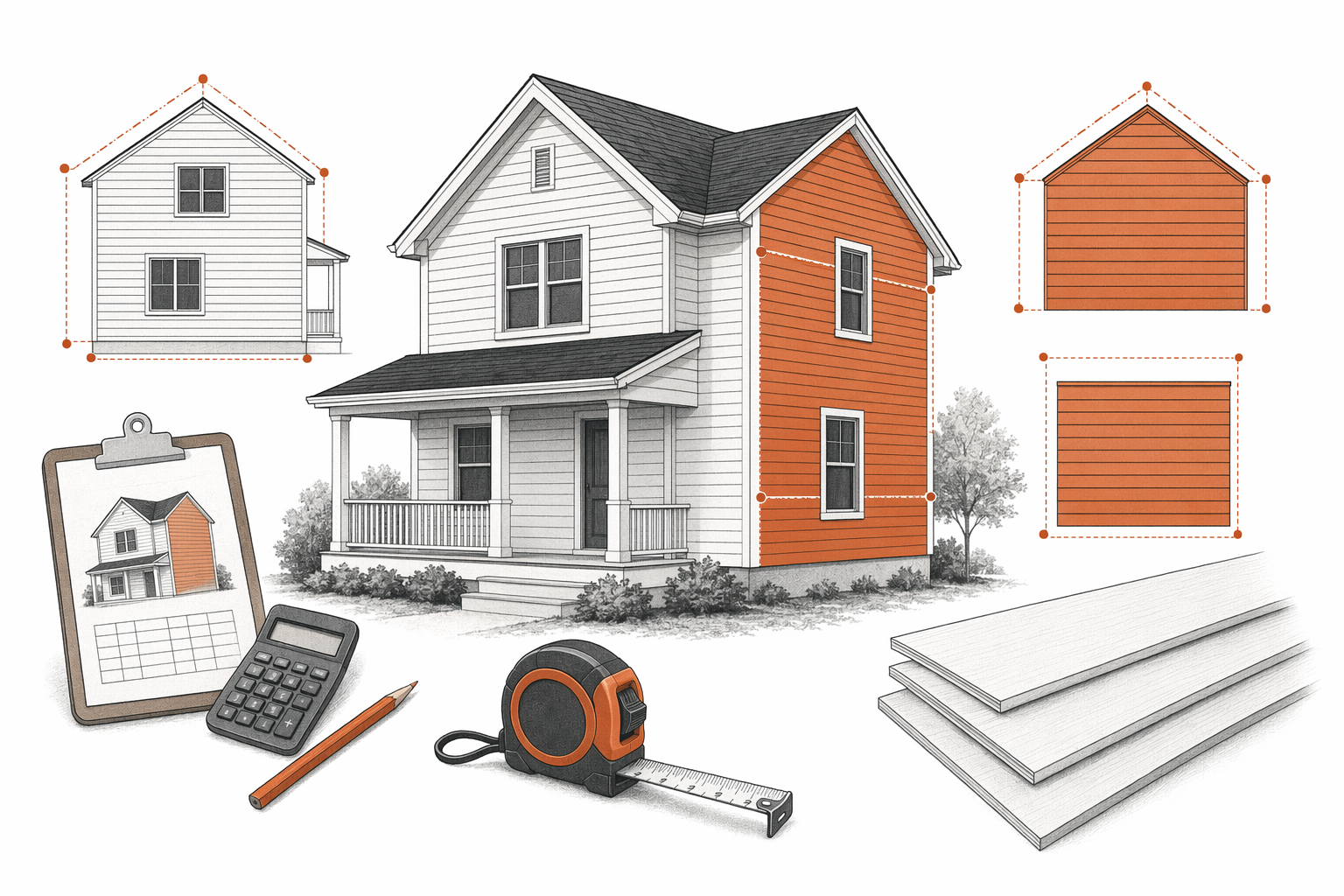
Most siding projects start with square footage of exterior wall area. Contractors usually measure the height and width of each wall section, then multiply those numbers to get square feet. After that, they add or adjust for areas like gables, trim details, and waste.
This is useful because many siding prices are discussed as a typical per-square-foot range. If you know your approximate wall area, you can better understand the numbers you see on cost guides and in contractor estimates.
Keep in mind: your own measurement is for planning only. The real project price depends on home size and height, siding material, tear-off of old siding, site conditions, trim details, and your area. A final scope should come from a licensed, insured, and bonded siding contractor who measures the house directly and follows local permit and code rules.
Key points to know before you measure
You do not need perfect math to get a useful starting number. The goal is to get close enough to compare estimates and ask better questions.
Some contractors measure the full wall area first and then subtract large openings like garage doors or many windows. Others may leave smaller openings in the total because those areas can be offset by waste, starter pieces, corner work, and trim cuts. That is one reason two estimates can look a little different even when both are reasonable.
If your home has dormers, bump-outs, tall peaks, or a steep lot, the job may take more labor than a simple one-story rectangle. So square footage helps, but it is not the whole story.
What to do: a simple step-by-step method
1. Walk around the house and sketch the exterior.
Make a basic drawing of each side of the home. It does not need to look nice. The goal is to break the exterior into easy shapes.
2. Measure the width of each wall section.
Use a tape measure, measuring wheel, or building plan if you have one. Write each number on your sketch.
3. Measure the wall height.
Measure from the bottom of the siding area to the top of the wall section. If the height changes, split it into smaller sections.
4. Calculate rectangles first.
For each main wall section, use width × height = square feet. Add all rectangle sections together.
5. Add gables and other triangular areas.
For a gable end, use width × height ÷ 2. Then add that number to your total. If your home has several peaks, measure each one separately.
6. Decide how to treat openings.
If you want a more refined estimate, subtract large openings such as a garage door or a wall of windows. For a quick planning number, some homeowners leave smaller windows and doors in the total. Just be consistent when you compare bids.
7. Add a waste allowance.
Most jobs need extra material for cuts, starter pieces, damaged pieces, and pattern matching. A simple home may need less waste. A home with many corners, peaks, and design details may need more.
8. Use the result with per-square-foot cost ranges.
Once you have an estimated wall area, you can compare it with typical siding cost ranges. Remember, this only gives you a planning range. The real price depends on material choice, removal of old siding, trim, moisture protection needs, home height, and local labor rates.
9. Get written estimates from qualified contractors.
Ask each contractor to list the material, removal work, trim or accessory work, cleanup, and warranty details in writing. Verify that the contractor is licensed, insured, and bonded yourself before signing anything or paying a deposit.
10. Use a free matching service if you want local options.
If you are ready to talk to pros, you can get matched with licensed, insured, and bonded siding contractors near you at no cost through SidingLedger. SidingLedger is a free matching service, not a contractor.
Common mistakes when estimating siding square footage
Next step: use your estimate to compare bids more confidently
A rough siding square footage estimate gives you a better starting point. It helps you spot whether a bid seems low, high, or incomplete. It also helps you ask better questions about material quantity, waste, trim, tear-off, and labor.
Still, the final project scope should come from a contractor who measures the house in person. Before you hire anyone, verify the company is licensed, insured, and bonded. Ask for the full scope and price in writing before any deposit. Make sure the contractor will follow local permit and code requirements.
If you want help finding local companies to quote the job, SidingLedger can help you get matched for free. You can also review more cost information as you plan your budget.
Measure each outside wall by width and height, then add the wall areas together. Add gables, think about waste, and use the total only as a rough planning number. A licensed, insured, and bonded siding contractor should do the final measurement and give you the scope in writing.