How Much Does New Siding Cost?
New siding is a big home project, so one of the first questions is simple: **what will it cost?** The honest answer is that siding prices vary a lot by material, labor, and the condition of your home. This guide gives typical price ranges in plain language so you can plan your budget and compare estimates with more confidence.
The short answer
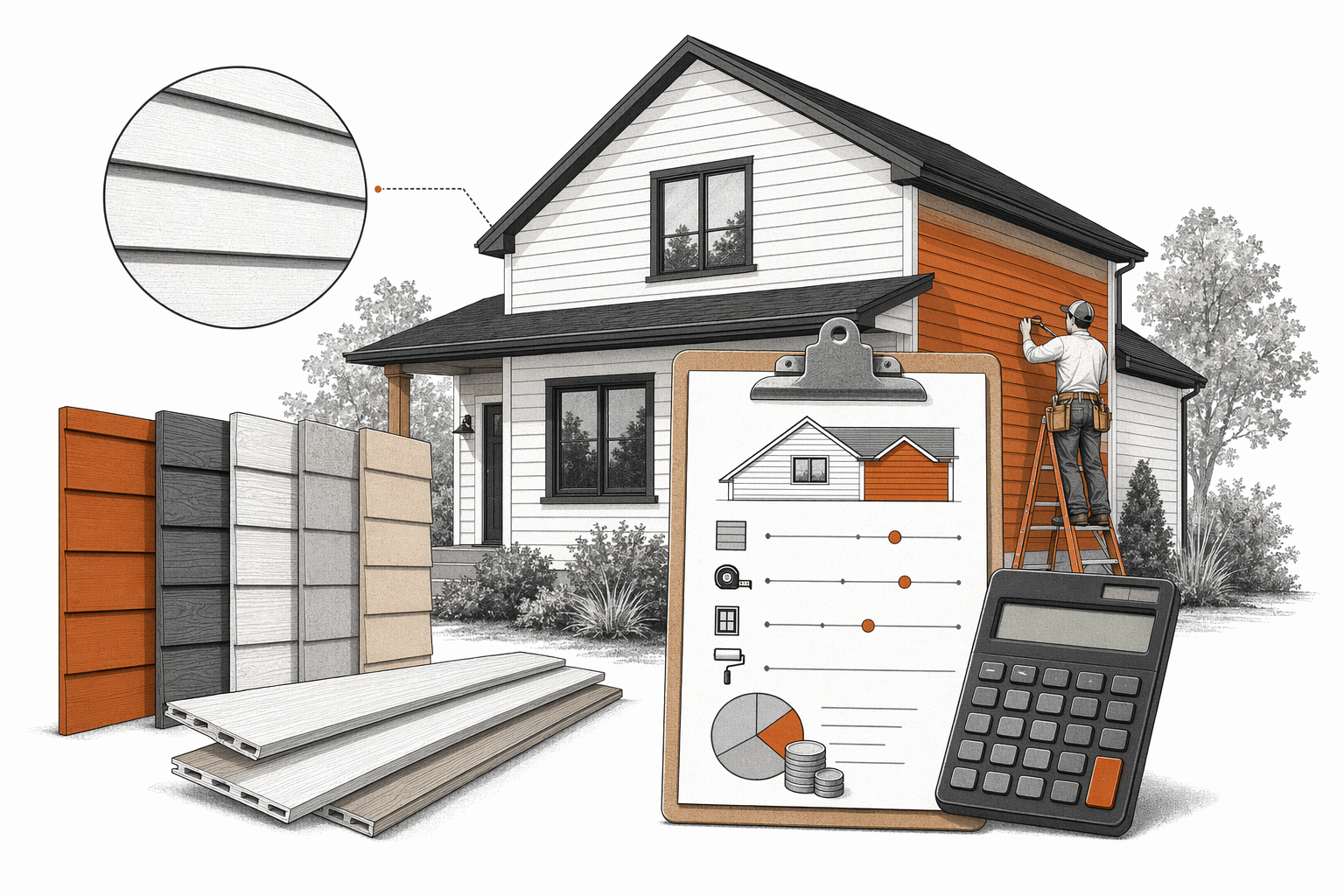
Typical new siding costs often fall around $5 to $18+ per square foot installed for many homes, but some projects can land below or above that range. The real price depends on your siding material, home size and height, removal of old siding, trim work, repairs underneath, site conditions, and your local labor market. These are estimates, not quotes or guarantees. For broader price examples, see siding costs.
What changes the price most
A few factors have the biggest effect on your total project cost.
Material choice matters a lot. Vinyl is often one of the lower-cost options. Engineered wood, metal, and fiber cement board usually cost more. Natural wood can also increase the budget, especially if you want a premium look or more upkeep.
Labor and home shape also matter. A simple one-story home is usually easier and faster than a tall two-story home with many corners, dormers, or hard-to-reach walls. More detail means more labor.
Removal and repairs can raise the price. If old siding must be removed, disposed of, or if there is hidden water damage underneath, the contractor may need to replace sheathing, trim, or moisture barrier before new siding goes on.
Your location affects labor, permit, and disposal costs. Prices can vary by city and state, and by the time of year.
What may be included in the estimate
Not every estimate includes the same work. That is why two prices can look very different.
A siding estimate may include removal of old siding, disposal, house wrap or moisture barrier, trim pieces, corner boards, soffit and fascia work, caulking, flashing, and cleanup. Another estimate may leave some of those items out.
Ask for a written scope that clearly lists materials, labor, prep work, trim, debris removal, permit responsibility, and warranty details. If one bid is much lower, check what is missing before you compare it to others.
You can also read how to vet a siding contractor before you choose who to hire.
How to budget smartly
It helps to think in ranges, not one exact number. Start with your home's approximate square footage of siding surface, then compare material options and likely labor complexity.
- Decide whether you want a lower upfront cost or a different look and maintenance level.
- Set aside room in your budget for possible hidden repairs after old siding comes off.
- Get multiple written estimates from licensed, insured, and bonded siding contractors.
- Verify the contractor's license, insurance, and bond yourself.
- Follow local permit and code requirements.
Be careful with door-to-door crews after storms. Storm-chasers may pressure you to sign right away or pay a large deposit before you have time to compare bids.
What to do next
If you are early in the process, start by learning what siding type fits your budget and climate. Then get a few written estimates so you can compare price and scope side by side.
SidingLedger is a free matching service that helps homeowners connect with local siding contractors. We do not install siding or give construction advice. If you want to take the next step, you can get matched with contractors near you and use the information here to ask better questions.
New siding usually costs a few dollars to over ten dollars per square foot, depending on the material and the home. Get written estimates, check what is included, and verify the contractor's license, insurance, and bond yourself.