Hail-Damaged Siding — What to Do First
Hail can leave marks that are easy to miss at first. If you think your siding was hit, the first step is to stay calm, take clear photos, and have a **licensed, insured, and bonded siding contractor** inspect the damage before you agree to any work.
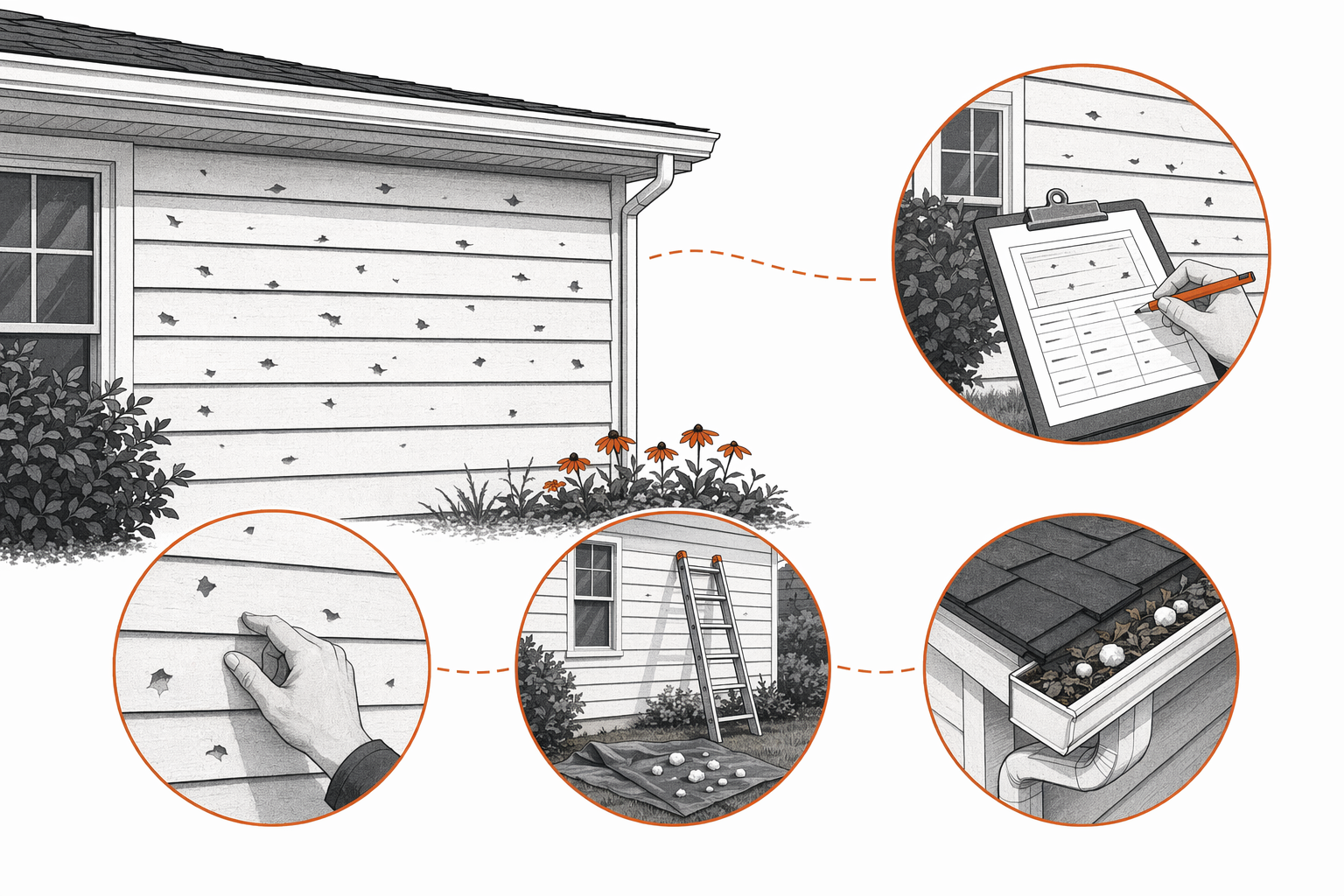
Start with a quick check
After a hailstorm, walk around your home when it is safe. Look for cracks, chips, dents, loose panels, broken edges, and pieces on the ground. Also check trim, soffit, fascia, and nearby items like gutters or downspouts, because damage in those areas can be a clue that the siding was hit too.
Do not feel pressured to sign anything right away. Some storm-chasing contractors go door to door after bad weather and push homeowners to commit on the spot. Take photos, write down the date of the storm, and slow the process down.
If you want to compare repair or replacement options, get matched with local contractors at no cost.
The short answer
What to do first: document the damage, prevent further problems if you safely can, and get a written inspection from a licensed, insured, and bonded siding contractor. Hail damage is not always obvious from the ground. Small cracks, impact marks, or loosened pieces can let water in later. The real cost is only an estimate until a contractor sees the home in person, and price depends on home size and height, material, removal of old siding, site conditions, and your area.
How to tell if hail damaged the siding
Some hail damage is easy to see. Some is subtle. Vinyl may show cracks, punctures, or loosened edges. Metal may show dents. Fiber cement or engineered wood may have chipped corners, broken edges, or impact marks.
Look for patterns. Damage often appears on the side of the house that faced the storm. You may also see matching signs on window trim, gutters, screens, or outdoor fixtures.
A few marks do not always mean full replacement is needed. In some cases, a contractor may recommend a repair or a partial replacement. In other cases, color fade or discontinued materials can make a clean match hard. You can learn more about checking companies before you hire at vet a siding contractor.
What not to do after a hailstorm
Do not let fear make the decision for you. Avoid anyone who says you must sign today, offers a very large discount for same-day approval, or asks for a big deposit before giving clear scope in writing.
Do not assume the lowest price is the best value. Ask for the material, tear-off or overlay plan, trim work, cleanup, warranty details, and estimated timeline in writing. Follow local permit and code requirements.
SidingLedger is a free matching service. We do not install siding, inspect homes, pull permits, or adjust insurance claims. We help homeowners compare local contractor options and plan the project with clearer information.
What to do next
- Take photos and notes as soon as it is safe.
- Make a list of the visible damage by side of house.
- Contact a few licensed, insured, and bonded siding contractors for written inspections and estimates.
- Compare material, scope, cleanup, warranty, and timeline — not just price.
- Review typical pricing so you know what questions to ask at costs.
- If you want help finding local companies, use free contractor matching.
Typical siding repair or replacement pricing is usually discussed in per-square-foot ranges, not guaranteed numbers. Your actual price depends on home size and height, material, removal of old siding, site conditions, and your area.
After hail, take photos and do not rush into a contract. Ask a licensed, insured, and bonded siding contractor for a written inspection, and verify their license, insurance, and bond yourself.