Stucco vs Fiber Cement Siding
Choosing between stucco and fiber cement siding depends on your climate, your budget, the look you want, and how much upkeep you can handle. Both can work well, but they are built differently and may fit some homes better than others.
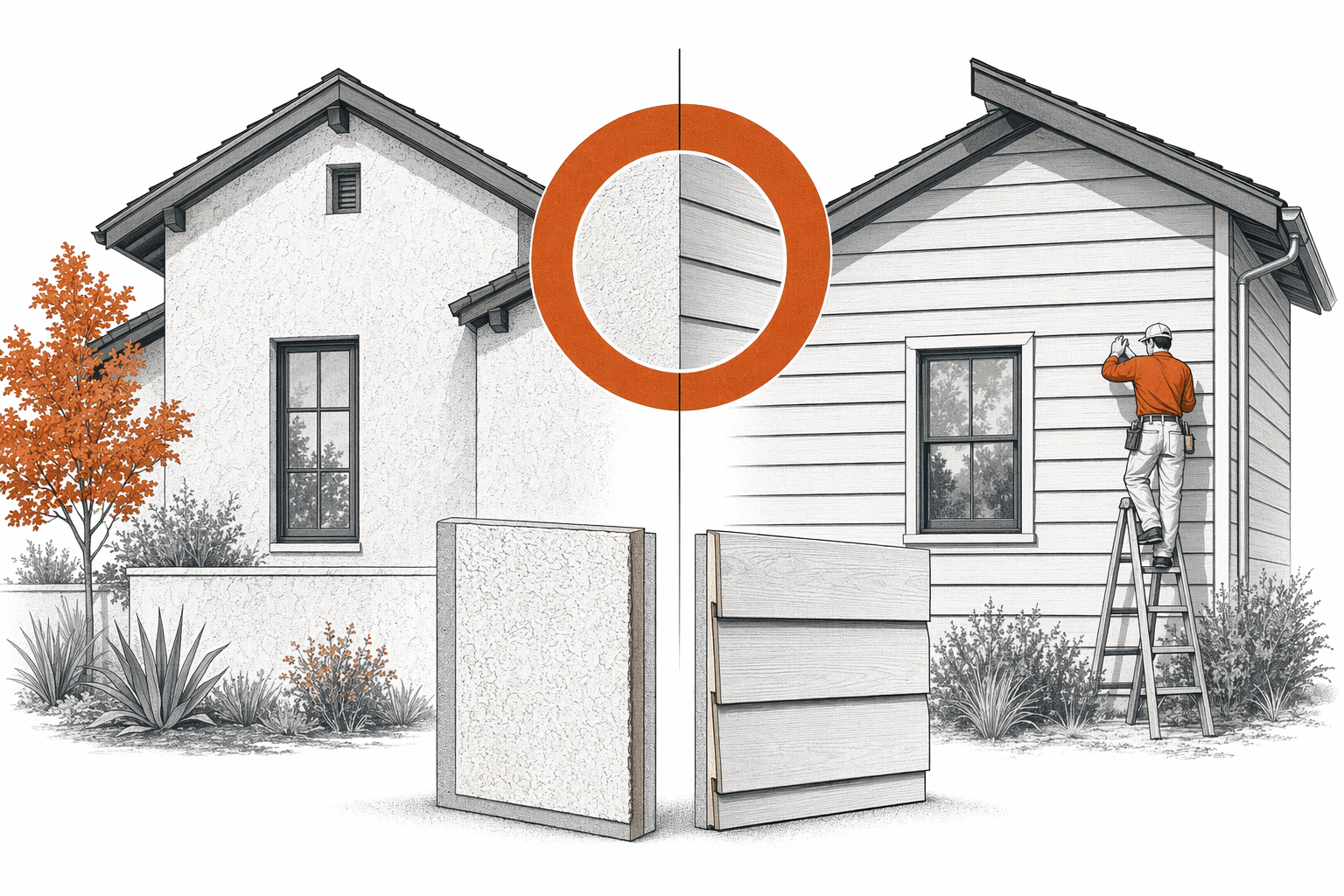
Intro
Stucco and fiber cement siding can both give a home a clean, durable exterior. But they are not the same type of system.
Stucco is a cement-based finish applied in layers. Fiber cement siding is made in factory-produced boards or panels that are installed piece by piece. If you are comparing the two, it helps to think about appearance, moisture performance, upkeep, and total project cost.
If you are still early in the process, you can review typical siding costs and later use free contractor matching to connect with licensed local pros.
The short answer
Fiber cement is often the easier choice for homeowners who want a siding product with a wide range of styles and more predictable repairs. Stucco can be a strong option in the right climate and on the right home design, especially where stucco is already common. The better pick depends on your area, wall design, moisture exposure, and installation quality. Real pricing is a typical estimate only, not a quote. Your actual cost depends on home size and height, material and style, removal of old siding, site conditions, and your local market.
Details
How they differ in look and construction
Stucco creates a more seamless, solid-looking exterior. It is common on certain home styles and can give a smooth or textured finish. Fiber cement usually comes as lap boards, panels, or shake-style pieces. It can mimic wood grain or provide a more simple, modern look.
Because the systems are different, repairs are different too. Small stucco cracks may be patchable, but matching older texture and color can be hard. Fiber cement damage may sometimes be limited to a few boards or sections, though paint and color matching can still take effort.
If you want a home with strong trim lines, lap siding, or board-and-batten style, fiber cement usually gives more design flexibility.
Durability, moisture, and maintenance
Both materials can last a long time when installed correctly and maintained. The key phrase is installed correctly.
Stucco can perform well, but moisture management matters a lot. If water gets behind it and the wall system is not detailed well, problems can become expensive. In some climates and wall assemblies, stucco may need extra care and careful flashing details around windows, doors, and penetrations.
Fiber cement is also durable, but it still needs proper clearances, flashing, and moisture control. It is not a waterproof system by itself. It may need repainting over time, depending on the product, finish, climate, and sun exposure.
In general:
- Stucco may fit dry climates and certain architectural styles very well.
- Fiber cement may be easier for homeowners who want traditional siding profiles.
- Both need skilled installation and local code compliance.
- Neither material should be chosen on appearance alone.
Before hiring anyone, read how to vet a siding contractor and verify that the contractor is licensed, insured, and bonded for your area.
Typical cost and project fit
Stucco and fiber cement are both usually mid-to-higher cost exterior options compared with simpler vinyl siding jobs. Typical installed price ranges often vary widely by region and job complexity.
As a very general guide, homeowners may see:
- Stucco: about $8 to $15+ per square foot
- Fiber cement: about $7 to $14+ per square foot
These are typical estimates, not bids or guarantees. The real price depends on home size and height, tear-off of old materials, trim work, wall condition, moisture repairs, site access, and local labor rates.
A stucco project may make more sense if you already have stucco and want to keep a similar look. Fiber cement may make more sense if you want plank or panel siding, easier section replacement, or a style that looks more like painted wood.
What to do next
Start by deciding what matters most: look, maintenance, climate fit, or budget. Then get written estimates from more than one contractor so you can compare scope, not just price.
Use this checklist:
1. Ask each contractor which material fits your climate and why.
2. Request the full scope in writing, including removal, flashing, trim, and moisture barrier details.
3. Verify that the contractor is licensed, insured, and bonded.
4. Confirm who handles permits and that the work will follow local code.
5. Be careful with high-pressure sales, especially after storms. Watch for storm-chaser contractors to avoid.
If you want help finding local contractors, use free contractor matching. SidingLedger is a free matching service, not a contractor, and homeowners should always verify credentials themselves before signing anything or paying a deposit.
Stucco is a layered cement finish. Fiber cement is made from factory boards or panels, and many homeowners choose based on climate, appearance, maintenance, and cost.