Storm-Chaser Contractors and How to Avoid Them
After a storm, many homeowners feel pressure to act fast. That is when **storm-chaser contractors** often appear. This guide explains what they are, how to spot warning signs, and how to protect yourself while planning a siding repair or replacement.
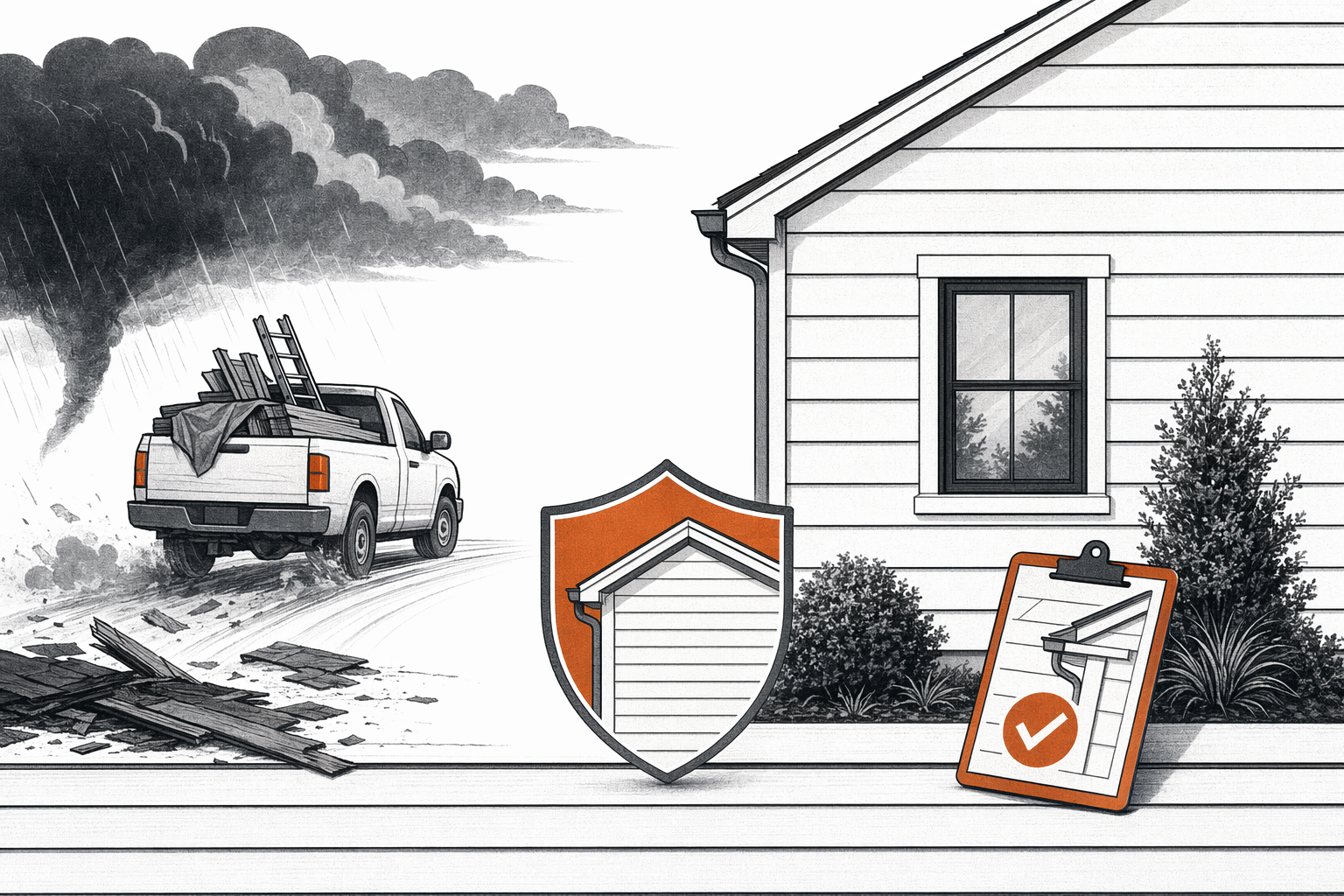
What is a storm-chaser contractor?
A storm-chaser contractor is usually a company or sales crew that moves into an area right after hail, wind, or other storm damage. They may go door to door, call repeatedly, or say they are already working "just down the street." Some may do acceptable work, but many use high-pressure sales tactics, vague paperwork, or promises that sound too good to be true.
The biggest risk is not just price. It is signing a contract too fast, before you verify the company, understand the scope, and follow local permit and code rules.
The short answer
Avoid storm-chasers by slowing down and verifying everything. Do not sign on the spot. Hire only siding contractors who are licensed, insured, and bonded when required in your area, and verify the license, insurance, and bond yourself. Get the full price and scope in writing before any deposit. Compare more than one estimate, review typical siding costs, and be extra careful with anyone who pressures you right after a storm.
Common warning signs after a storm
Storm-chasers often use urgency to make homeowners feel they must decide immediately. That is the main pattern to watch for.
Other warning signs include:
- They knock on your door and say you must sign today.
- They offer a "special storm deal" that disappears if you wait.
- They say they can start without clear paperwork.
- They avoid giving a local business address.
- They want a large deposit before materials, schedule, and scope are clear.
- They cannot clearly show proof of license, insurance, or bond.
- They ask you to trust them instead of checking reviews, references, and documents.
- They promise to handle everything while staying vague about permits and code.
A careful homeowner should treat pressure as a red flag. A good contractor may be busy after a storm, but they should still give you time to read the contract and ask questions.
How to protect yourself before you sign
Use a simple step-by-step process.
- Get more than one estimate. Prices are usually given as typical per-square-foot ranges, and the real cost depends on home size and height, siding material, removal of old siding, site conditions, and your area.
- Verify credentials yourself. Confirm the contractor is licensed, insured, and bonded if required locally.
- Read the contract carefully. Make sure it lists materials, removal, trim, cleanup, timeline, payment schedule, and warranty details.
- Check permit responsibility. Follow local permit and code rules. Do not assume someone else handled it unless it is clearly written.
- Avoid big upfront payments. Get the price and scope in writing before any deposit.
- Take your time. If the company gets angry because you want to review documents, walk away.
If you are not sure what to ask, read how to vet a siding contractor before you agree to anything.
Why storm damage makes homeowners vulnerable
After wind or hail, siding problems can feel urgent. You may worry about water, appearance, noise, or future damage. That stress can make a fast promise sound safe.
But storm-related siding work still needs the same careful checks as any other project. A low number on day one may grow later if the scope was incomplete. A fast promise may also hide poor materials, rushed labor, or missing permit steps.
If you think your home has storm damage, slow the process down enough to compare options, document what you see, and speak only with contractors you have checked. SidingLedger can help you get matched with local contractors so you can compare your options more calmly.
What to do next
If someone came to your door after a storm, do not panic and do not sign because of pressure.
Start here:
- Write down what the salesperson said.
- Save any flyer, business card, or contract.
- Take photos of visible siding damage from the ground if you can do so safely.
- Compare written estimates.
- Verify license, insurance, and bond yourself.
- Follow local permit and code requirements.
If you want help starting the process, use SidingLedger's free matching service to connect with local siding contractors and compare written estimates. You can also review typical siding cost ranges before making a decision.
After a storm, some contractors try to rush homeowners into signing. Slow down, verify credentials yourself, and get the full job in writing before you pay a deposit.