Trim, Soffit, and Fascia — The Parts That Matter
Trim, soffit, and fascia may look like small parts of a siding job, but they do a lot of important work. They help seal edges, protect roof and wall areas from water and pests, and give the outside of the home a clean, finished look.
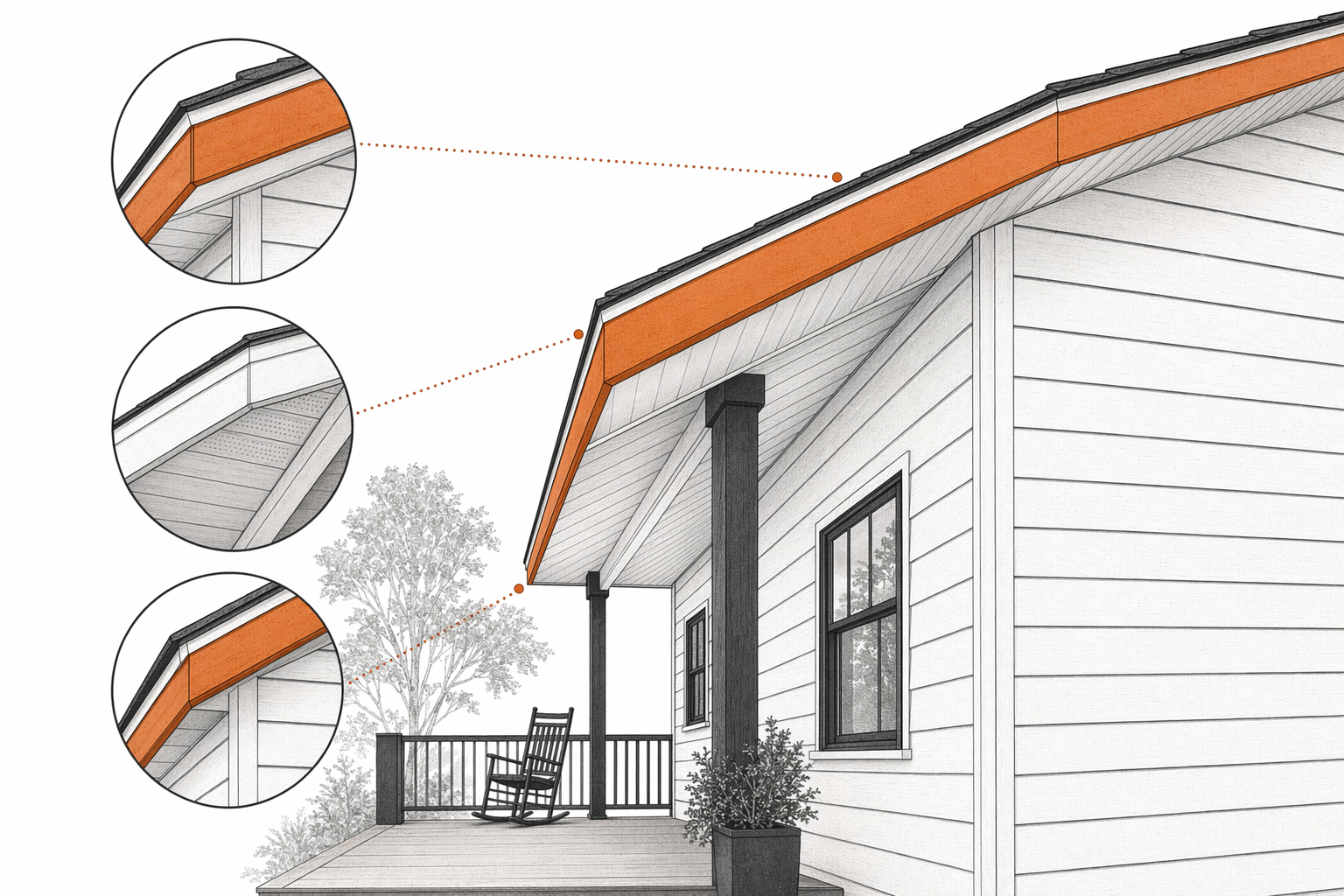
Intro
When homeowners plan new siding, they often focus on the main wall material first. But trim, soffit, and fascia also matter. If these parts are old, damaged, or poorly installed, they can affect how the whole project looks and how well the home is protected.
If you are comparing siding projects, ask whether these parts are included in the scope. A full exterior plan often works better when the siding, trim, and roof-edge details are considered together.
The short answer
Trim covers and finishes edges around corners, doors, and windows. Soffit is the material under the roof overhang. Fascia is the board along the roof edge where gutters are often attached. These parts matter because they help manage water, allow ventilation in some homes, block pests from entering, and make the siding job look complete. If they are rotted, bent, cracked, or missing, a licensed siding contractor may recommend repair or replacement during a siding project.
Details: What each part does
Trim creates clean transitions. It is often used around windows, doors, corners, and where siding meets other materials. Good trim work can improve appearance and help close gaps that let in water or air.
Soffit covers the underside of the eaves. In many homes, soffit panels include ventilation openings that help air move through the attic. That airflow can help with moisture control, but the right approach depends on the home design and local code.
Fascia sits at the roof edge and helps finish the perimeter of the roofline. It can support gutters and help protect exposed roof framing from weather. If fascia is soft, stained, or peeling, it may be a sign that water has been getting where it should not.
You can learn more about related exterior parts in trim and soffit fascia.
Details: Why these parts matter during a siding project
A siding replacement is often the best time to check these areas because crews already work around edges, rooflines, and wall transitions. If trim, soffit, or fascia is left in bad shape, the new siding may not perform or look as well as expected.
Common reasons contractors bring up these parts during siding work:
- Water damage near roof edges or around windows and doors
- Peeling paint, rot, warping, or insect damage
- Loose gutters pulling on weak fascia
- Poor ventilation or blocked soffit openings
- Mismatched old trim next to new siding
Sometimes only small sections need replacement. In other cases, wider repair makes more sense. The right scope depends on the condition of the home, the siding material, removal of old siding, site conditions, and your area.
Details: Materials, costs, and contractor questions
Trim, soffit, and fascia can come in different materials, such as vinyl, aluminum, engineered wood, wood, or fiber cement board, depending on the home and project goals. Some options need more upkeep than others. Some are easier to match with existing siding.
Costs vary widely. As part of a full siding job, these items may be priced separately or bundled into the estimate. Typical siding project pricing is often discussed in per-square-foot ranges, but the real price depends on home size and height, material choice, removal of old siding, site conditions, and area. For general planning help, see siding costs.
Before you sign anything, ask the contractor:
1. Is trim, soffit, and fascia included in the written scope?
2. Are you replacing damaged sections or covering over them?
3. Will you check for hidden rot after old materials are removed?
4. Are ventilation details and permits handled according to local code?
5. What product and color will be used on each part?
Always hire licensed, insured, and bonded siding contractors. Verify the license, insurance, and bond yourself. Get the price, materials, and scope in writing before any deposit. You can use this guide to vet a siding contractor.
What to do next
Walk around your home and look at the roof edges, eaves, corners, and areas around windows and doors. Make notes about peeling paint, soft spots, stains, sagging gutters, holes, or missing pieces.
Then compare written estimates carefully. Make sure each estimate clearly says whether trim, soffit, and fascia are included, repaired, or replaced. Be careful with anyone who pressures you to sign right away, especially after a storm. Storm-chasers often push fast decisions.
If you want help finding local contractors, you can use free contractor matching. SidingLedger is a free service that helps homeowners connect with licensed, insured, and bonded siding contractors near them.
Trim finishes the edges of the siding. Soffit and fascia help protect the roof edge and can help with airflow and water control.