Siding Repair vs Full Replacement
Not every siding problem means you need to replace the whole exterior. In some cases, a small repair can make sense. In other cases, full replacement is the safer and more cost-effective path. This guide explains how homeowners often compare siding repair vs full replacement in plain language.
Short intro
If your siding is cracked, loose, rotting, warped, or faded, it is normal to ask one big question: Should I repair it, or replace it all? The answer depends on how much damage you have, the age of the siding, whether matching is possible, and how long you want the fix to last.
SidingLedger is a free matching service. We help homeowners plan and connect with licensed, insured, and bonded siding contractors near them. We do not install siding or inspect homes. If you want a quick overview of typical pricing, see siding costs.
The short answer
Repair is often the better choice when the damage is small, isolated, and the rest of the siding is still in good shape. Full replacement is often the better choice when damage is widespread, moisture may be getting behind the siding, the material is near the end of its life, or matching the old siding is difficult. The real price depends on home size and height, material, removal of old siding, site conditions, and your area. Always get written estimates from licensed, insured, and bonded contractors, and verify their license, insurance, and bond yourself before you sign anything.
When a siding repair may make sense
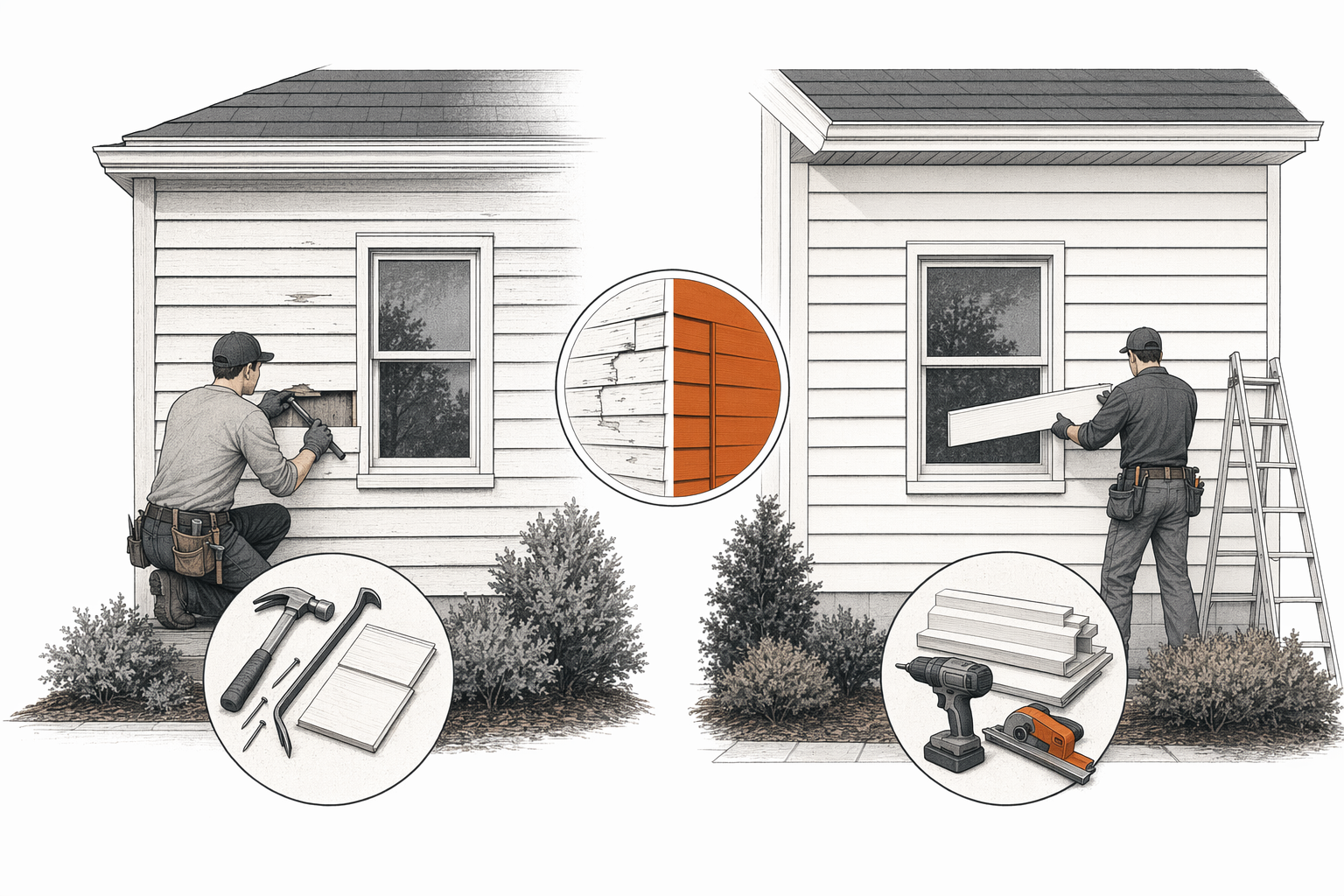
A repair can be the practical option when the problem is limited to one area. For example, maybe a few panels came loose in wind, one wall has minor impact damage, or a small section has moisture damage that was caught early.
Repair is usually worth asking about when:
- The damage is only in a small area
- The siding is still fairly young
- The color and profile can still be matched closely
- There is no major rot, mold, or hidden wall damage
- You need a lower upfront cost
Keep in mind that a repair is not always "cheap" if matching takes time or if the damaged section is hard to reach. A second-story repair, custom trim work, or hidden water damage can raise the total. If you are unsure how to compare scope and pricing, get matched with local contractors and ask each one to explain whether repair is a short-term fix or a long-term solution.
When full replacement may be the smarter choice
Full replacement may cost more upfront, but sometimes it prevents repeat repairs and bigger problems later. If the siding has failed in many places, water may already be getting behind it. In that case, replacing all of it may be the cleaner path.
Full replacement is often considered when:
- Damage is spread across many walls
- The siding is old or near the end of its expected life
- You see repeated warping, cracking, rot, or loose pieces
- Matching the old material is difficult or impossible
- You want a more consistent look on the whole house
- You are already planning other exterior work
Typical siding project costs are usually discussed in per-square-foot ranges, not fixed prices. Your actual total depends on the material, home size and height, tear-off needs, trim details, and local labor conditions. For a deeper breakdown, see how much siding costs.
Key things to ask before you decide
Before you choose repair or replacement, ask each contractor the same questions so you can compare the answers clearly.
- Is the damage only on the surface, or is there moisture behind the siding?
- Can the existing siding be matched in color and profile?
- How long is a repair likely to last compared with replacement?
- What is included in the written scope: removal, trim, flashing, cleanup, and disposal?
- Will permits be needed in my area?
Always hire licensed, insured, and bonded siding contractors. Verify the license, insurance, and bond yourself. Get price and scope in writing before any deposit. Be careful with storm-chasers who knock on doors and pressure you to sign the same day. For help screening companies, read how to vet a siding contractor.
What to do next
Start by listing the problems you can see: cracked panels, soft spots, gaps, rot, bubbling paint, or loose sections. Take photos from the ground and write down when you first noticed the issue.
Then get written estimates from licensed, insured, and bonded siding contractors. Ask each one to price both options if possible: repair and full replacement. That gives you a clearer side-by-side comparison of cost, appearance, and expected lifespan.
If you want help finding local companies, SidingLedger can help you get matched for free. No matter which option you choose, follow local permit and code rules, and do not feel pressured to sign on the spot.
If only a small part of your siding is damaged, a repair may work. If damage is spread out, old, or hard to match, full replacement may be the better choice.