Partial vs Full Siding Replacement
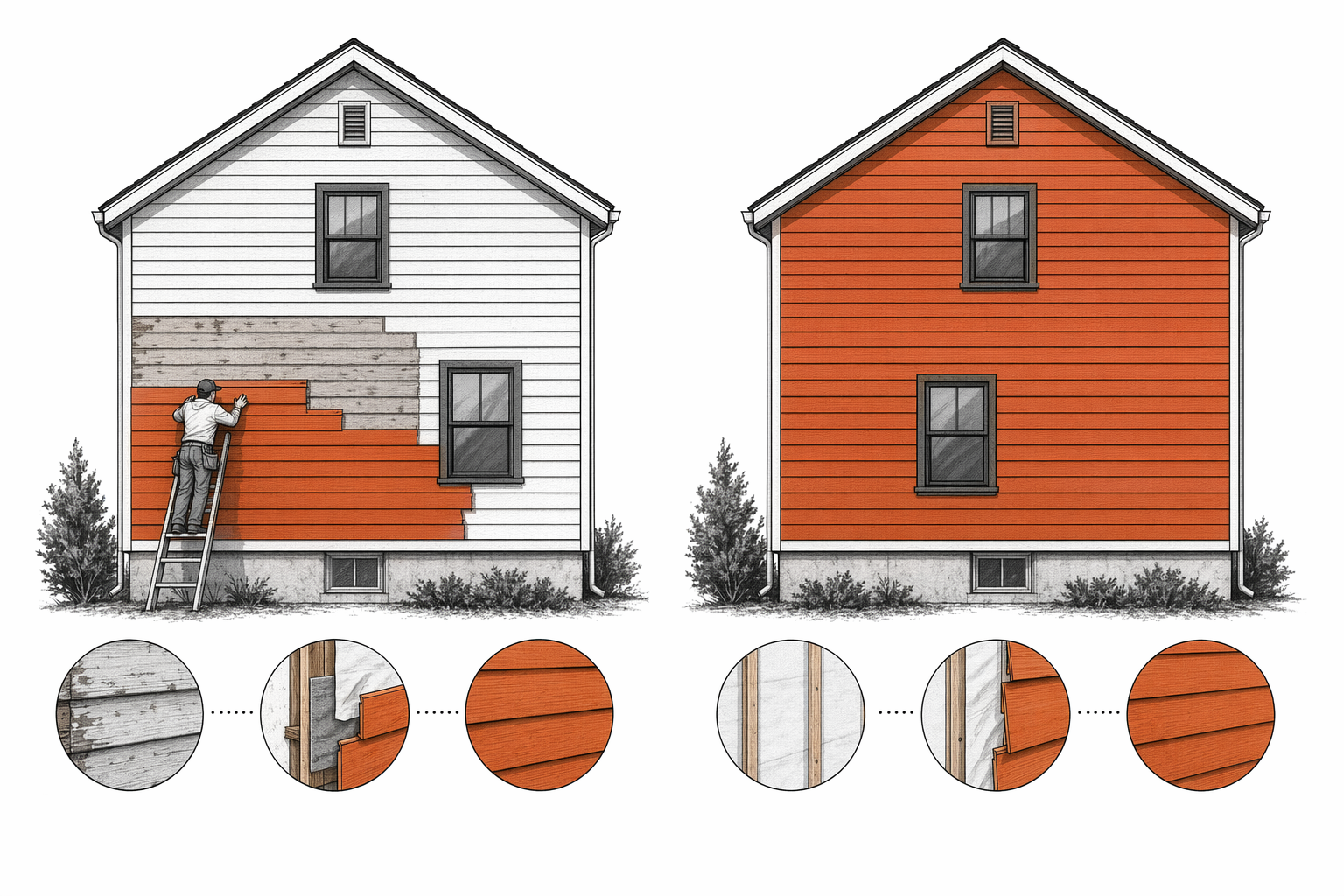
If your siding is damaged or worn out, you may wonder if you can replace just one wall or one section instead of the whole house. In many cases, **partial siding replacement is possible**, but it is not always the best long-term choice.
Intro
Homeowners often ask this question after storm damage, water problems, or when one side of the house looks much worse than the others. The right choice depends on the condition of the rest of the siding, how easy it is to match the old material, and your budget.
A partial replacement can cost less upfront. A full replacement can give a more even look and may solve hidden problems in more than one area. If you are still comparing options, this helps to review typical siding costs before you talk with contractors.
The short answer
Choose partial siding replacement when the damage is limited, the rest of the siding is still in good shape, and a close match is available. Choose full siding replacement when the siding is old, failing in multiple areas, or hard to match. The real price depends on home size and height, material, removal of old siding, site conditions, and your area. Any numbers you see online are only typical per-square-foot estimates, not quotes.
When partial replacement makes sense
Partial replacement may be a practical choice if only one area is damaged. This can happen after a leak, impact damage, or a storm that hit one side of the home.
It usually works best when your current siding is still being made, or when a contractor can find a close match in color, profile, and texture. Even then, older siding may have faded in the sun, so the new section may still look newer.
A licensed contractor can also check whether the damage is truly limited to one area. Sometimes what looks like a small problem on the outside hides moisture damage underneath.
When full replacement is the better choice
Full replacement often makes more sense when the siding is near the end of its life, has problems on several sides, or shows repeated issues such as cracking, warping, rot, loose panels, or moisture trouble.
A full job can create a more uniform look around the house. It may also give the contractor a chance to find and address broader exterior issues, like damaged sheathing, flashing concerns, or missing moisture protection, depending on what is uncovered during the project.
If matching is difficult, full replacement may actually save frustration. A patchwork look can affect curb appeal, and multiple small repairs over time can add up.
How to compare the two options
Before you decide, ask at least two or three licensed, insured, and bonded siding contractors to explain both options in writing. Ask them to show the scope, material type, what will be removed, what happens if hidden damage is found, and whether the new section is expected to match the old siding.
Read each estimate carefully. Make sure the scope is clear before you pay any deposit. You can use this guide on how to vet a siding contractor and then request help through free contractor matching.
Be careful with storm-chasers who knock on doors and pressure you to sign the same day. Take your time. Verify the contractor's license, insurance, and bond yourself, and follow local permit and code rules.
What to do next
- Walk around your home and note which walls have damage, fading, or loose siding.
- Take clear photos of problem areas.
- Get written estimates for partial and full replacement.
- Compare appearance, expected lifespan, and total scope — not just the lowest price.
- Hire a licensed, insured, and bonded siding contractor only after you verify their credentials yourself.
If you are unsure where to start, SidingLedger can help you plan your project and get matched, at no cost, with local contractors for your siding project. We are a free matching service, not a siding installer or construction company.
If only a small part of your siding is damaged, you may be able to replace just that section. If the siding is old or damaged in many places, replacing all of it may be the better long-term choice.