How Long Does Each Type of Siding Last?
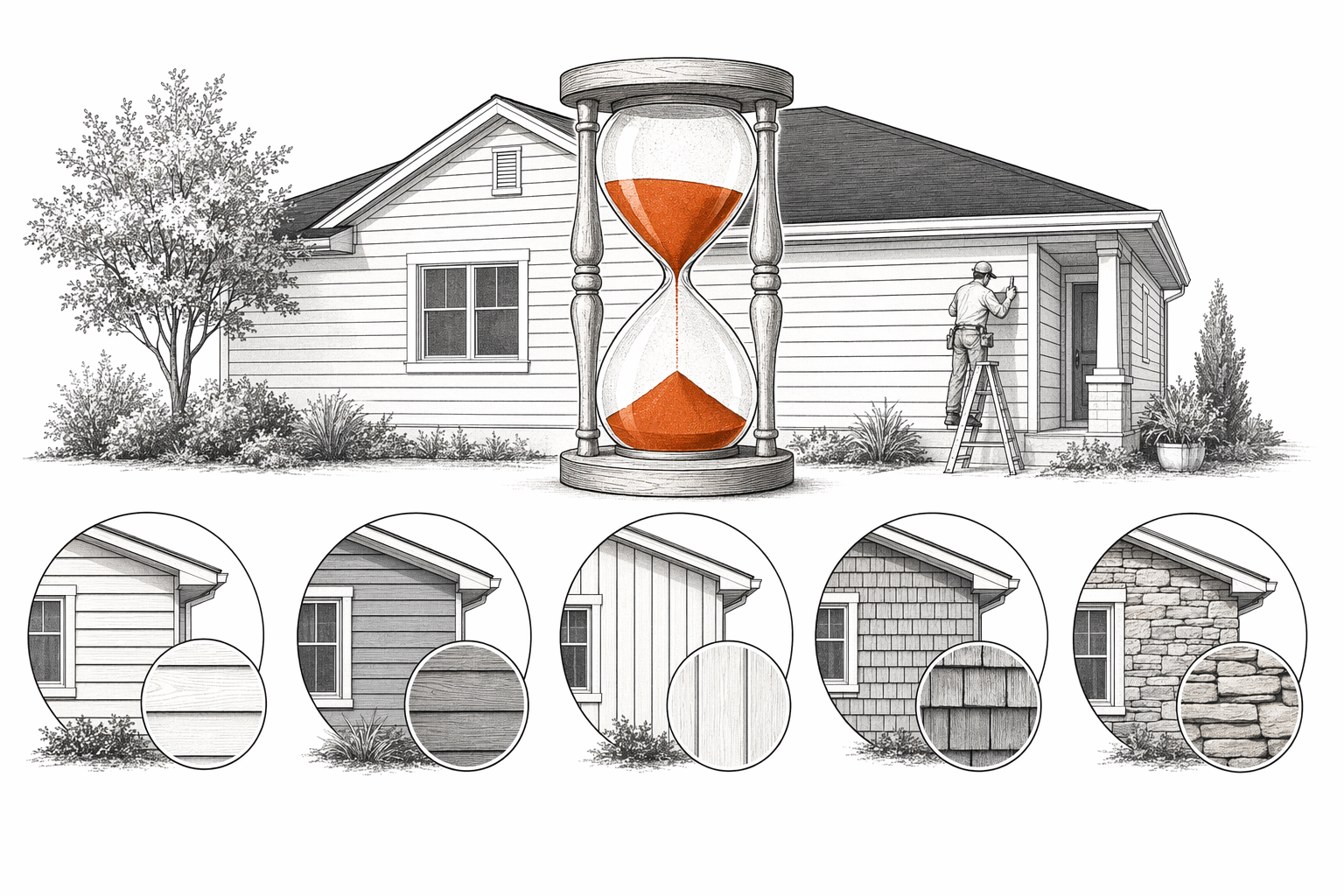
Siding does not last the same amount of time on every home. Material matters, but so do sun, rain, freeze-thaw weather, salt air, installation quality, maintenance, and whether water gets behind the panels or boards.
A quick intro
If you are planning a siding project, it helps to know the typical lifespan of each material before you compare prices. A lower-cost option may not last as long, and a longer-lasting option may need more upfront money.
This guide gives typical ranges, not guarantees. Real life can be shorter or longer depending on home size and height, weather, maintenance, site conditions, and the quality of the install. If you are still comparing materials, our cost guides can help you build a rough budget.
The short answer
In general, vinyl siding often lasts about 20 to 40 years, fiber cement about 30 to 50 years, engineered wood about 20 to 30 years, traditional wood about 20 to 40 years with regular upkeep, metal siding about 30 to 50 years, and stucco can last 50 years or more in the right conditions. These are typical lifespan ranges, not promises. Poor installation, trapped moisture, storm damage, and skipped maintenance can shorten the life of almost any siding.
Typical lifespan by siding type
Here are common lifespan ranges homeowners often see:
- Vinyl siding: about 20 to 40 years. It is popular because it is lower maintenance, but strong sun, impact, and wind damage can shorten its life.
- Fiber cement: about 30 to 50 years. It is known for durability, but it still depends on proper installation, flashing, caulking, and paint upkeep where needed.
- Engineered wood: about 20 to 30 years. It can perform well when installed and maintained correctly, but moisture management is very important.
- Traditional wood siding: about 20 to 40 years. With consistent painting or sealing and quick repair of damaged areas, some wood siding can last longer.
- Metal siding: about 30 to 50 years. It can hold up well, but dents, scratches, corrosion near the coast, and installation details matter.
- Stucco siding: often 50 years or more. Its life depends heavily on climate, moisture control, and whether cracks are repaired before water gets in.
What affects how long siding lasts?
The material is only part of the story. Installation quality is one of the biggest factors. If water gets behind the siding because of poor flashing, bad trim work, or missing moisture protection, the siding system may fail much earlier.
Climate also matters. Homes in areas with hail, hurricanes, high heat, heavy rain, snow, or salty coastal air may see shorter lifespans. A two-story home or a home with lots of sun exposure can also age unevenly.
Maintenance matters too. Vinyl may need less upkeep than wood, but every siding type benefits from cleaning, checking gaps and seams, and fixing damage early. If you notice swelling, cracking, loose panels, rot, mold, peeling paint, or repeated leaks, it may be time to ask a contractor whether repair or replacement makes more sense.
How to tell whether your siding is near the end
Age alone does not decide everything. A 15-year-old wall with trapped moisture may be in worse shape than a 30-year-old wall that was installed well and maintained carefully.
Look for signs like these:
- Cracks, chips, holes, or warping
- Loose or missing pieces after wind
- Soft spots, rot, or insect damage on wood-based products
- Faded areas that come with brittleness, not just color change
- Caulk joints that keep failing
- Water stains inside the home near exterior walls
- Higher concern about moisture around windows, doors, trim, soffit, or corners
If several of these signs are showing up at the same time, it is smart to get written opinions from licensed, insured, and bonded siding contractors. Be sure to verify the license, insurance, and bond yourself and compare scope carefully. Our guide on how to vet a siding contractor can help.
What to do next
Start by writing down your siding type, approximate age, problem areas, and whether damage is cosmetic or may involve moisture. Then get a few written estimates from licensed, insured, and bonded siding contractors near you. Ask what they recommend, why, what is included, and whether old siding removal, trim, house wrap, and disposal are part of the price.
Be careful with door-to-door sales after storms. Storm-chasers may pressure you to sign the same day. Slow down, verify credentials yourself, and get price and scope in writing before any deposit. Follow local permit and code rules.
If you want help finding contractors to compare, you can use SidingLedger to get matched with local siding contractors at no cost.
Different siding materials have different typical lifespans. Good installation, weather, and maintenance can make siding last longer or fail sooner.