Do I Need a Permit to Replace Siding?
Replacing siding **may require a permit**, but it depends on your city, county, and the exact work being done. Some places require a permit for almost any full siding replacement, while others may only require one if you are changing wall layers, repairing damage underneath, or working on a historic home.
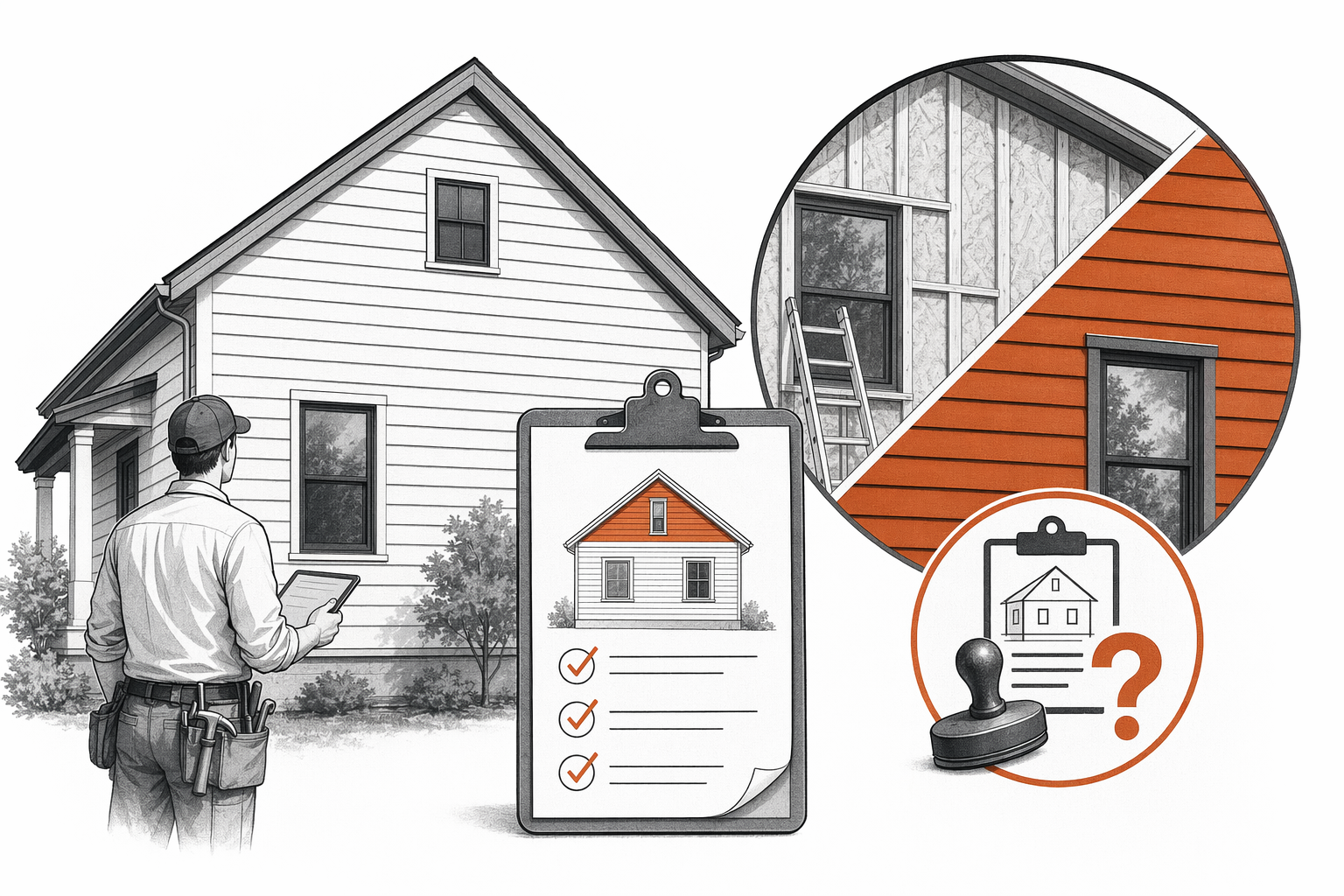
A short intro
If you are planning new siding, one of the first questions is simple: Do I need a permit? The honest answer is that many homeowners do, but not always.
Permit rules are local. They can change from one town to the next. That is why it is smart to check early, before materials are ordered or old siding is removed.
If you are still planning your project, you can review typical siding costs and get free help finding local contractors through contractor matching.
The short answer
Maybe. In many areas, a permit is required for full siding replacement because the work affects the outside of the home and may involve weather barrier, flashing, trim, insulation, or repairs to damaged sheathing underneath. In some places, small repairs may not need a permit. The only reliable answer comes from your local building department, and your contractor should also know the usual local rules.
When a permit is more likely
A permit is more likely when the project is more than a small repair.
Common examples include:
- Replacing siding on most or all of the house
- Removing old siding down to the wall surface
- Adding or replacing house wrap, foam board, or other wall layers
- Repairing rot, water damage, or damaged sheathing found after removal
- Changing the exterior look in a way your town reviews
- Working on a home in a historic district or under HOA rules
Even if the job seems straightforward, local code may require an inspection. That can help catch moisture or flashing issues before the new siding is fully finished.
When a permit may not be required
Some areas do not require a permit for minor siding repairs. For example, replacing a few damaged panels after a storm or fixing one small section may be treated as maintenance.
But do not guess. A project can start as a small repair and become bigger once the old material comes off. If hidden rot or water damage is found, permit needs can change.
If storm damage is involved, be extra careful with anyone who says, "No permit needed" without checking local rules. Watch out for pressure tactics from storm-chaser style contractors to avoid.
Who handles the permit
In many siding jobs, the licensed contractor pulls the permit. But that does not mean you should ignore it.
You should still ask:
1. Will a permit be required for my address?
2. Who is responsible for pulling it?
3. Is the permit cost included in the written estimate?
4. Will inspections be scheduled if required?
5. What happens if hidden damage is found?
Before you sign anything, hire only contractors who are licensed, insured, and bonded where required, and verify that information yourself. Ask for the full price and scope in writing before paying a deposit. You can also use this guide to vet a siding contractor.
What to do next
Here is the safest path:
- Call or visit your local building department and ask if siding replacement at your address requires a permit.
- Ask whether rules change for full replacement, partial replacement, insulation, or repairs under the siding.
- Check HOA or historic district rules if they apply to your home.
- Get written estimates from licensed, insured, and bonded siding contractors.
- Confirm in writing who will pull permits, who pays the fee, and what inspections may be required.
SidingLedger is a free matching service. We do not install siding or issue permits, but we can help you connect with local contractors for your project through get matched.
You might need a permit to replace siding, especially for a full replacement. Check with your local building department and make sure your contractor explains permit responsibility in writing.