Replacing Storm-Damaged Siding Through Insurance
A family noticed dents, cracks, and loose siding after a hail storm. Instead of signing with the first company that knocked on the door, they documented the damage, stayed in contact with their insurance company, and compared licensed contractor estimates before moving forward.
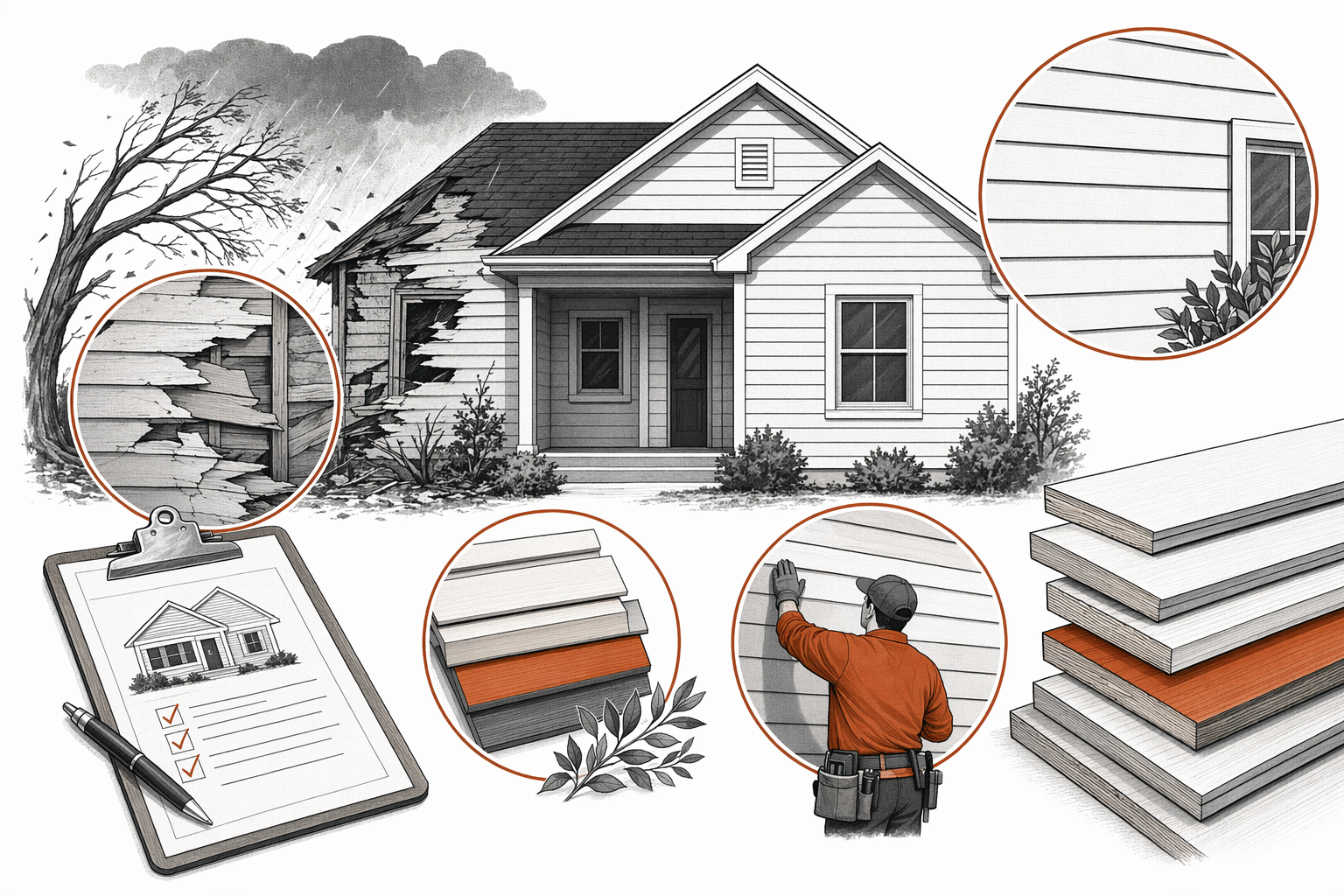
The situation
After a strong hail storm, the homeowner saw marks on several sides of the house. Some panels were cracked. A few pieces were loose near corners and trim. There were also dents on metal areas around the exterior.
At first, the family was not sure if the damage was cosmetic, repairable, or serious enough for a full replacement. They also started getting fast offers from door-to-door crews. Some pushed them to sign paperwork right away.
Because the family did not want to rush, they took a step back. They wanted to understand the likely siding costs, what insurance might cover, and how to avoid overpaying.
What they did
The homeowner started by taking clear photos and videos of every damaged area they could see from the ground. They saved the storm date, wrote down what they noticed, and kept copies of all emails and claim documents in one folder.
Next, they contacted their insurance company to open a claim and asked questions about the process, timing, deductible, and documentation. They did not assume every damaged wall would be approved. They waited for the adjuster’s review and kept notes during each call.
Before choosing a contractor, the family got more than one written estimate for the siding work. They focused on scope, materials, removal, trim details, cleanup, and warranty language. They also used this guide to vet a siding contractor and checked that each company was licensed, insured, and bonded.
They were careful with storm-related sales pressure. One company wanted a quick signature before the insurance review was complete. The family declined and continued comparing options.
When they were ready, they used get matched to connect with local siding contractors for additional estimates. That helped them compare pricing and scope more calmly.
The estimates they received were not identical. Typical siding pricing is often discussed in per-square-foot ranges, but the real total can change based on home size and height, material choice, removal of old siding, site conditions, and local labor rates. That is why the family reviewed line items closely instead of looking only at the final number.
The outcome
The insurance process took time, but the family stayed organized. After the adjuster review and contractor comparisons, they moved forward with a replacement plan that matched the approved scope more clearly.
In their case, the final project cost was shaped by the size of the home, the amount of damaged material, trim work, and removal needs. They still had out-of-pocket costs, including their deductible and some decisions about materials and finish details.
The result was a cleaner, more consistent exterior without the stress of hiring the first company that appeared after the storm. Just as important, the family felt they understood the paperwork better and had more confidence in the contractor they selected.
The takeaway
This story is a good reminder that storm damage claims are rarely instant. Good records, patience, and careful contractor vetting can help homeowners avoid confusion and expensive mistakes.
If your siding may have storm damage, slow down and document everything. Hire licensed, insured, and bonded siding contractors, verify those credentials yourself, get the price and scope in writing before any deposit, and follow local permit and code rules. Be extra careful with storm-chasers who pressure you to commit the same day.
SidingLedger is a free matching service. We do not install siding or handle claims, but we can help homeowners compare local contractors and plan next steps.
A family had hail damage and did not rush into a contract. They documented the damage, worked through the insurance process, compared written estimates, and chose a licensed, insured, bonded contractor more carefully.