Vinyl vs Fiber Cement Siding — Which Is Right for You?
Choosing between vinyl siding and fiber cement siding can feel hard. Both are common choices for U.S. homes. The right pick depends on your budget, climate, how much upkeep you want, and the look you prefer.
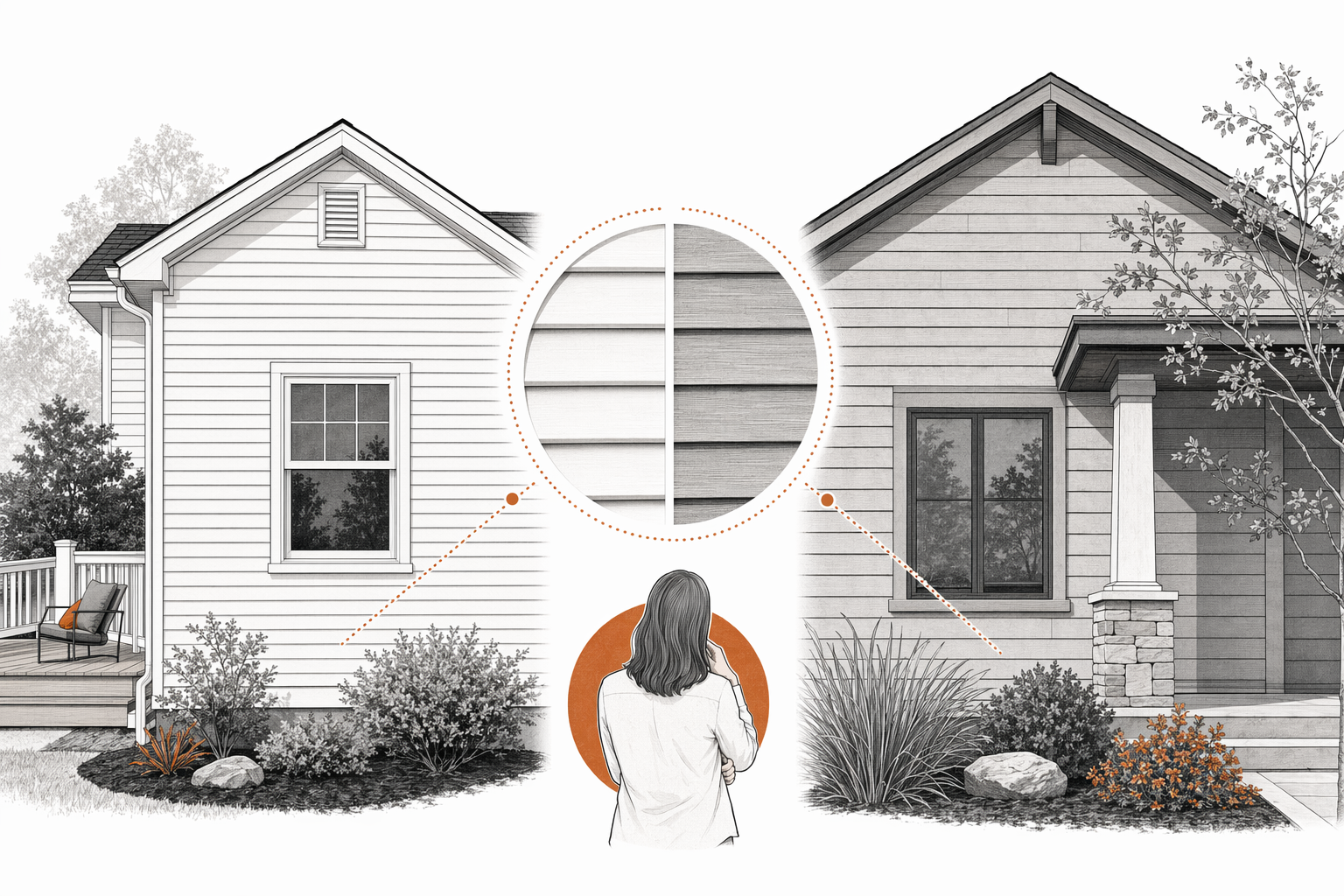
A simple way to compare vinyl and fiber cement
If you are deciding between vinyl and fiber cement, start with your priorities. Vinyl usually costs less and needs less routine upkeep. Fiber cement often feels more solid and can give a more premium look.
Typical installed cost ranges are often about $4 to $12 per square foot for vinyl and $6 to $15+ per square foot for fiber cement. These are only typical ranges, not quotes. Your real price depends on home size and height, material grade, removal of old siding, site conditions, trim details, and your area. You can review more cost basics on costs.
The short answer
Choose vinyl siding if you want the lower-cost option, faster installation in many cases, and simple maintenance. Choose fiber cement siding if you want a more rigid material, stronger resistance to heat and pests, and a style that many homeowners feel looks closer to painted wood. Neither option is automatically "best" for every home. The better choice depends on your budget, local weather, and the contractor's workmanship.
Cost and maintenance
For many homeowners, price is the first big difference. Vinyl is usually more affordable up front. That can matter if you are replacing all siding on a large home or working with a tight budget.
Fiber cement usually costs more to buy and install. It is heavier, and installation can take more labor. On the other hand, some homeowners are comfortable paying more for its appearance and durability.
Maintenance is different too. Vinyl does not usually need painting, but it can fade, crack, or warp over time, especially in harsh sun or after impact. Fiber cement is low-maintenance, but it is not no-maintenance. It may need repainting or touch-ups over the years, depending on the finish and exposure.
Durability, weather, and appearance
Climate matters. Vinyl can perform well in many areas, but extreme heat may cause warping, and hard impact can crack some panels. Fiber cement is not usually affected by insects the same way wood can be, and it tends to hold up well against heat.
Moisture management is important for both materials. Good flashing, trim, house wrap, and installation details matter just as much as the siding itself. A good product installed badly can still fail.
Appearance is another big factor. Vinyl comes in many colors and profiles, and modern options can look much better than older styles. Fiber cement is popular with homeowners who want a crisp, painted look with strong curb appeal. If style is important to you, ask contractors to show completed local jobs in both materials.
Installation and hiring the right contractor
Fiber cement is heavier and more specialized to install, so contractor experience is very important. Vinyl also needs careful installation. Panels must be installed correctly so they can move with temperature changes.
SidingLedger is a free matching service. We help homeowners connect with local siding contractors through get matched. We do not install siding or give construction advice.
Before you hire anyone, use a careful vetting process. Ask whether the contractor is licensed, insured, and bonded, and verify that yourself. Get the scope of work, materials, cleanup, timeline, warranty details, and payment terms in writing before any deposit. You can use this guide to vet a siding contractor.
Be careful with storm-chasers or anyone who pressures you to sign the same day.
What to do next
1. Decide what matters most: lower cost, lower upkeep, premium appearance, or long-term durability.
2. Ask for estimates on both vinyl and fiber cement so you can compare the full scope, not just the price.
3. Verify the contractor's license, insurance, and bond yourself, and make sure local permit and code requirements are followed.
4. Compare trim, moisture barrier details, warranty terms, and old-siding removal in writing.
If you want help finding local pros, start with free contractor matching.
Vinyl usually costs less and needs less upkeep. Fiber cement usually costs more but can look more solid and upscale.