Why Vinyl Siding Fades and Warps
Vinyl siding is popular because it is low maintenance and often costs less than some other materials. But homeowners still ask an important question: **why does vinyl siding fade and warp?** The simple answer is usually **sun, heat, age, and installation problems**. If you are seeing color changes, waves, buckling, or panels that do not sit flat, it is smart to learn the cause before you decide on a repair or full replacement.
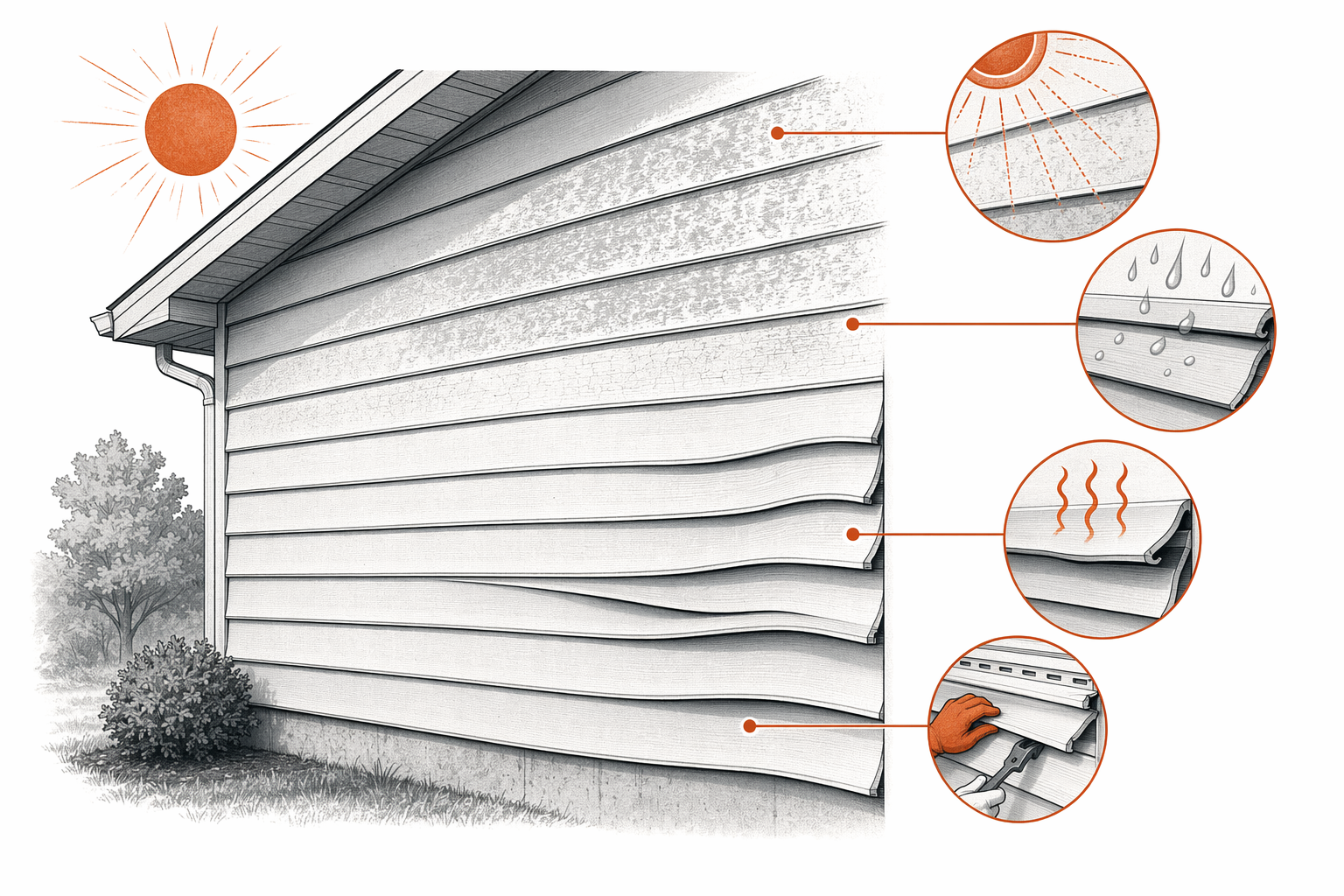
The short answer
Vinyl siding fades because sunlight and weather slowly break down the color over time. It warps, buckles, or looks wavy when heat builds up or when the siding was installed too tightly and cannot move as temperatures change. The real fix depends on the age of the siding, how much damage you have, and whether the issue is limited to a few panels or affects larger areas.
Sun, weather, and age can fade vinyl siding
Vinyl siding sits outside every day. Over the years, UV rays from the sun, heat, rain, and changing seasons can wear down the surface and make the color look dull or uneven.
Fading often happens faster on walls that get strong direct sun. South-facing or west-facing sides of the house may show more color change than shaded areas. Older siding can also fade unevenly, which makes replacement matching harder.
In some cases, fading is mostly cosmetic. In other cases, it comes with brittleness, cracking, or other signs that the siding is reaching the end of its useful life. If you are comparing repair and replacement, cost ranges can help you plan before talking to local pros. See siding cost guides for typical price information.
Heat is a common reason vinyl siding warps
Vinyl siding expands and contracts as temperatures change. That movement is normal. Problems start when the material gets too hot or cannot move the way it should.
Warping or buckling can happen from direct heat exposure. Common examples include intense sunlight, heat reflected from nearby windows, grills placed too close to the wall, or other concentrated heat sources. Sometimes the siding is not defective at all. The real issue is heat buildup in one area.
When vinyl gets too hot, panels may look rippled, bent, or pulled out of line. A few distorted boards may be repairable. Wider damage may point to a larger replacement project.
Poor installation can also cause buckling and waves
Even good vinyl siding can have problems if it was installed the wrong way. Vinyl needs room to expand and contract. If nails are driven too tight, panels are cut too short or too snug, or accessories are not installed correctly, the siding may buckle or look wavy.
This is one reason homeowners should hire licensed, insured, and bonded siding contractors and verify that license, insurance, and bond themselves. Get the scope, materials, and price in writing before any deposit. Be careful with door-to-door crews or storm-chasers who pressure you to sign on the spot.
If you want help comparing local companies, get matched with contractors near you. You can also review this guide on how to vet a siding contractor before choosing who to call.
What to do next
Start by looking at where the problem is and how big it is. If only a few panels are affected, a contractor may recommend a targeted repair. If fading is widespread or many sections are warped, full replacement may make more sense.
Take clear photos of each side of the house. Note where the sun hits hardest and whether heat sources are nearby. Then ask at least two or three licensed, insured, and bonded siding contractors to inspect the visible issue and explain the likely cause. Verify their license, insurance, and bond yourself, and make sure the written estimate clearly shows materials, labor, removal of old siding if needed, and any permit responsibilities required by local code.
Remember: prices are estimates, not quotes or guarantees. The real cost depends on home size and height, material choice, removal work, site conditions, and your area.
Vinyl siding usually fades from sun and weather over time. It usually warps from heat or because it was installed in a way that does not let it move normally.