Siding materials compared
Choosing siding is not only about color. It is also about price, weather, upkeep, and how long you plan to stay in the home. This guide compares common siding materials in plain language so you can narrow your options before you talk to local pros.
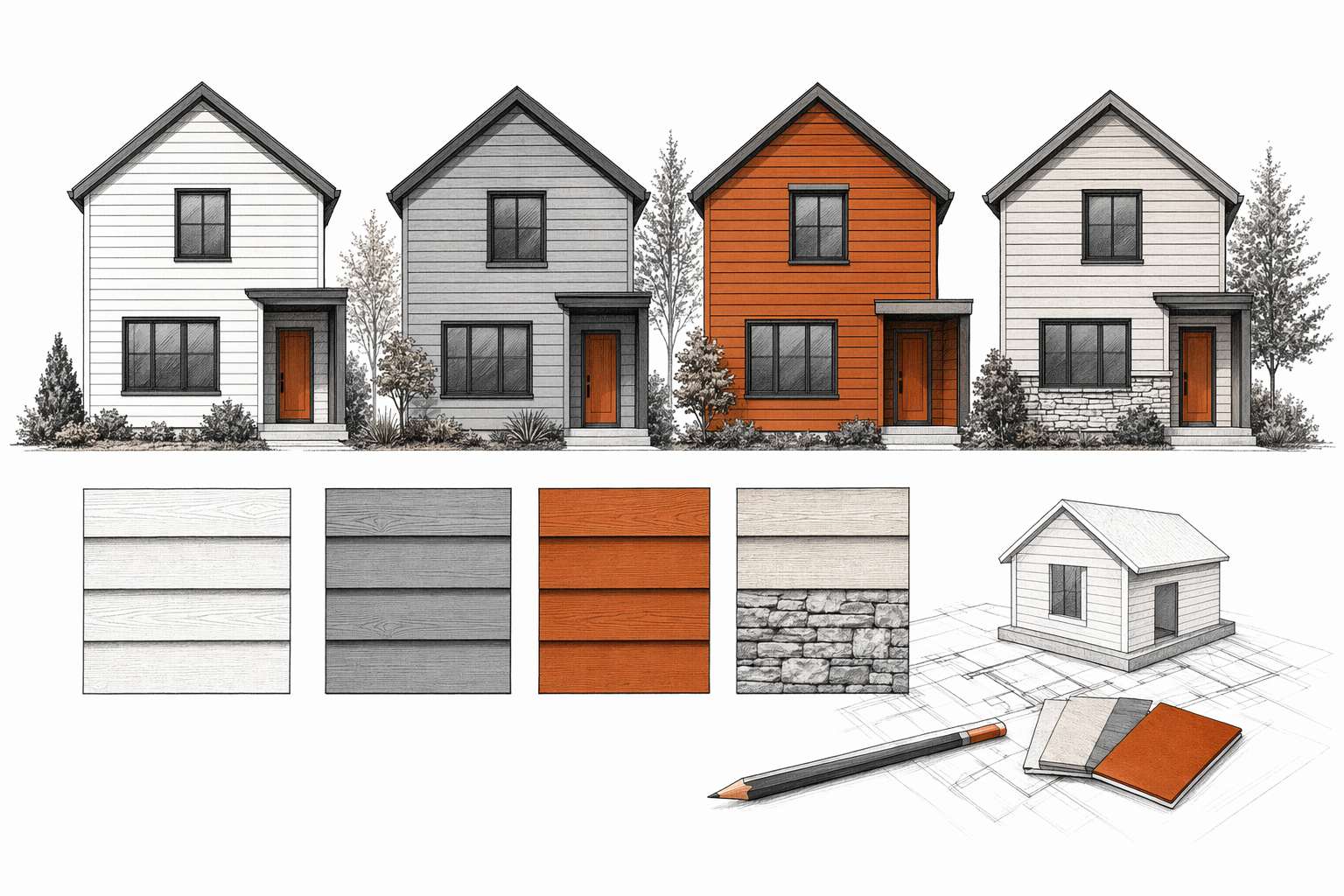
Start with the big picture
Most homeowners compare five common siding types: vinyl, fiber cement board, wood, metal, and stucco. Each has trade-offs. One may cost less up front. Another may last longer or handle heat, moisture, dents, or insects better.
A good choice depends on your climate, your budget, your home's style, and how much maintenance you can handle. If you are early in the process, review typical pricing on costs first, then compare materials side by side.
Keep in mind: siding prices are typical per-square-foot ranges and estimates, not quotes. The real price depends on home size and height, the material you choose, removal of old siding, trim details, site conditions, and your area.
Key points: how the main siding materials compare
Vinyl siding is often one of the lower-cost options. A typical installed range is about $4-$11 per square foot. It is popular because it is widely available, usually low maintenance, and comes in many colors and profiles. The trade-off is that quality can vary, and in some climates it may crack, fade, or warp over time.
Fiber cement board often falls around $6-$15 per square foot installed. Many homeowners like its solid feel and classic look. It is commonly chosen for durability and fire resistance, and it can resemble wood lap siding or panels. But it is heavier, labor can cost more, and repainting or upkeep may still be needed over time.
Wood siding often runs about $7-$16 per square foot installed, sometimes more depending on style and species. Many people love the natural look. But wood usually needs more upkeep than other materials. It can be vulnerable to moisture, insects, and paint or stain maintenance if not cared for well.
Metal siding commonly ranges from $7-$16 per square foot installed. It can work well for modern designs and may be valued for durability and low upkeep. Still, some products may dent, and pricing can vary a lot depending on panel type, trim, and complexity.
Stucco siding often lands around $8-$17 per square foot installed. It is common in some regions and can perform well in the right climate and wall system. But repairs can be tricky, and not every home or weather pattern is a great fit.
No single material is "best" for every house. The better question is: best for your home, your weather, and your budget.
What to do before you choose
Use these steps to compare materials with fewer surprises.
1. Set your real budget range. Think about both install cost and future upkeep. A lower upfront price may not stay cheaper if you expect more maintenance later.
2. Match the material to your climate. Heat, freeze-thaw cycles, heavy rain, coastal air, hail, and strong sun all matter. Ask how each option performs in your local area, not just in a brochure.
3. Look at your home's design. Some materials fit certain architectural styles more naturally. Also ask whether trim, soffit, fascia, and moisture barrier work will change the final look and cost.
4. Compare estimates line by line. Ask for the same scope from each contractor so you can compare fairly. A low number may leave out tear-off, trim replacement, house wrap, disposal, or permit-related work. Our guide to vetting a siding contractor can help you ask better questions.
5. Ask about upkeep and lifespan in plain language. Instead of asking which material is best, ask: what cleaning, painting, sealing, or repair work is typical over time?
6. Confirm who is doing the work. Hire licensed, insured, and bonded siding contractors, and verify the license, insurance, and bond yourself. Get the price, materials, and scope in writing before any deposit. Follow local permit and code rules.
7. Be careful after storms. If someone pressures you to sign right away, that is a red flag. Watch out for storm-chasers who use urgency to rush homeowners.
If you want help connecting with local companies, you can get matched with licensed, insured, and bonded siding contractors near you through SidingLedger's free matching service.
Common mistakes homeowners make
Next step: narrow your options and compare local estimates
A simple way to decide is to narrow your list to two materials, then get written estimates for both if your budget allows. That makes it easier to compare not just price, but also installation method, upkeep, timeline, and how the finished home will look.
Remember that all pricing you see online is only a starting point. Actual project cost depends on home size and height, your chosen material, old siding removal, site conditions, trim details, and your area. Take your time, ask clear questions, and do not let anyone rush you.
When you are ready, SidingLedger can help you compare options by connecting you with local licensed, insured, and bonded siding contractors through our free matching service. Start with get matched.
This guide compares common siding materials by cost, upkeep, durability, and look. Prices are only typical estimates per square foot, not quotes. Always hire licensed, insured, and bonded siding contractors, verify their credentials yourself, and get the scope in writing before paying a deposit.