Signs It's Time to Replace Your Siding
Not sure if your siding still has life left, or if it is time to replace it? This guide covers the most common signs to watch for, what they may mean, and how to take the next step with confidence.
A quick intro
Siding does more than change how your home looks. It helps protect the walls underneath from water, wind, sun, and pests. Over time, even good siding wears down.
Some problems are cosmetic. Others can point to deeper moisture damage or poor protection. If you see several warning signs at the same time, it may be smarter to plan for replacement instead of repeated patch repairs.
If you are still budgeting, our costs page can help you understand typical price ranges.
The short answer
It may be time to replace your siding if you see cracks, warping, loose panels, repeated moisture problems, rot, mold, fading, rising maintenance, or damage across many areas of the house. A few small issues can sometimes be repaired, but widespread wear usually means the siding is no longer protecting the home well. The real solution depends on the material, the age of the siding, how much damage there is, and whether water has reached the layers underneath.
Visible damage you should not ignore
Some warning signs are easy to spot from the street. Others show up when you walk around the house closely.
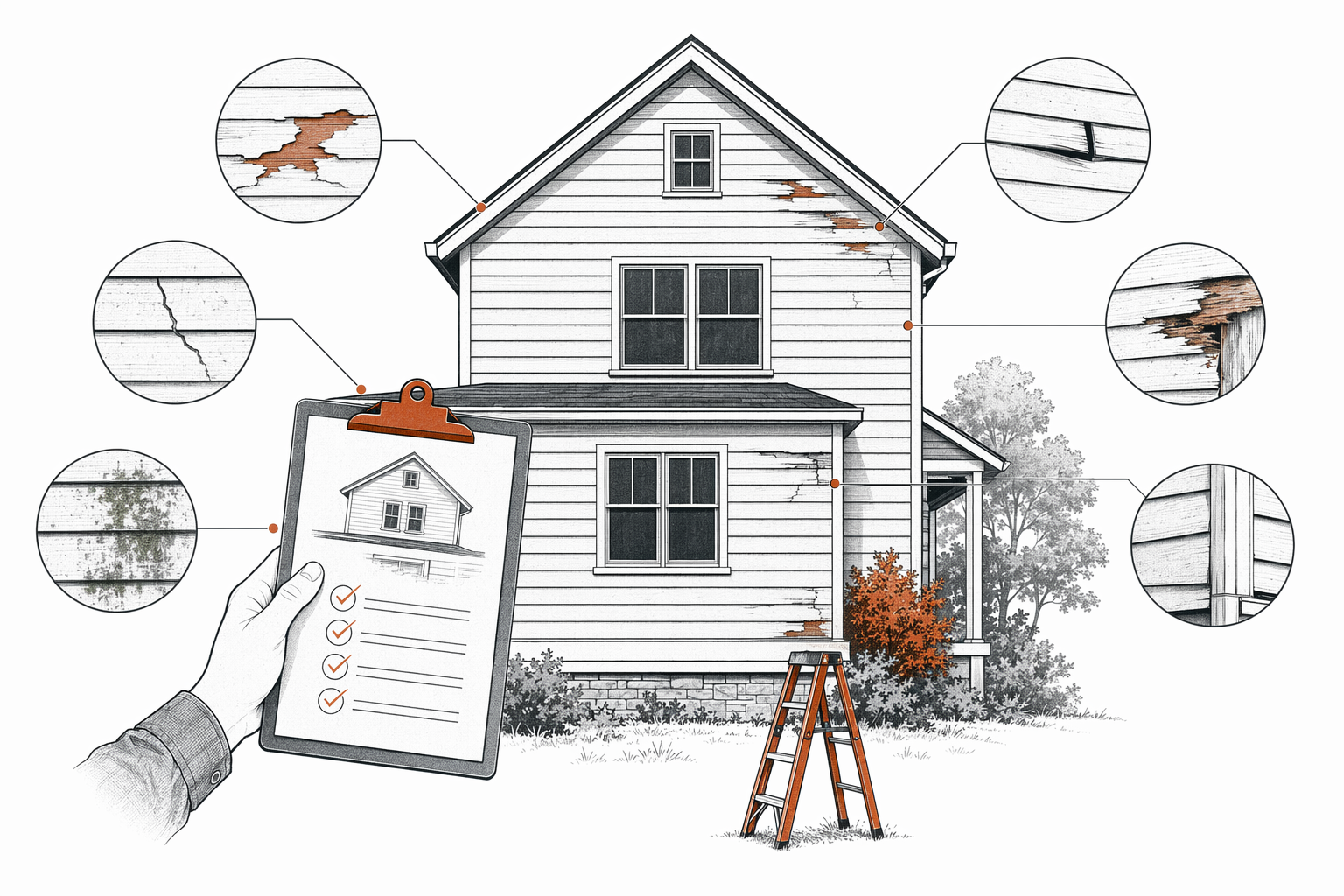
Look for siding that is cracked, broken, dented, warped, bubbling, or pulling away from the wall. Also watch for loose trim, gaps at seams, or boards that seem soft when touched. These can let water get behind the siding.
If damage is limited to one small area, a licensed contractor may suggest repair. But if the same problem appears on many sides of the home, replacement is often more practical.
Moisture and energy warning signs
Water is one of the biggest reasons siding gets replaced. Stains, mold, mildew, peeling interior paint near exterior walls, or repeated leaks around the siding line can all be signs that moisture is getting where it should not.
You may also notice your home feels draftier than before, or your energy bills have gone up without another clear reason. Siding alone is not the only cause, but failing exterior materials can contribute to air and moisture problems.
If you suspect hidden water damage, do not rely on guesswork. Hire a licensed, insured, and bonded siding contractor to inspect the visible conditions and explain whether repair or replacement makes more sense. Follow local permit and code rules.
When repairs stop making sense
Many homeowners try repairs first, and that can be the right move for minor issues. But repeated patch jobs can add up. If color matching is poor, damage keeps spreading, or one repair leads to another, full replacement may save time and stress.
Replacement may also make sense if your siding is near the end of its expected life, has storm damage in multiple areas, or no longer fits the look and upkeep level you want. Before signing anything, compare written estimates carefully and review scope, materials, cleanup, warranty details, and payment terms.
SidingLedger is a free matching service that helps you connect with local contractors for your project. You can also read how to vet a siding contractor before choosing who to call.
What to do next
1. Walk around your home and make a simple list of what you see: cracks, warping, rot, stains, loose pieces, or repeated repairs.
2. Take clear photos of each side of the house and any close-up damage.
3. Get written estimates from licensed, insured, and bonded siding contractors. Verify the license, insurance, and bond yourself.
4. Ask whether repair is realistic or whether replacement is the better long-term choice.
5. Watch out for storm-chasers or anyone who pressures you to sign the same day.
If you are ready to compare local options, you can get matched for free with contractors near you. Before paying a deposit, make sure price, materials, scope, timeline, and cleanup are all in writing.
If your siding has many cracks, warped pieces, rot, or moisture problems, it may be time to replace it. Get written estimates from licensed, insured, and bonded contractors, and verify their credentials yourself before paying a deposit.