Siding R-Value and Your Energy Bills
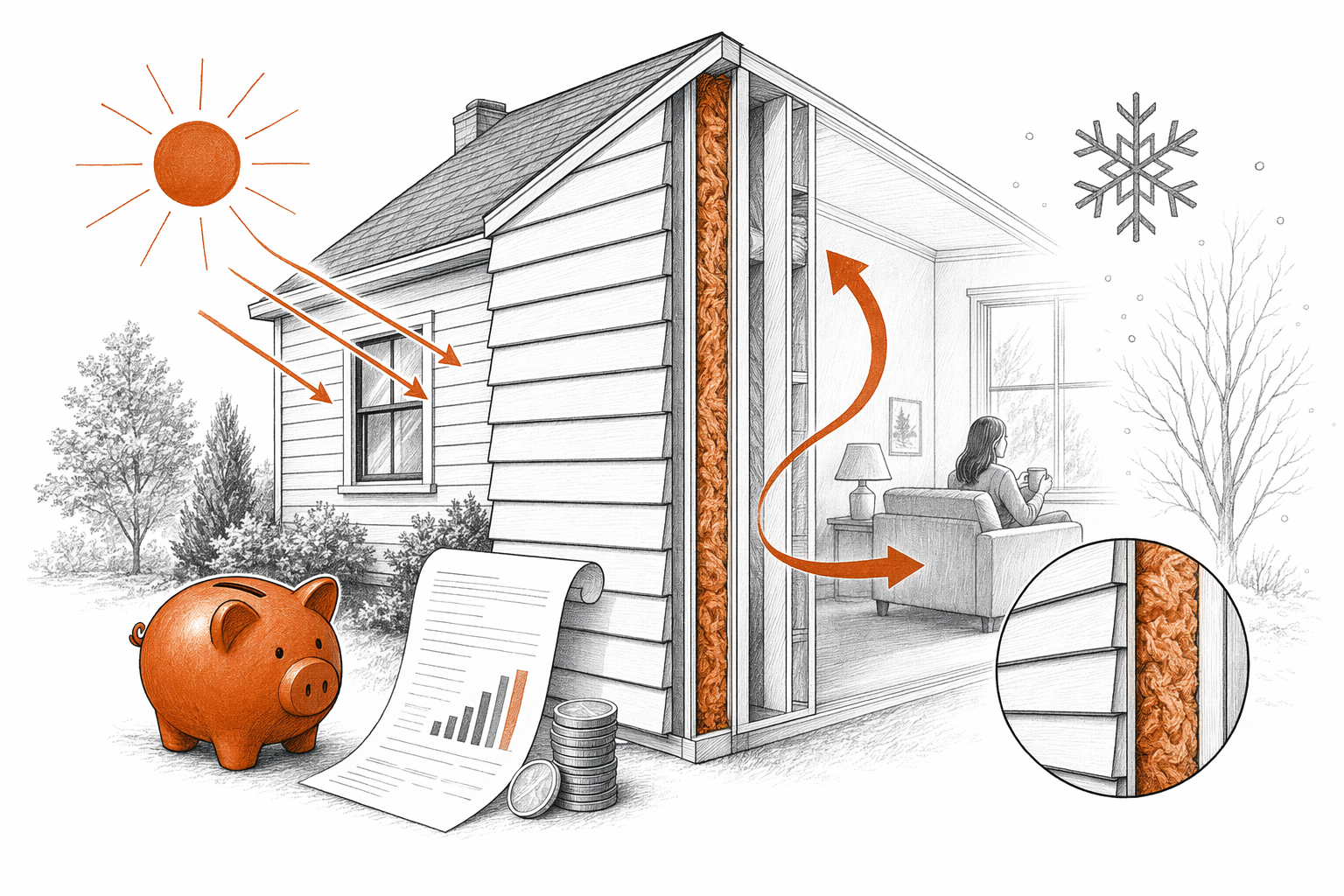
Siding can affect comfort and energy use, but **siding alone usually does not make a big change in energy bills**. The larger difference often comes from what is behind the siding, such as insulation, house wrap, air sealing, and how well the wall system is installed.
Why homeowners ask about siding R-value
If you are planning new siding, it is normal to ask if a higher R-value will lower your utility bills. The honest answer is: sometimes a little, but not always a lot.
R-value is a measure of how well a material slows heat flow. Higher numbers mean more resistance to heat moving in or out. But most siding materials are thin. That means their own R-value is usually modest.
In many homes, energy savings depend more on the full wall system than on the outer cladding by itself. If you are comparing project budgets, cost guides can help you see how material choices fit into the bigger picture.
The short answer
Siding R-value matters, but usually less than homeowners expect. Standard siding by itself often adds only a small amount of insulation. If your project includes insulated backing, better house wrap, or improvements to the wall assembly, the effect on comfort and energy bills may be more noticeable. Real results depend on your climate, existing wall insulation, air leaks, home size and height, and the quality of the installation.
How siding R-value really affects energy bills
Energy bills are not controlled by one number. A home loses and gains heat through walls, windows, the attic, doors, and air leaks.
Because of that, siding with a slightly higher R-value may help, but it is rarely a magic fix for high heating or cooling costs. In many cases, drafts, poor attic insulation, older windows, or missing moisture and air barriers have a bigger impact.
If your current siding project includes removing old siding, your contractor may be able to identify wall-related issues that should be addressed at the same time. Ask what is included in the written scope and whether the bid covers wall prep, moisture barrier work, and insulation-related upgrades where allowed by local code.
Which parts of the wall matter more than the siding itself
When people say a siding job improved comfort, they may be noticing changes from the whole system, not just the siding panel.
The parts that often matter most are:
- Continuous insulation or insulated sheathing behind the siding
- House wrap or moisture barrier installed correctly
- Air sealing around gaps and penetrations
- Proper flashing around windows, doors, and trim
- Good workmanship that helps reduce water intrusion and hidden wall damage
Some siding products may be sold with insulation or backing. That can help in some homes, but the value depends on the full assembly, not only the product label. You can read more about checking contractor qualifications at vet a siding contractor.
Typical expectations and what can change the price
It is smart to expect modest energy improvement, not dramatic savings, from siding alone. Homes with very old walls, visible drafts, or damaged weather barriers may see more benefit when a siding replacement also improves the wall assembly.
If you are comparing options, remember that project cost is not based on R-value alone. Typical siding prices are estimates, not quotes, and usually depend on:
- Home size and height
- Siding material choice
- Removal and disposal of old siding
- Repairs to wall surfaces underneath
- Trim, soffit, fascia, and flashing details
- Local labor rates and site conditions
If you want local pricing, get matched with licensed, insured, and bonded siding contractors and compare written estimates carefully.
What to do next
- Ask each contractor what part of the project affects energy performance: siding only, or also wrap, insulation, and air sealing.
- Get the full scope in writing before any deposit. Make sure materials, tear-off, prep work, and cleanup are clearly listed.
- Verify that the contractor is licensed, insured, and bonded. Check it yourself.
- Follow local permit and code rules.
- Be careful with storm-chasers or anyone who pressures you to sign the same day.
A free matching service like SidingLedger can help you connect with local contractors for siding projects, but the contractor should evaluate the home, explain the scope, and provide the written estimate.
Siding can help a little with insulation, but the bigger energy difference often comes from what is behind the siding. Ask for a written scope, verify the contractor's license, insurance, and bond, and do not rush into a deal.