Putting Siding Over Brick or Stucco
Thinking about new siding, but your home has brick or stucco now? In many cases, **it may be possible** to put siding over brick or stucco, but it is not a simple cover-up job. The right approach depends on the wall condition, moisture control, attachment method, local code, and the siding material you choose.
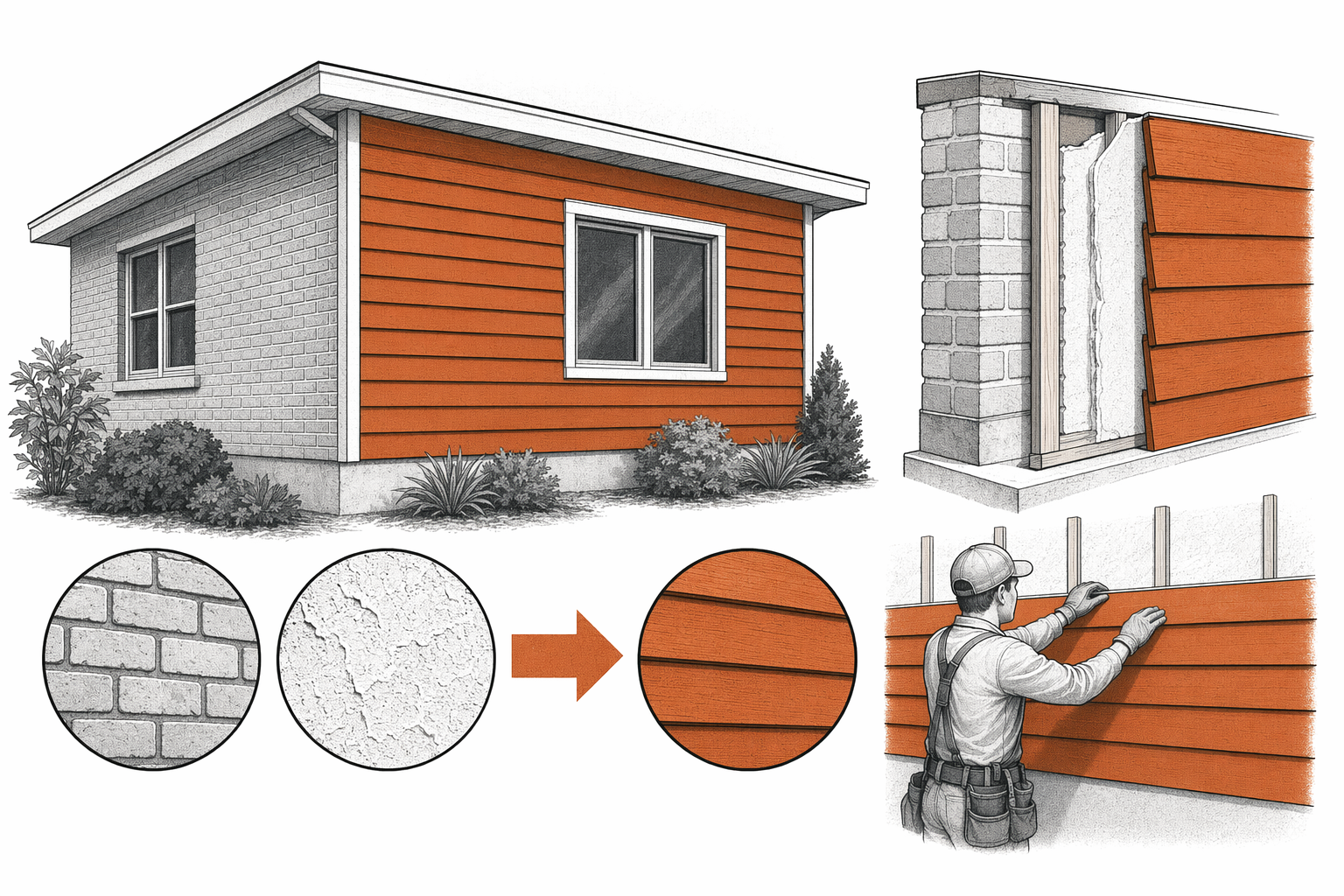
A short intro
Homeowners often ask this question to save time, mess, or removal cost. That makes sense. But putting siding over brick or stucco is not always the best choice, and it is not right for every house.
A licensed siding contractor usually needs to check the wall surface, look for cracks or trapped moisture, and confirm how the new siding would be fastened. If you are comparing options, our costs page can help you understand typical price ranges before you talk with contractors.
The short answer
Yes, sometimes siding can be installed over brick or stucco, but only when the existing surface is sound and the new wall assembly can handle moisture correctly. In many projects, installers use furring strips or another attachment system to create a flat surface and space for drainage. In other cases, partial or full removal may be the safer path. The real cost and scope depend on home size and height, siding material, removal needs, site conditions, and your area.
Check the wall condition first
Brick and stucco can hide problems. Cracks, loose areas, water intrusion, and uneven surfaces can affect the new siding project.
If the existing exterior is failing, covering it may only hide the issue for a while. A qualified contractor may recommend repairs first, or removal, before new siding goes on.
Ask contractors to explain:
- Whether the brick or stucco is stable enough to stay
- Whether there are signs of trapped moisture
- How they will create a flat, secure fastening surface
- What local permit or code rules apply
This is also a good time to review how to vet a siding contractor before you choose who to call.
Moisture and attachment matter most
This is the biggest issue. Siding is not just a decorative outer layer. A good siding system also needs proper water management.
When siding goes over brick or stucco, contractors may need a drainage gap, moisture barrier details, flashing at windows and doors, and a fastening method designed for that wall type. The exact method depends on the house and the siding product.
An uneven wall can also create problems. Brick and stucco are not always flat, so installers often need extra framing or strips to level the surface. That can affect trim depth around windows, doors, and corners.
If these details are skipped, you could end up with water issues, loose panels, or a finished look that does not sit right on the house.
Pros, trade-offs, and cost questions
There can be benefits to going over brick or stucco in the right situation:
- Less demolition mess
- Possible savings on tear-off labor
- Faster project timeline in some cases
But there are trade-offs too:
- Extra prep work may cancel out removal savings
- Trim and window details can become more complicated
- Moisture mistakes can be expensive later
- Some siding materials may be a better fit than others
Typical siding costs are estimates, not quotes, and prices vary by material and job complexity. Installing over masonry or stucco may add labor for prep, fastening, and trim changes. That is why written bids matter. Compare the scope carefully, not just the bottom-line number.
If you want help finding local companies to compare, you can use free contractor matching through SidingLedger.
What to do next
Start with 2 to 3 licensed, insured, and bonded siding contractors who have experience with brick or stucco homes. Ask each one whether they recommend going over the existing wall or removing it, and ask them to explain why.
Before you sign anything:
1. Verify the contractor's license, insurance, and bond yourself.
2. Get the full scope, materials, prep work, and cleanup terms in writing.
3. Ask who handles permits and how code requirements will be met.
4. Be careful with large deposits, and review cost guidance so you can compare estimates more clearly.
5. Watch out for storm-chasers or anyone pushing you to sign on the spot.
The safest choice is usually the one with the clearest moisture plan, fastening method, and written scope — not just the lowest price.
You can sometimes put siding over brick or stucco, but the wall must be in good shape and moisture must be handled the right way. Get written estimates from licensed, insured, and bonded contractors, and verify their credentials yourself before you sign.