Shake and Shingle Siding Explained
Shake and shingle siding can give a home a textured, traditional look. But many homeowners are not sure what the difference is, how much upkeep it needs, or whether it fits their budget.
Intro
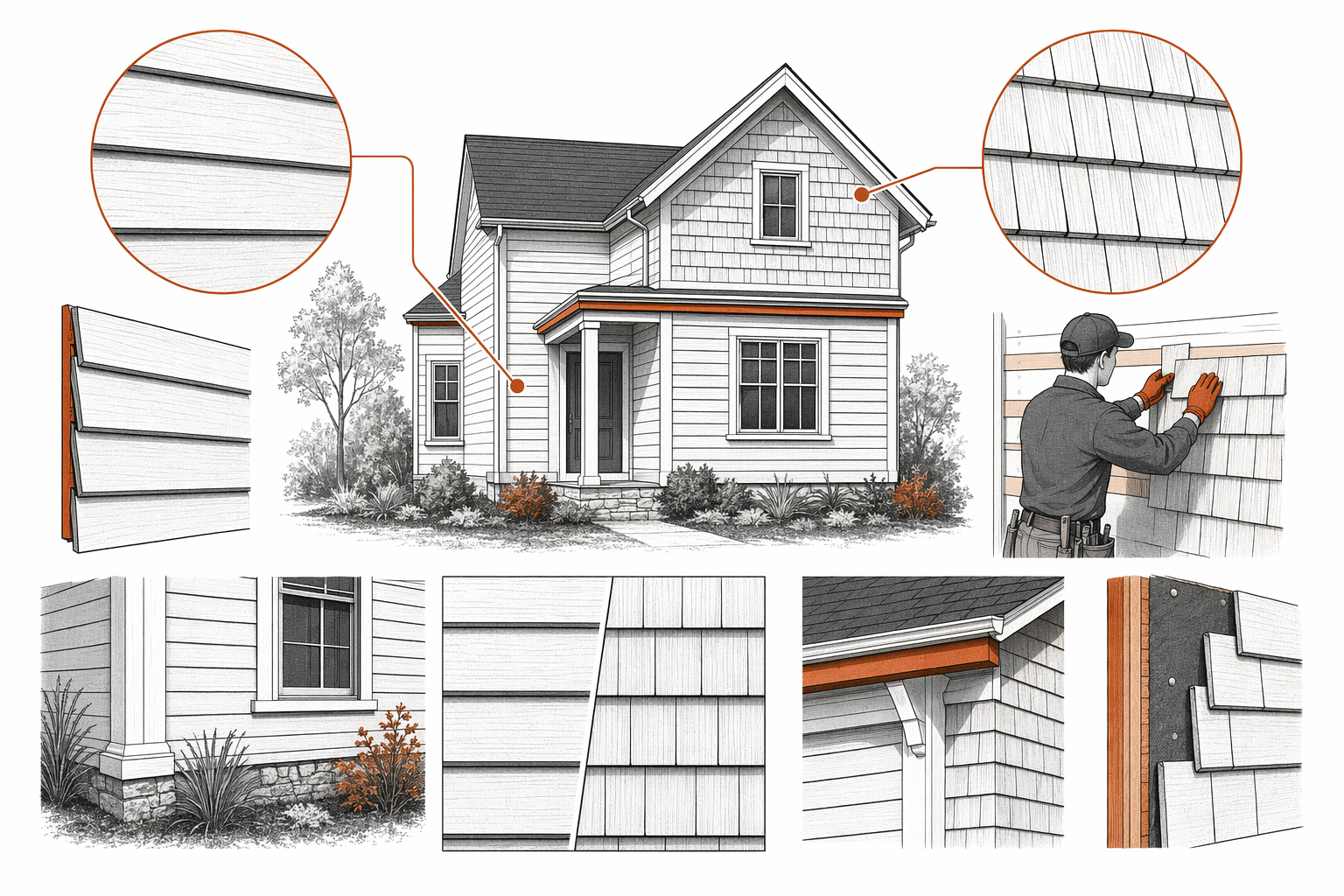
Shake and shingle siding are decorative siding styles made to look like small overlapping pieces. You often see them on gables, accents, and older-style homes, but they can also be used on larger wall areas.
In plain terms, the main difference is the surface and cut. Shakes usually look more rugged and uneven. Shingles usually look smoother and more uniform. Today, this look can come in real wood or in other siding materials made to copy the same style.
The short answer
Shake and shingle siding are siding styles, not just one material. Shakes have a more rustic, textured appearance, while shingles look cleaner and more even. Both can be made from wood or from lower-maintenance materials such as vinyl, fiber cement board, or engineered wood. The best choice depends on the look you want, your climate, your maintenance comfort level, and your budget. If you want to compare typical pricing first, see siding costs.
Details
### What is the difference between shakes and shingles?
The words are often used together, but they are not exactly the same.
- Shake siding usually has a rougher, more natural look.
- Shingle siding usually has a more consistent shape and smoother face.
- Some products come in panels, which means several "shakes" or "shingles" are joined together to speed up installation.
For many homeowners, the visual difference matters more than the technical definition. If you want a handcrafted, cottage-style appearance, shakes may feel closer to that goal. If you want a tidier pattern, shingles may be a better fit.
### What materials are available?
You may find this siding style in several materials.
- Natural wood: attractive and classic, but usually needs more upkeep and can be more sensitive to moisture, insects, and fire rules in some areas.
- Vinyl: often a lower-cost option with less maintenance, though quality and appearance can vary.
- Fiber cement board: heavier, durable, and often chosen for a wood-look style with less upkeep than real wood.
- Engineered wood: designed to give a wood appearance with different maintenance and cost tradeoffs.
Each option has pros and cons. The right fit depends on your weather, how long you plan to stay in the home, and how much maintenance you want to handle. The real installed price is a typical per-square-foot estimate only, not a quote, and depends on home size and height, material, removal of old siding, site conditions, and your area.
### Where does shake or shingle siding work best?
Many homeowners use this style as an accent rather than on the whole house. For example, it is common on:
- gables
- dormers
- upper story sections
- entry areas
- mixed-style exteriors with lap siding below
This can give you the look without the full cost of covering every wall in a specialty profile. It can also make repairs and future color matching simpler, depending on the product.
Before signing with anyone, ask how the contractor plans flashing, trim, moisture protection, and transitions between siding areas. You can review helpful screening tips in how to vet a siding contractor.
What to do next
If you are thinking about shake or shingle siding, start with three steps:
- Save a few photos of homes you like, especially if you want the style only on certain sections.
- Compare materials based on upkeep, appearance, and typical price range.
- Get written estimates from licensed, insured, and bonded siding contractors, and verify the license, insurance, and bond yourself.
Also make sure the scope is in writing before any deposit, including material type, removal of old siding, trim work, cleanup, and permit responsibility. Follow local permit and code rules. Be careful with storm-chasers or anyone who pressures you to sign on the spot.
If you want help finding local pros to compare, you can use free contractor matching. You may also want to read more about shake and shingle siding as you plan your project.
Shake siding looks more rough and rustic. Shingle siding looks more smooth and even, and both styles can come in different materials.