Painting vs Replacing Your Siding
Not sure if you should paint your siding or replace it? The right choice depends on the **condition of the siding**, not just how it looks. Paint can help when the siding is still solid. Replacement may make more sense when there is rot, cracks, warping, moisture trouble, or repeated repair needs.
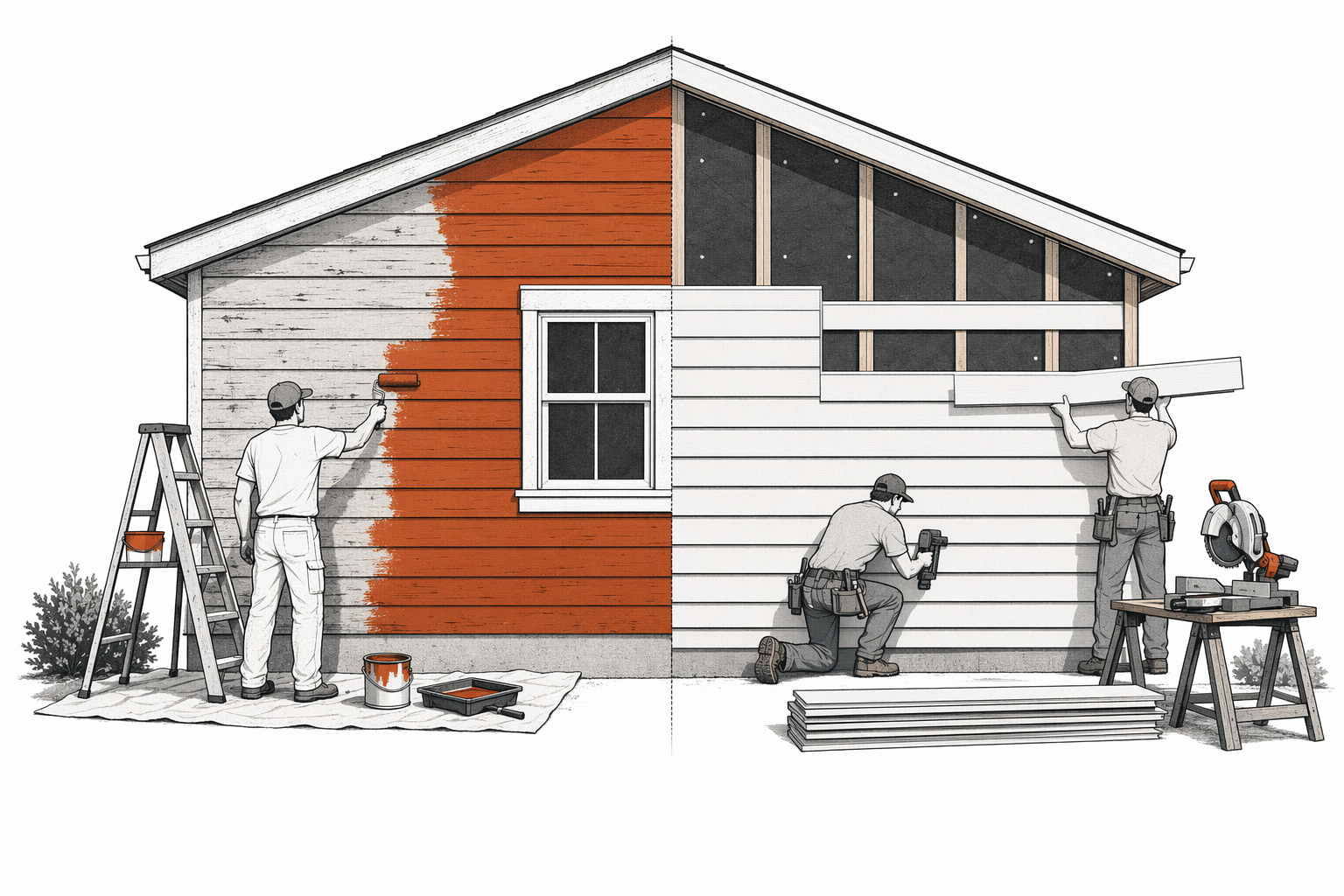
Start here: paint helps appearance, replacement fixes bigger problems
Many homeowners ask this when their siding looks faded, worn, or old. Painting is usually the lower-cost option up front. Replacing siding usually costs more, but it may solve deeper issues and last longer.
A good rule is simple: if the siding is still structurally sound, painting may be enough. If the siding is failing, replacement is often the safer long-term choice. If you are comparing project budgets, see typical siding costs.
The short answer
Paint your siding if it is mostly in good shape and you want to improve color, curb appeal, and short-term protection. Replace your siding if it has widespread damage, moisture problems, rot, loose panels, warping, or repeated repair needs. The real cost depends on your home size and height, material, removal of old siding, site conditions, and your area.
When painting makes sense
Painting can be a smart choice when the main problem is cosmetic. Fading, peeling finish, minor surface wear, or an outdated color do not always mean the siding itself has failed.
Painting often makes sense when:
- The boards or panels are still firmly attached
- There is no major rot, soft spots, or moisture damage
- Cracks and small trouble spots are limited, not everywhere
- You want a lower upfront cost than full replacement
- You are trying to extend the life of the current siding for a few more years
Keep in mind that paint is not a fix for structural or moisture problems. If water is getting behind the siding, painting the outside may only hide the issue for a short time.
When replacement may be the better choice
Replacement is often worth considering when damage is beyond the surface. New siding can improve appearance, weather protection, and maintenance needs, but only if the underlying problem is addressed correctly by a qualified contractor.
Common signs that point toward replacement:
- Rot, mold, or soft areas
- Warped, buckled, cracked, or broken sections in many places
- Loose panels or boards that no longer hold well
- Bubbling paint caused by trapped moisture
- Interior water stains or signs of moisture near exterior walls
- Frequent repairs that keep adding up
If the damage is limited to one area, a partial repair may still be possible. But if problems show up on several sides of the home, full replacement can be more practical than repainting over failing material.
How to compare the two options
Before you decide, ask licensed contractors to explain what is cosmetic and what is actual damage. Get the scope in writing so you can compare clearly.
Use this checklist:
1. Ask whether the siding is still sound or near the end of its service life.
2. Ask if there are signs of hidden moisture behind the siding.
3. Ask whether spot repairs plus paint are realistic, or just a short delay.
4. Ask for written pricing for both options if both are possible.
5. Review the contractor carefully using this guide: how to vet a siding contractor.
Always hire licensed, insured, and bonded siding contractors, and verify the license, insurance, and bond yourself. Get price and scope in writing before any deposit. Follow local permit and code rules. Be careful with storm-chasers who pressure you to sign on the spot.
What to do next
If you are still unsure, get a few written opinions from local siding contractors. Ask each one to separate cosmetic work from damage repair, and to explain why painting or replacement is the better fit for your home.
If you want help finding local pros, you can use free contractor matching. You can also read more before you decide with our guide on vetting a siding contractor. SidingLedger is a free matching service that helps homeowners connect with licensed, insured, and bonded siding contractors near them.
If your siding is still solid, painting may be enough. If it is cracked, warped, rotting, or has moisture problems, replacement may be the better choice.