Low-Maintenance Siding Options Compared
If you want siding that looks good without a lot of scraping, patching, or repainting, some materials are easier to live with than others. This guide compares common low-maintenance siding options in plain language, so you can decide what may fit your home, budget, and climate.
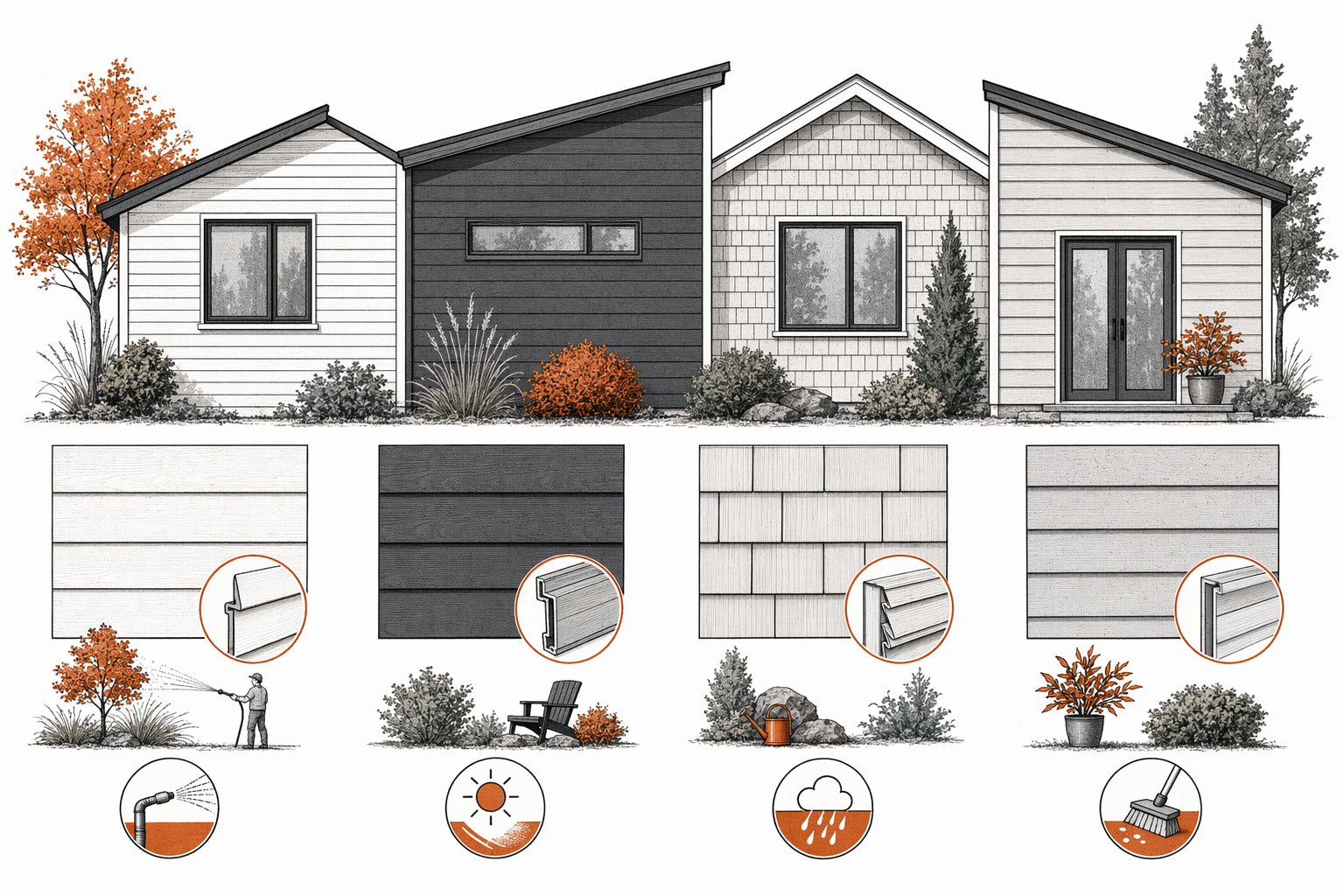
Low-maintenance siding: what homeowners usually mean
Most homeowners mean siding that needs less frequent painting, fewer repairs, and simple cleaning. No siding is truly zero-maintenance, but some materials need much less attention over time.
If you are still comparing overall pricing, see typical siding costs. If you want help finding local pros, you can use free contractor matching.
The short answer
For many homeowners, vinyl and metal siding are the most low-maintenance common choices because they usually only need occasional washing and basic inspections. Fiber cement board is also a durable option, but it can need repainting or caulking upkeep over time. Engineered wood can be lower maintenance than traditional wood, but it still needs regular care to keep moisture out. The right choice depends on your climate, your home's design, the quality of installation, and your budget.
Option 1: Vinyl siding
Vinyl is popular because it is usually easy to maintain and does not need routine painting. Dirt can often be cleaned with water and a soft brush or gentle wash.
It can be a practical choice for homeowners who want a lower upfront cost and simple upkeep. But it is not maintenance-free. Panels can crack, loosen, fade, or warp in some conditions, especially with age, heat, impact, or poor installation.
Option 2: Metal siding
Metal siding is another low-maintenance option. It is often chosen by homeowners who want a clean look and less routine upkeep. It does not attract pests the way some wood-based products can, and it generally does not need frequent repainting if the finish holds up well.
Still, metal can dent, scratch, or show wear near cut edges or fasteners. In some areas, the real-world performance depends a lot on the coating, the installation details, and the local weather.
Option 3: Fiber cement board and engineered wood
Fiber cement board is often picked for its solid feel and long service life. It is usually lower maintenance than traditional wood, but it is not as hands-off as vinyl or some metal products. Depending on the product and finish, it may need repainting, caulk maintenance, and regular checks around joints and trim. You can read more in our guide to hiring and checking a contractor.
Engineered wood can offer a wood-like appearance with less upkeep than natural wood. But because it is still a wood-based product, moisture management matters. If water gets behind the siding or edges are not protected well, maintenance needs can increase.
Traditional wood usually needs the most ongoing care of the common siding choices. It can look beautiful, but it often needs more painting, sealing, and repair than homeowners expect.
What matters as much as the material
The siding material is only part of the story. Installation quality matters just as much. Even a low-maintenance product can become a high-maintenance problem if flashing, house wrap, trim, or fasteners are done poorly.
Real cost also varies. Typical per-square-foot pricing depends on your home size and height, the material, removal of old siding, site conditions, and your area. Before you sign anything, get the price and scope in writing, confirm local permit and code requirements, and compare more than one estimate.
Always hire licensed, insured, and bonded siding contractors, and verify the license, insurance, and bond yourself. Be careful with storm-chasers or anyone pushing you to sign the same day.
What to do next
- Decide what matters most: lowest upkeep, lower upfront cost, appearance, or durability.
- Ask contractors which materials perform well in your local climate.
- Get at least two written estimates with material, prep, trim, and cleanup clearly listed.
- Verify license, insurance, and bond before any deposit.
- If you want help connecting with local contractors, start with free matching here.
Low-maintenance siding usually means less painting, fewer repairs, and easier cleaning. Vinyl and metal are often the easiest to care for, but good installation is just as important as the material.