Fiber Cement vs Wood Siding
Choosing between fiber cement and wood siding often comes down to **maintenance, look, and budget over time**. Both can work well, but the best choice depends on your climate, your home style, and how much upkeep you are willing to handle.
Intro
Fiber cement and wood siding can both give a home a beautiful finished look. But they are not the same when it comes to upkeep, moisture, impact resistance, and long-term cost.
If you are planning a siding project, it helps to compare the two side by side before you ask for estimates. You can also review typical pricing on our costs page before you talk to local pros.
The short answer
Fiber cement is usually the better fit for homeowners who want a durable, lower-maintenance exterior. Wood siding is often chosen for its natural appearance and traditional character, but it usually needs more regular care. Typical installed cost ranges can vary by market, but many homeowners see fiber cement at about $6 to $14 per square foot and wood siding at about $7 to $15+ per square foot. These are estimates, not quotes. The real price depends on home size and height, material grade, removal of old siding, site conditions, and your area.
Details
Appearance and curb appeal
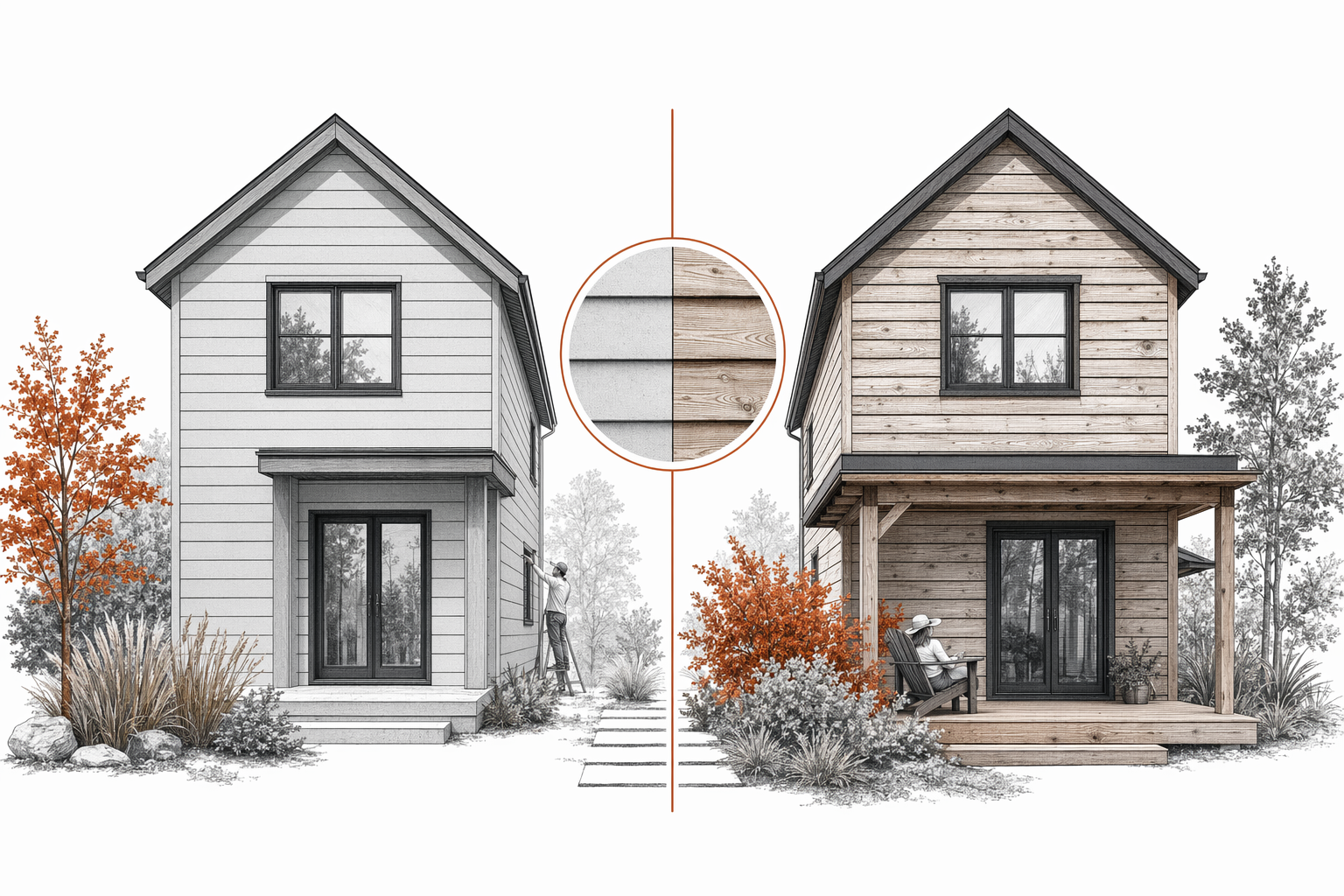
Wood siding is known for its warm, natural look. Many homeowners like the texture and character, especially on older homes or traditional designs. It can be painted or stained, and some people prefer how real wood ages over time.
Fiber cement is made to give a clean, finished appearance and can mimic the look of wood in many styles. It does not have the exact same natural grain variation as real wood, but it can still offer strong curb appeal with less ongoing work.
If appearance is your top priority, ask contractors to show you full-size samples and photos of nearby completed jobs. What looks good in a small sample may look different across an entire wall.
Maintenance and durability
This is where the biggest difference usually shows up.
Wood siding needs regular attention. Depending on the product and climate, that may include repainting or restaining, caulking, and checking for moisture damage, insects, cracking, or rot. In wet or humid areas, wood may need more care.
Fiber cement is often chosen because it is generally more stable and lower-maintenance than wood. It still needs proper installation, painting or factory finish care, and periodic inspection, but it does not typically demand the same level of routine upkeep as natural wood.
No siding material is maintenance-free. Good installation details, flashing, trim work, and moisture management matter a lot. You can learn more about comparing contractors at vet a siding contractor.
Cost, installation, and long-term value
Up-front price is only part of the decision. Wood siding may fit some homes well, but future painting, staining, and repair work can add to the long-term cost. Fiber cement may cost more than some basic siding options, but many homeowners like it because it can reduce the amount of frequent upkeep.
Installation matters for both materials. Fiber cement is heavier and requires crews who know how to handle and install it correctly. Wood also needs skilled installation to help manage water and movement over time.
When you compare bids, do not look at price alone. Check exactly what is included:
- Removal and disposal of old siding
- House wrap or moisture barrier details
- Flashing around windows, doors, and roof lines
- Trim, soffit, and fascia scope
- Cleanup and warranty terms
Always hire licensed, insured, and bonded siding contractors, and verify the license, insurance, and bond yourself. Get the price and scope in writing before any deposit, and follow local permit and code rules. Be careful with storm-chasers or anyone pushing you to sign the same day.
What to do next
Start by deciding what matters most to you: natural look, lower maintenance, up-front budget, or long-term upkeep. Then ask for written estimates from qualified local siding contractors who have experience with the material you want.
If you want help finding local pros, you can use SidingLedger to get matched with licensed, insured, and bonded siding contractors near you. Before you sign, compare scope carefully and ask questions about moisture protection, trim details, warranties, and cleanup.
Fiber cement usually means less upkeep. Wood can look more natural, but it often needs more care over time.