Board-and-Batten Siding Explained
Board-and-batten siding is a vertical siding style made with wide boards and narrow strips called battens that cover the seams. Many homeowners like it because it has a clean, simple look and can work on farm-style, cottage, modern, and mixed-style homes.
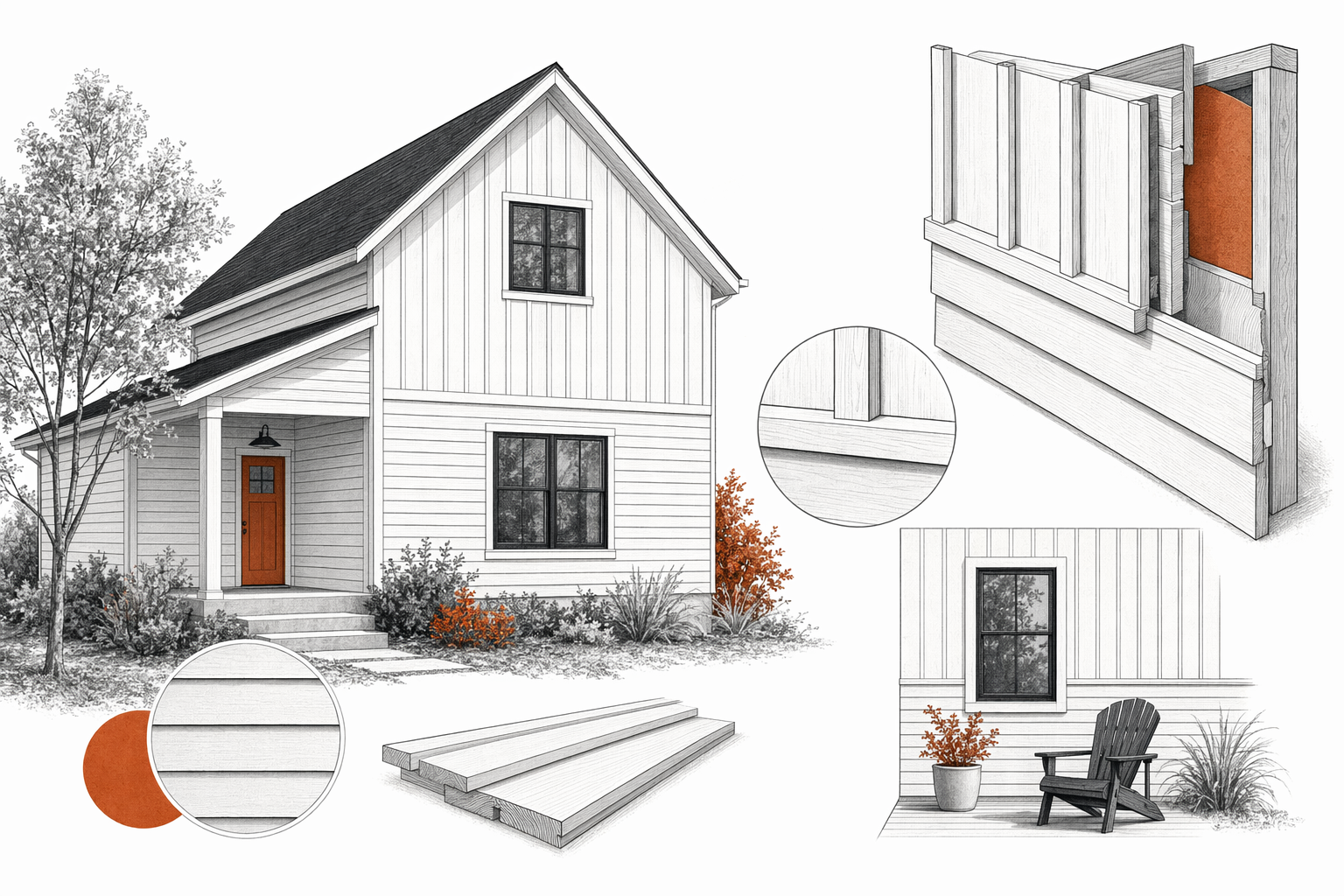
A simple introduction to board-and-batten siding
If you are looking at siding styles, board-and-batten is one of the most recognizable options. Instead of long horizontal lines, it uses vertical lines. That can make a home look taller and more distinct.
Today, board-and-batten is available in more than one material. You may see it in vinyl, engineered wood, fiber cement board, or metal panels designed to create a similar look. The style can be used on a whole house or only as an accent on gables, dormers, or entry areas.
If you are still comparing options, it helps to review typical siding costs and talk with licensed local pros about what fits your home and climate.
The short answer
Board-and-batten siding is a vertical siding style, not just one material. It uses wide panels or boards with narrower pieces over the joints to create a layered look. Homeowners often choose it for curb appeal and a more custom appearance, but the right choice depends on your budget, maintenance preferences, local weather, and the condition of your existing exterior.
How board-and-batten is built
Traditional board-and-batten used real wood boards fastened vertically, with battens covering the gaps between boards. Modern versions often use panels or boards made from other materials to create the same appearance.
The exact installation method depends on the product. Some systems use separate boards and battens. Others use panels shaped to look like board-and-batten. Because details vary, the installer should follow the product instructions, local code, and permit rules.
This style is popular because vertical siding can give a home a fresh, updated look. It also works well when mixed with other siding profiles. For example, some homeowners use horizontal lap siding on the main walls and board-and-batten only on upper sections or accent areas.
Pros, tradeoffs, and maintenance
Board-and-batten can offer strong curb appeal, but it is not automatically the best fit for every house.
Common benefits:
- Distinct vertical design
- Works on many home styles
- Can be used as full siding or as an accent
- Available in low-maintenance and higher-end material options
Common tradeoffs:
- Cost can be higher than basic horizontal siding, depending on material and labor
- Installation details matter, especially around moisture control and trim
- Some materials need more upkeep than others
- Matching an older board-and-batten profile later may be difficult
Typical installed price ranges vary a lot by material and market. In many areas, homeowners may see rough ranges from about $5 to $16+ per square foot for board-and-batten style siding systems, but that is only a general estimate, not a quote. The real price depends on home size and height, material, removal of old siding, site conditions, and your area.
Before you decide, ask how the material handles moisture, impact, fading, repainting, and long-term repairs. A good contractor should explain the scope clearly in writing.
Choosing the right contractor for this style
Because board-and-batten uses visible vertical lines, layout and finishing details matter. Small mistakes can stand out. That is why it is important to hire licensed, insured, and bonded siding contractors and to verify the license, insurance, and bond yourself.
Ask each contractor:
1. Have you installed this exact board-and-batten product before?
2. What trim, flashing, and moisture-barrier details are included?
3. Will old siding removal and disposal be included in writing?
4. Will permits be handled according to local rules?
5. What warranty applies to labor and materials?
Always get the price, materials, and scope in writing before any deposit. Be careful with storm-chasers or anyone who pressures you to sign the same day. You can use this guide to vet a siding contractor before moving forward.
What to do next
Start by deciding whether you want board-and-batten on the whole house or only as an accent. Then compare material types, upkeep needs, and your rough budget.
Next, get matched with local contractors and ask for written estimates that clearly list materials, prep work, trim, moisture protection, cleanup, and permit responsibility. If you want help finding local companies, you can use SidingLedger to get matched with licensed, insured, and bonded siding contractors near you.
SidingLedger is a free matching service. We do not install siding or act as a contractor. Our role is to help homeowners plan and connect with local pros for their project.
Board-and-batten siding is vertical siding with narrow strips covering the seams. It can look great, but the best choice depends on material, cost, upkeep, and the quality of the contractor's installation.