The Best Time of Year to Replace Siding
Planning siding work? Many homeowners ask if there is a **best season** to do it. The simple answer is that siding can be replaced in most parts of the year, but the best time depends on your weather, your material choice, contractor availability, and how urgent the damage is.
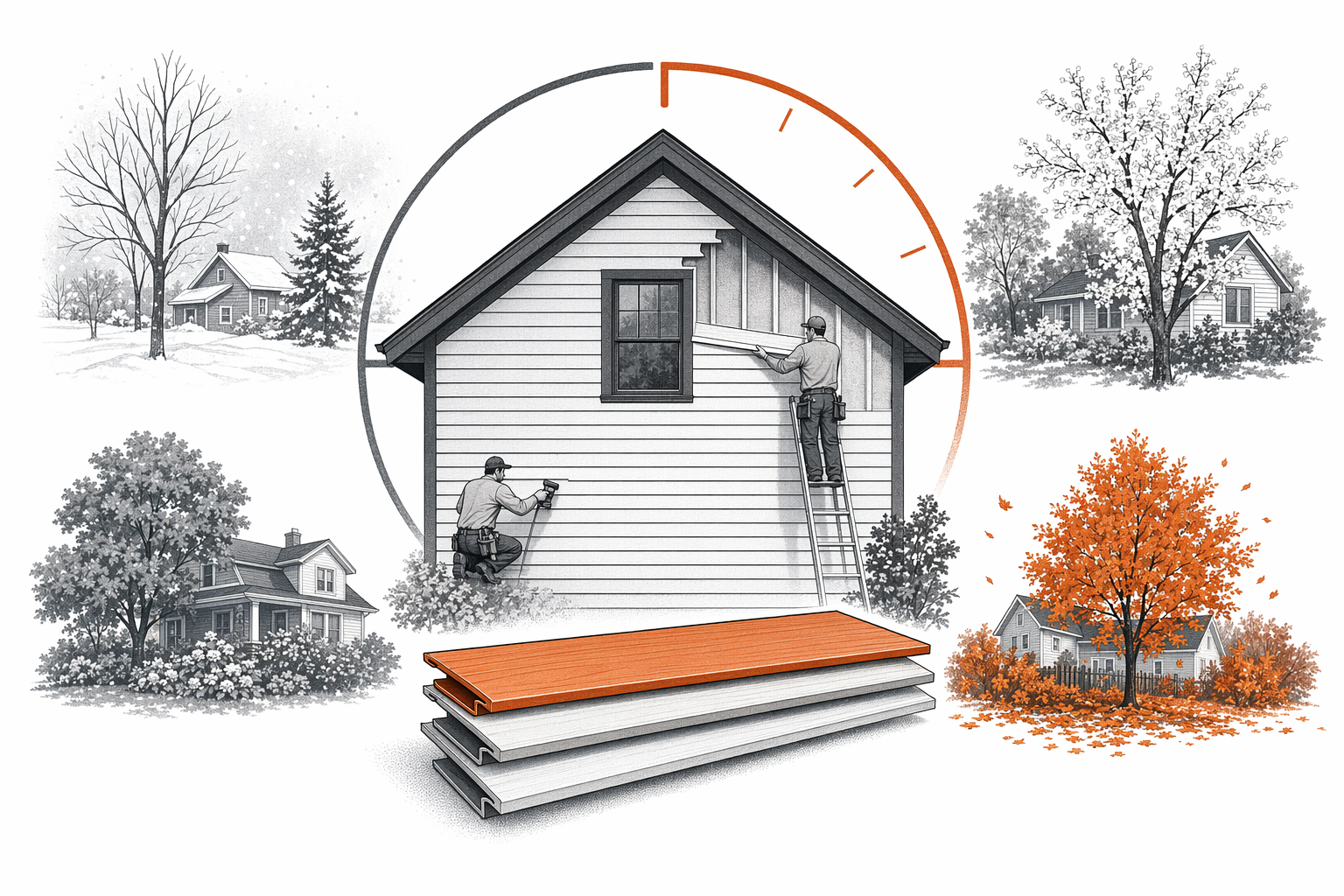
Why timing matters
Siding replacement is not only about looks. It also helps protect your home from water, wind, heat, and cold. The time of year can affect crew scheduling, work speed, and sometimes material handling.
In general, mild weather is easiest for many siding projects. Spring, early summer, and early fall are often popular because temperatures are more comfortable and there may be fewer weather delays. But that does not mean winter or late summer is always a bad choice. In some areas, off-season scheduling may be easier, and some licensed contractors work year-round.
The short answer
For many homeowners, spring and fall are often the easiest times to replace siding because the weather is usually milder. But the real best time is when your home needs it, when conditions in your area are workable, and when you can hire a licensed, insured, and bonded siding contractor you have checked carefully. If your siding has active leaks, storm damage, rot, or loose panels, waiting for the “perfect” season may cause bigger problems.
How each season can affect a siding project
Spring is a common choice because winter damage may be easier to spot, and temperatures are often moderate. The downside is that spring rain can cause delays in some areas.
Summer can be a good time for steady work, especially in places with drier weather. But very hot temperatures can make labor harder and may affect scheduling in busy markets. Summer is also a high-demand season in many areas.
Fall is often one of the most comfortable times for exterior work. Many homeowners try to finish projects before winter. Because of that, good contractors may book up quickly.
Winter is not automatically off-limits. In some climates, siding replacement can still move forward. However, snow, ice, freezing temperatures, and shorter daylight hours may slow the job. Some materials and site conditions may need extra care.
If you want a deeper look at seasonal planning, see best time of year to replace siding.
What really matters more than the calendar
The season matters, but it is only one part of the decision. These factors usually matter more:
- Current siding condition: Cracks, holes, rot, warping, moisture problems, or storm damage can make replacement more urgent.
- Your local climate: A mild winter in one state may be easier than a wet spring in another.
- Material choice: Vinyl, fiber cement board, engineered wood, metal, and other options can have different installation considerations.
- Contractor quality and availability: A careful, well-reviewed contractor is usually more important than chasing one specific month.
- Budget and scope: Total price is a typical estimate, not a guarantee. It depends on home size and height, material, removal of old siding, site conditions, and your area.
To compare typical pricing ranges, visit costs. To review who you hire, read how to vet a siding contractor.
Be careful with door-knockers after storms. Storm-chasers may pressure you to sign right away. Do not rush. Verify license, insurance, and bond yourself, and get price, materials, timeline, cleanup, and change-order terms in writing before any deposit. Also follow local permit and code rules.
What to do next
If your siding is aging or damaged, start with a simple plan.
- Walk around the home and make notes about cracks, loose pieces, swelling, rot, fading, or moisture stains.
- Decide whether your project feels urgent or can wait for a better weather window.
- Compare material options, timing, and typical budget ranges.
- Speak with licensed, insured, and bonded siding contractors, and verify those credentials yourself.
- Get the scope and price in writing before paying any deposit.
If you want help connecting with local pros, you can use free contractor matching. SidingLedger is a free matching service for homeowners, not a siding contractor.
Spring and fall are often easier times for siding work, but there is no single best month for every home. The best time is when weather in your area is workable and your siding condition says it should not wait.