Best Siding for Cold and Snowy Climates
Cold weather is hard on siding. Snow, ice, wind, and freeze-thaw cycles can make weak spots worse over time. This guide explains which siding types usually perform best in cold and snowy climates, what to watch for, and how to plan your project with realistic expectations.
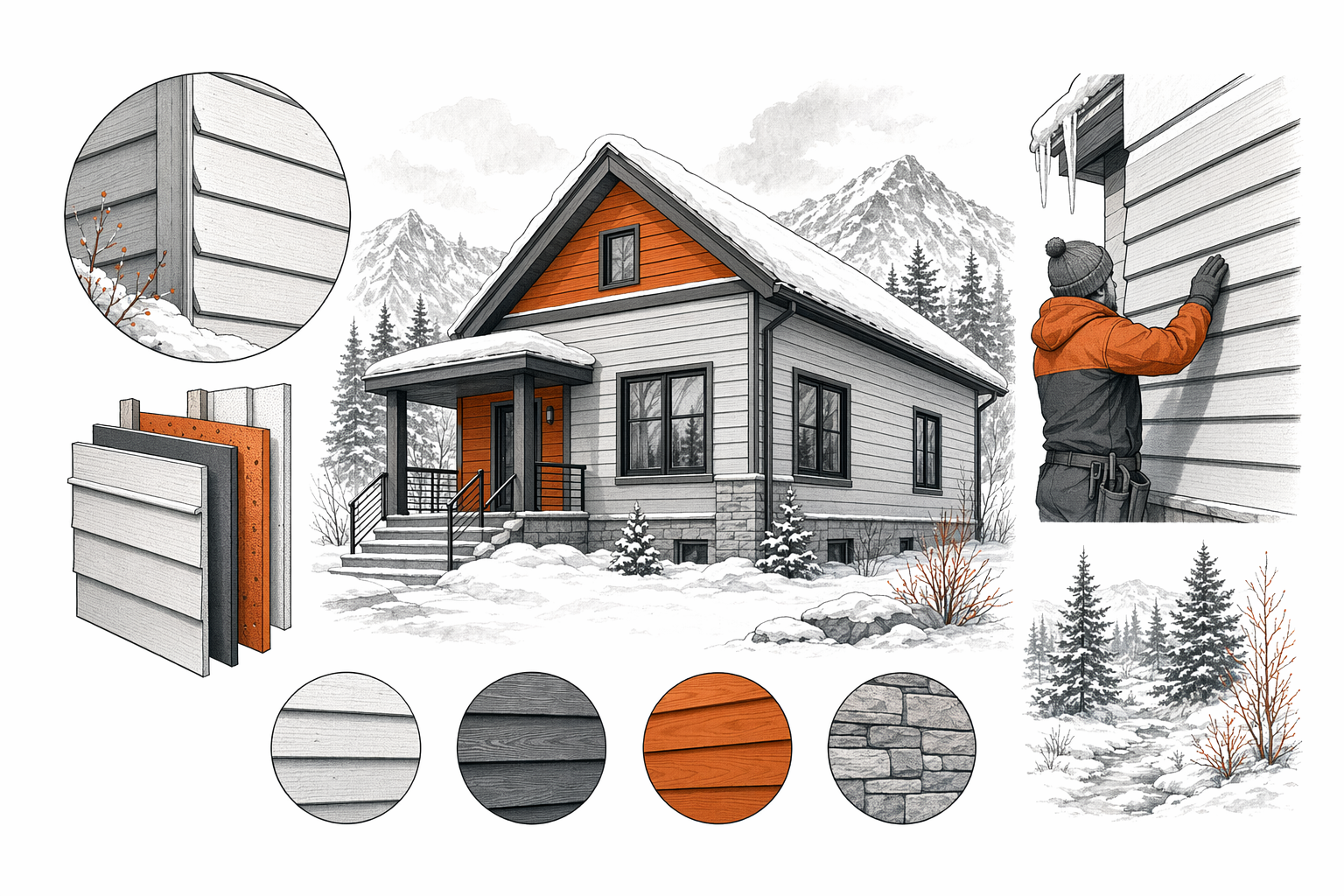
Why cold climates need tougher siding
In snowy areas, siding does more than change curb appeal. It also has to handle moisture, freezing temperatures, ice, and strong winter wind. The best choice is usually a material that resists water problems, stays stable when temperatures swing, and can be installed correctly with good flashing and a proper moisture barrier.
No siding material is perfect for every home. The right option depends on your budget, the style of your house, your maintenance goals, and your local weather. Price also varies by home size and height, material, removal of old siding, site conditions, and area. If you want to compare common ranges first, see siding costs.
The short answer
For many homes in cold and snowy climates, fiber cement board, quality vinyl siding rated for colder weather, and some metal siding systems are common choices. Fiber cement is often chosen for durability and fire resistance. Vinyl can be more budget-friendly and low maintenance if it is installed well and suited to the climate. Metal can perform well in harsh weather in some applications. The most important part is not just the material. It is also proper installation, flashing, house wrap or moisture barrier, and ventilation details done by a licensed, insured, and bonded siding contractor.
Best siding options for cold and snowy weather
Fiber cement board is a popular option in cold climates because it is durable and does not attract insects. Many homeowners like its wood-look appearance with less routine upkeep than traditional wood. It is heavier and usually costs more than vinyl, so labor can be higher. In freeze-thaw areas, careful installation matters so water does not get trapped behind the panels.
Vinyl siding is often one of the more affordable choices and is widely used in colder parts of the US. It does not need painting, and many homeowners like the lower maintenance. Still, extreme cold can make some vinyl products more brittle, so product quality and correct installation are important. Expansion and contraction details also matter.
Metal siding can be a strong option where snow, wind, and moisture are concerns. It is generally low maintenance and can last a long time. Some homeowners like its clean look, while others prefer a more traditional appearance. Noise, denting, and style fit are things to think about depending on the product and your home.
Engineered wood can also work in some cold climates, but long-term performance depends heavily on product quality, installation, and moisture management. Traditional wood can look beautiful, but it usually needs more upkeep and closer attention to moisture in snowy regions.
What matters as much as the material
Even the best siding can fail early if water gets behind it. In cold and snowy climates, ask contractors about:
- Moisture control. Flashing around windows, doors, roof lines, and penetrations is critical.
- House wrap or moisture barrier. This helps protect the wall system when wind-driven snow or rain gets past the outer siding.
- Freeze-thaw durability. Materials and trim details should fit local climate conditions.
- Insulation and air sealing. New siding may be a good time to discuss exterior insulation or air leakage issues, where allowed by local code.
- Snow exposure. Areas near roofs, valleys, decks, and walkways may get more water and ice.
A good contractor should explain the installation plan in plain language and put the scope in writing. Before you sign, use this guide to vet a siding contractor. Always hire a licensed, insured, and bonded siding contractor, verify their license, insurance, and bond yourself, and follow local permit and code rules.
What to do next
Start by deciding what matters most: lower upfront cost, lower maintenance, a specific look, or longer-term durability. Then compare at least a few written estimates that clearly list materials, tear-off if needed, trim, moisture barrier details, cleanup, and timeline.
Be careful with door-knockers after storms or anyone who pressures you to sign the same day. Storm-chasers are common in damaged areas. Get the full price and scope in writing before any deposit.
If you want help finding local pros, you can get matched with licensed, insured, and bonded siding contractors near you through SidingLedger's free matching service.
In cold and snowy places, siding should handle water, ice, and temperature changes. A strong material helps, but correct installation and moisture control matter just as much.