Stucco siding
Stucco siding gives a home a solid, textured, seamless look. It can be a traditional cement-based system or a synthetic insulated system often called EIFS. The right choice depends on your climate, wall design, maintenance goals, and how well the installer handles moisture details. If you are comparing options, see [cost guides](/costs/) or [get matched](/get-matched/) with licensed, insured, bonded siding contractors near you at no cost.
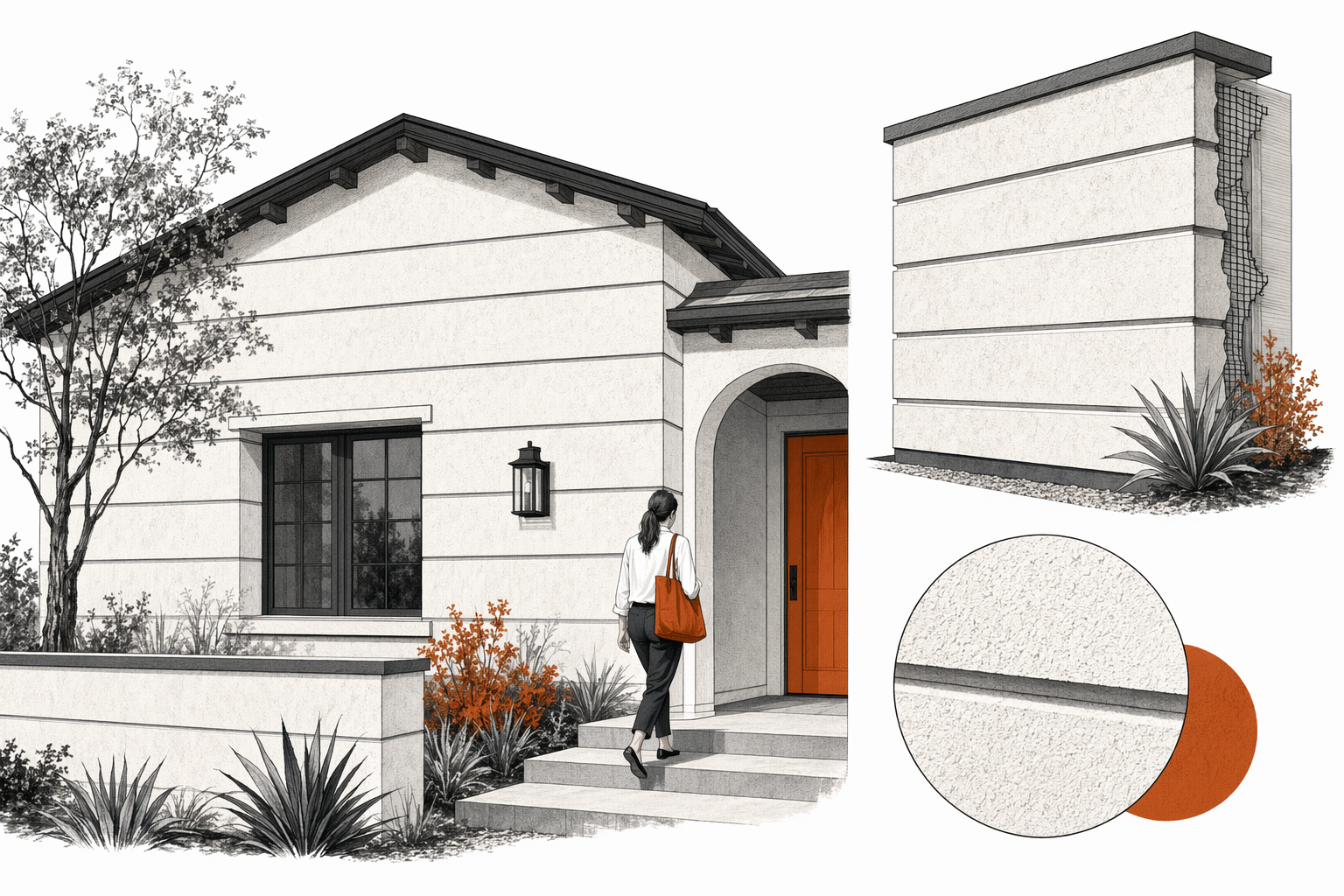
What stucco siding is
Stucco is an exterior wall finish made to cover the outside of a home in a continuous surface. Many homeowners like it because it looks clean, lasts a long time when installed correctly, and works with many home styles.
There are two main types:
- Traditional stucco uses a cement-based mix applied in layers over a base.
- Synthetic stucco (EIFS) uses foam insulation boards and a synthetic finish coat.
Both can look similar from the street. But they are built differently, and the moisture management details are very important. That is why the installer's experience matters so much.
How a stucco job usually works
The exact steps depend on whether the home is new construction, a full replacement, a re-coat, or a repair. A licensed contractor should explain the wall assembly, prep work, and how water will drain away from the house.
A typical full stucco project may include:
- Protect landscaping, windows, doors, and nearby surfaces.
- Remove damaged exterior material if this is a replacement project.
- Inspect the wall surface and repair any problem areas found behind the cladding.
- Install moisture barrier, flashing, trim details, and other water-control parts as required.
- Add lath or insulation board, depending on the stucco system.
- Apply the base coats and allow proper curing or drying time.
- Apply the finish coat and texture.
- Clean up and do a final walkthrough.
For homeowners, one of the biggest questions is whether the project is a simple cosmetic re-coat or a deeper wall repair. If moisture got behind the finish, the fix can be much larger than it first appears. You can learn more about checking contractor quality in this vet a siding contractor guide.
Typical stucco cost per square foot
Installed stucco costs are usually given as a per-square-foot estimate, not a quote. A realistic installed range for many homes is about $9 to $22 per square foot.
Smaller repairs or re-coat work may be priced differently, often by project size, access, and how much damaged material must be removed. Synthetic systems, custom textures, multi-story walls, and major moisture repairs can push pricing higher.
Your real price depends on:
- Home size and height
- Traditional stucco vs EIFS
- Removal of old siding or old stucco
- Damage found underneath
- Trim, flashing, and detail work
- Scaffolding and access needs
- Local labor rates and permit requirements
Always get the material, scope, and cleanup terms in writing before any deposit. If you want a broader pricing view, start with siding costs.
How long a stucco project takes
A stucco job usually takes longer than many lighter siding materials because prep, layering, and curing time matter.
For an average home, a full project may take about 1 to 3 weeks. Larger homes, bad weather, repair work behind the walls, or complex trim can extend the schedule.
A smaller repair or re-coat may take just a few days. But if hidden moisture damage is found, the timeline can change. Ask the contractor what could delay the job and how they handle weather protection during the work.
Pros and cons of stucco siding
What to ask a stucco contractor
Verify the contractor before you sign
Hire only licensed, insured, and bonded siding contractors, and verify the license, insurance, and bond yourself. Get the full scope, materials, payment schedule, and cleanup terms in writing before any deposit. Follow local permit and code rules.
Be careful with contractors who pressure you to sign right away, especially after a storm. Storm-chasers often use urgency to rush homeowners. Take your time, compare written estimates, and ask questions. If you want help finding local contractors to contact, you can get matched through SidingLedger for free.
Stucco siding can look beautiful and last a long time, but the water-control details matter a lot. Traditional stucco and EIFS are different systems, and the real cost depends on your home size, height, hidden damage, and local labor. Always hire a licensed, insured, bonded contractor and verify that information yourself.