Siding repair & storm damage
Siding repair after hail, wind, or an impact can be simple in some cases and more involved in others. The main goals are to stop water from getting in, match the old siding as closely as possible, and decide whether a **small repair** or a **larger replacement** makes more sense. SidingLedger is a **free matching service** that helps you connect with licensed, insured, and bonded siding contractors near you for repair or storm-damage replacement.
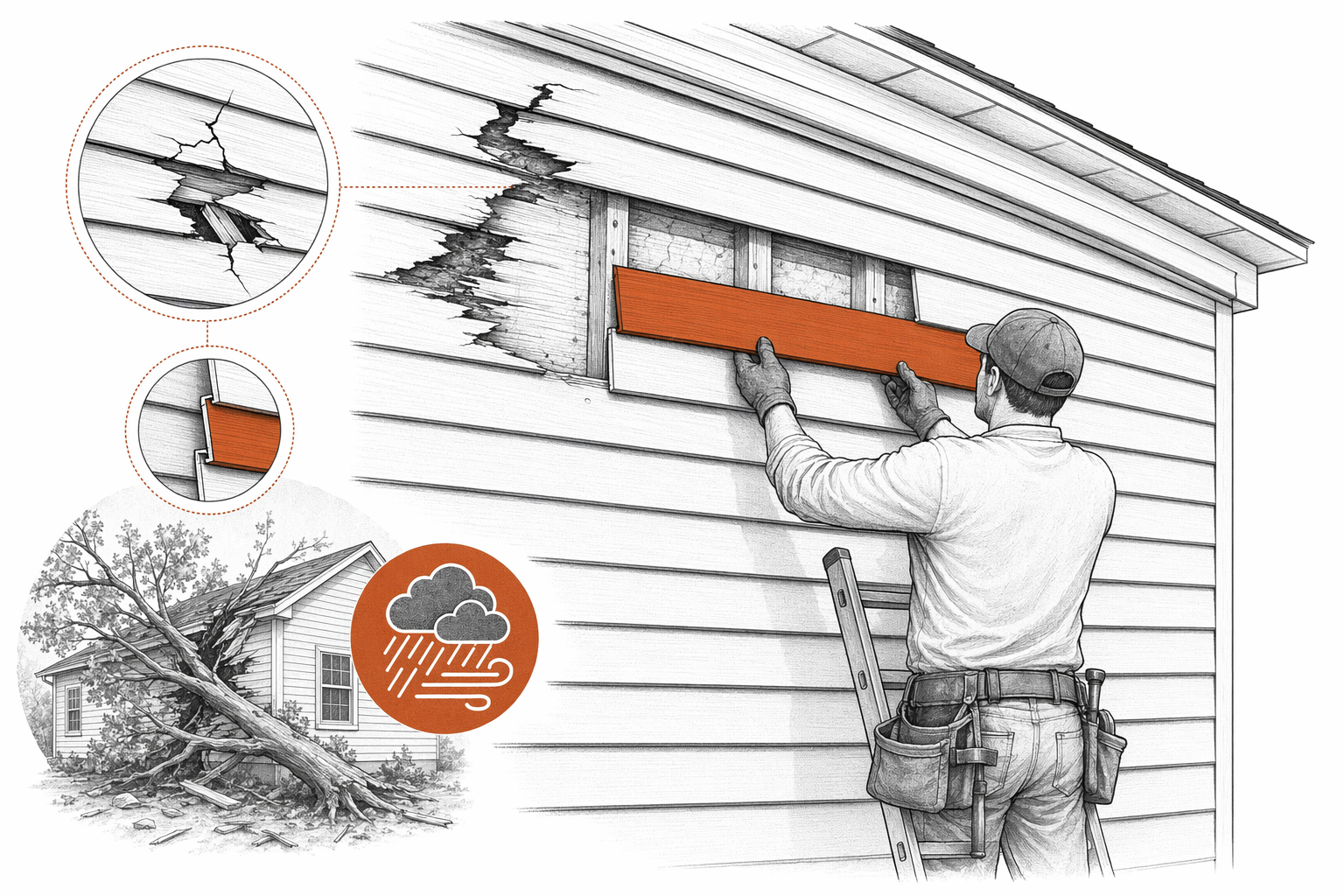
Overview: when siding repair makes sense
Not every damaged wall needs full replacement. A contractor may be able to repair a small area if the damage is limited and the existing siding is still in decent shape. Common reasons for repair include cracked panels, loose boards, holes from impact, hail marks, wind damage, and moisture getting behind a few sections.
A bigger replacement may be worth considering if the siding is old, brittle, faded, hard to match, or damaged in many places. Storm damage can also expose problems underneath, such as wet sheathing or failed house wrap. If you are comparing repair vs. replacement, our costs page can help you understand typical price differences.
How the job usually works
Most siding repair and storm-damage jobs follow a similar path.
- Damage review: The contractor checks the visible damage, takes measurements, and notes whether matching material is available.
- Scope of work: They explain whether a spot repair, partial replacement, or larger replacement is more realistic.
- Written estimate: Ask for labor, material, removal, trim, and any moisture-barrier work to be listed clearly.
- Permit check: Some areas require permits for partial or full replacement. Always follow local permit and code rules.
- Material ordering: If the old siding style or color is discontinued, the contractor may suggest the closest match or replacing a larger section for a cleaner look.
- Removal and repair: Damaged siding is removed carefully. If needed, the contractor replaces wet or damaged layers behind it before installing new siding.
- Final walkthrough: Review the finished work, the caulking details, and the cleanup before making the final payment.
If the damage happened during a storm, move carefully. Do not sign with anyone who pressures you at the door or says you must sign right away. Learn more about avoiding pressure tactics in vet a siding contractor.
Typical cost range for siding repair or storm-damage replacement
Repair pricing varies a lot because siding damage is rarely identical from one house to another. A typical installed cost estimate for siding repair or partial storm-damage replacement is often about $4 to $14 per square foot for the affected area.
Larger or more complex work can run higher, especially if the home is two stories, the old siding must be removed, matching is difficult, or there is damage behind the siding. Premium materials, custom trim work, and small jobs with minimum service charges can also push the per-square-foot price up.
These are estimates, not quotes or guarantees. Your real price depends on home size and height, siding type, removal of old siding, site conditions, and your area. For broader pricing help, see siding costs or get matched with local contractors.
How long siding repair usually takes
A small repair may take part of a day to 1 day once materials are available. A partial replacement often takes 1 to 3 days. If the crew finds water damage underneath, or if special-order materials are needed, the timeline can stretch longer.
Weather matters too. Rain, high wind, or very cold conditions can delay the work. The biggest timing issue after a storm is often material matching and scheduling, not the repair itself.
Ask the contractor two separate questions: how long the on-site work will take, and how long it may take to order materials and get on the schedule.
Pros and cons of repair vs. replacement
What to ask a siding contractor
Verify the contractor before you sign
Always hire a licensed, insured, and bonded siding contractor, and verify the license, insurance, and bond yourself. Get the full price, scope, materials, timeline, and cleanup details in writing before any deposit.
Be careful after storms. Some crews go door to door and pressure homeowners to sign on the spot. A trustworthy contractor should give you time to read the paperwork, compare options, and ask questions. SidingLedger can help you get matched with local contractors, but you should still do your own verification before moving forward.
Siding repair can fix small storm damage and help keep water out. If the damage is widespread or the old siding is hard to match, a bigger replacement may be the better choice. Always use a licensed, insured, and bonded contractor, and get the full scope and price in writing before you pay a deposit.